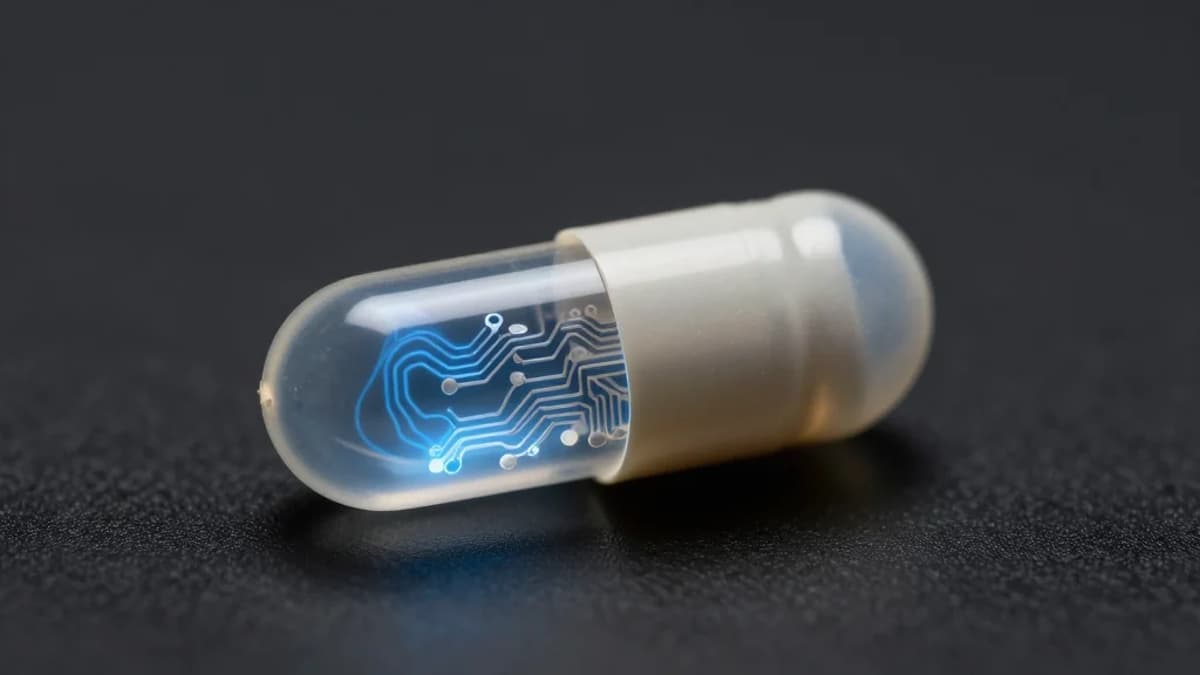
Magnetically Controlled Battery-Free Multifunctional Smart E-Pill
•February 3, 2026
0
Why It Matters
The technology removes battery‑related safety and size constraints, enabling longer, more accurate GI monitoring and targeted therapy, a breakthrough for personalized medicine and remote patient care.
Key Takeaways
- •Battery-free design eliminates leakage risk
- •Magnetic fields enable real-time control and data
- •Flexible electronics conform to GI tract for accurate sensing
- •Multi-sensor suite measures pH, temperature, pressure
- •Enables targeted drug release at precise locations
Pulse Analysis
The ingestible device market has long been hampered by the trade‑off between power capacity and patient comfort. Conventional capsules rely on miniature batteries that add bulk, limit operational time, and pose leakage hazards. By harnessing external magnetic fields for inductive power transfer, the new smart e‑pill sidesteps these limitations, offering virtually limitless runtime as long as the clinician’s field is applied. This paradigm shift mirrors trends in wireless charging for consumer electronics, but with the added complexity of navigating the human gastrointestinal environment.
At the heart of the innovation lies a suite of flexible electronics fabricated on ultrathin, biocompatible substrates. These conformal circuits adhere to the mucosal lining, improving signal fidelity for sensors that continuously track pH, temperature, and pressure. Integrated micro‑actuators respond to magnetic commands, releasing therapeutics precisely where and when needed. A robust bi‑directional antenna and adaptive signal‑processing algorithm ensure reliable data transmission despite the variable dielectric properties of tissue, delivering clinicians real‑time insights that were previously only achievable through invasive endoscopy.
Beyond the laboratory, the e‑pill’s battery‑free architecture promises significant commercial advantages. Eliminating chemical power sources reduces manufacturing costs, environmental impact, and regulatory hurdles associated with toxic materials. Combined with emerging AI‑driven analytics, future iterations could perform on‑device preliminary diagnostics, trimming data bandwidth and accelerating clinical decision‑making. As healthcare shifts toward remote monitoring and patient‑centric models, this technology positions itself as a cornerstone for next‑generation tele‑medicine platforms, potentially reshaping standards for gastrointestinal diagnostics, drug delivery, and broader minimally invasive therapies.
Magnetically Controlled Battery-Free Multifunctional Smart E-Pill
0
Comments
Want to join the conversation?
Loading comments...