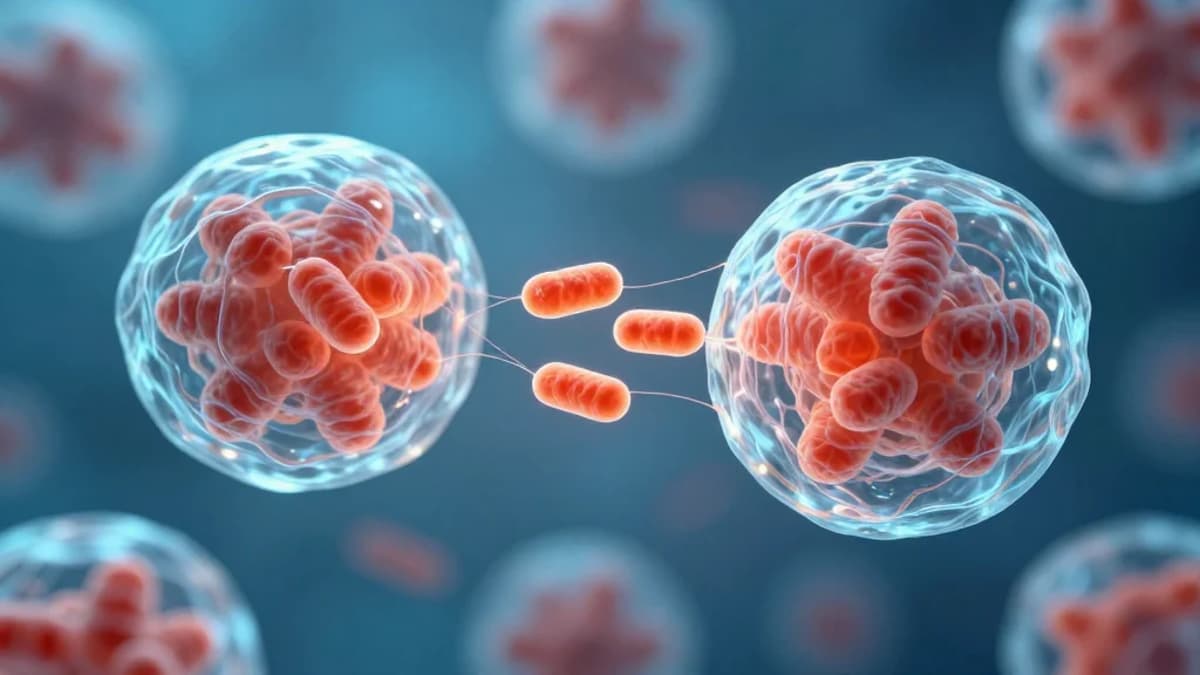
Mitochondrial Transfer: Dual Impact on Health and Disease
•January 17, 2026
0
Why It Matters
Understanding and controlling mitochondrial transfer could reshape treatment strategies across regenerative medicine and oncology, making it a pivotal focus for biotech investment and clinical innovation.
Key Takeaways
- •Mitochondria can rescue stressed cells via transfer.
- •Therapeutic transfer shows promise in neurodegeneration.
- •Cancer cells exploit transfer for metabolic advantage.
- •Targeting transfer pathways may enable regenerative therapies.
Pulse Analysis
Mitochondrial transfer has emerged from a niche curiosity to a central theme in cellular biology, revealing a sophisticated form of intercellular communication that directly impacts energy metabolism. Advanced imaging—such as super‑resolution microscopy—and fluorescent tagging now allow scientists to observe organelle exchange in real time, uncovering the roles of membrane proteins, cytoskeletal dynamics, and specific receptors. This granular insight not only deepens fundamental knowledge but also creates a platform for engineering precise interventions that modulate cellular health at the organelle level.
The therapeutic allure of mitochondrial transfer lies in its ability to restore bioenergetic function in tissues where mitochondrial dysfunction drives pathology. Preclinical models demonstrate that delivering healthy mitochondria to neurons can reverse synaptic deficits, while cardiac studies show reduced infarct size after ischemic injury. However, the same pathway can be co‑opted by malignant cells, granting them enhanced oxidative capacity and drug resistance. Balancing these opposing outcomes demands nuanced strategies—such as selective targeting of transfer pathways or engineered donor cells—to maximize clinical benefit without fueling tumor growth.
Future research is converging on three fronts: elucidating the exact molecular triggers that initiate transfer, designing delivery vehicles (e.g., stem‑cell‑derived vesicles) for controlled mitochondrial donation, and integrating lifestyle factors that naturally influence mitochondrial dynamics. As regulatory frameworks evolve, ethical considerations around mitochondrial donation and potential germline effects will shape translational pathways. Ultimately, mastering mitochondrial transfer could unlock a new class of regenerative therapies, positioning it as a cornerstone of next‑generation precision medicine.
Mitochondrial Transfer: Dual Impact on Health and Disease
0
Comments
Want to join the conversation?
Loading comments...