Net-Casting Spiders' Adjustable Silk Stiffness Point to Tunable Fiber Design
•January 27, 2026
0
Why It Matters
The study offers a biomimetic route to overcome the long‑standing trade‑off between strength and elasticity in engineered fibers, opening markets from aerospace to wearable tech. By replicating spiders’ tunable silk, manufacturers could produce high‑performance materials without compromising on either property.
Key Takeaways
- •Net‑casting spiders modulate silk stiffness via spinneret control
- •Curly silk stretches up to 150% before stiffening
- •Elastic and rigid properties coexist in same fiber
- •Study published in PNAS, Jan 2026
- •Provides blueprint for tunable synthetic fiber design
Pulse Analysis
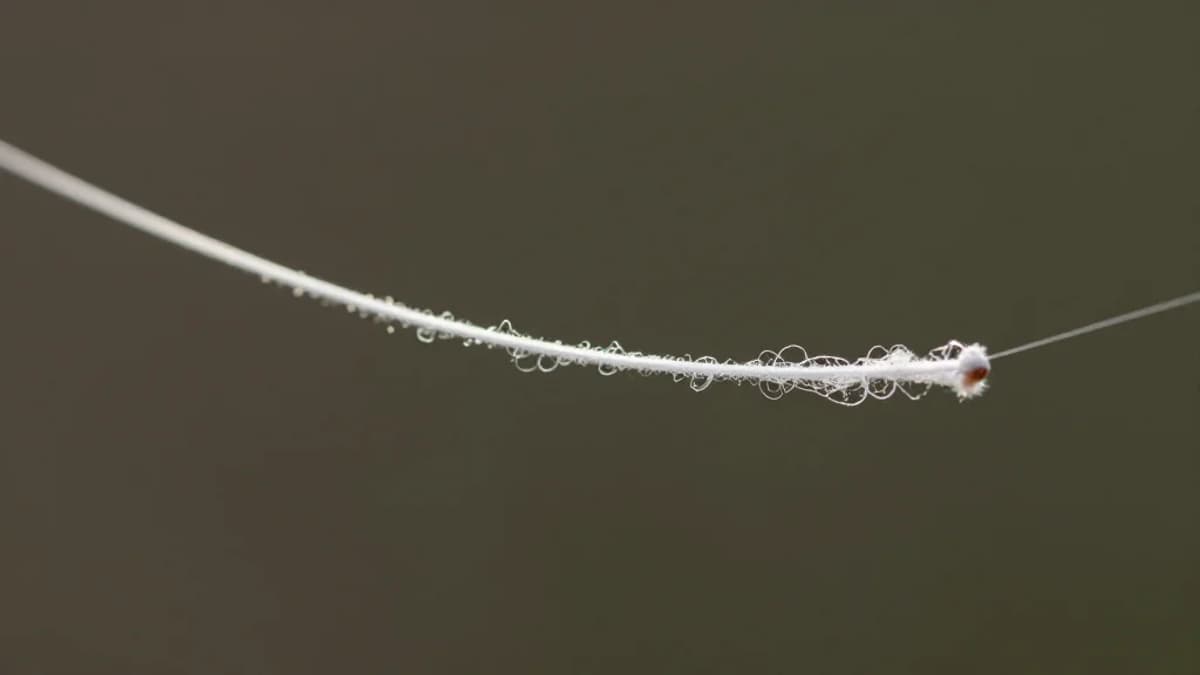
Spider silk has long fascinated engineers because it delivers a rare combination of tensile strength and extensibility. Traditional synthetic fibers, however, force a compromise: a material is either tough or stretchy, but rarely both. The recent discovery that net‑casting spiders dynamically reconfigure their silk at the micro‑level overturns this paradigm. By toggling spinneret positions, the arachnids introduce curled, looped filaments that act as latent reinforcements, allowing the web to absorb kinetic energy and then lock into a rigid state. This natural strategy showcases biomimicry’s power to solve entrenched material‑science challenges.
The research team employed ultra‑high‑speed cameras and high‑resolution electron microscopy to capture the rapid deployment of the spider’s sticky net and to map its internal architecture. Mechanical testing demonstrated that the curly prey‑catching silk can endure extensions of up to 150 %, far surpassing the 20 % failure point of the linear support threads. The key insight is that the silk’s stiffness is not static; it evolves as the fibers are stretched, a property engineers term “strain‑induced hardening.” Such behavior is rare in synthetic polymers, where stiffness is fixed during fabrication, highlighting the novelty of the spider’s approach.
For industry, the implications are immediate. Replicating this adjustable stiffness could enable next‑generation fibers for aerospace components that must flex under load yet retain structural integrity, or for smart textiles that adapt to user movement. Material scientists are already exploring programmable polymer networks and 3D‑printed composites that mimic the spider’s looped microstructure. As the demand for high‑performance, lightweight, and adaptable materials grows, the spider‑inspired design may become a cornerstone of future fiber engineering, accelerating the transition from trade‑off‑bound products to truly multifunctional solutions.
Net-casting spiders' adjustable silk stiffness point to tunable fiber design
0
Comments
Want to join the conversation?
Loading comments...