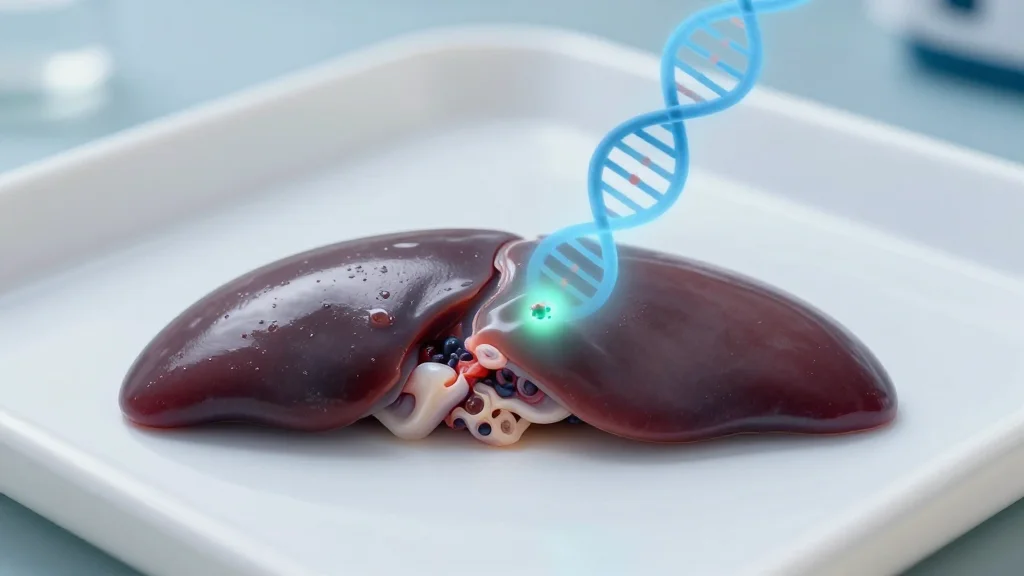
New Clues to Hepatitis B Species Restriction Could Help Build a Novel Model for Studying Infection
Why It Matters
A viable mouse model would enable systematic study of HBV’s life cycle, host response, and drug efficacy, accelerating progress toward curative treatments for a disease affecting 254 million people worldwide.
Key Takeaways
- •Mouse liver cells form HBV cccDNA comparable to human cells
- •Entry block occurs before nucleocapsid uncoating in mice
- •Human HBV receptor addition narrows the entry‑step barrier
- •New model could speed HBV therapy testing
- •Study challenges DNA‑type infection assumption
Pulse Analysis
Chronic hepatitis B remains a global health crisis, with roughly 254 million carriers and nearly one million deaths annually from cirrhosis or liver cancer. The lack of a small‑animal model that faithfully recapitulates the full viral lifecycle has hampered both basic research and the pre‑clinical evaluation of antiviral candidates. Existing mouse models either require human liver grafts or fail to sustain persistent infection, leaving a critical gap in the translational pipeline.
The Rockefeller team’s breakthrough centers on the discovery that mouse hepatocytes are capable of producing covalently closed circular DNA, the stable viral template that underpins HBV’s chronicity. By engineering cell lines that bypass the natural entry route, the researchers demonstrated robust cccDNA formation, suggesting that the intracellular machinery is not the limiting factor. Their experiments identified a late‑stage entry obstacle—occurring prior to nucleocapsid uncoating—that blocks viral genome delivery to the nucleus. Introducing the human HBV receptor into mouse cells partially rescued this defect, confirming that the entry step, rather than DNA incompatibility, is the primary hurdle.
If scientists can fully overcome this entry barrier, a genetically tractable mouse model will emerge, offering unprecedented access to study HBV‑induced liver pathology, immune evasion, and cccDNA persistence. Such a model would serve as a high‑throughput platform for testing novel therapeutics aimed at eradicating cccDNA, a goal that has eluded current treatment regimens. Beyond HBV, the findings illuminate broader principles of viral host‑range restriction, potentially informing model development for other hepatotropic viruses. The work therefore represents a pivotal step toward translating virological insights into curative strategies for millions of patients.
New clues to hepatitis B species restriction could help build a novel model for studying infection
Comments
Want to join the conversation?
Loading comments...