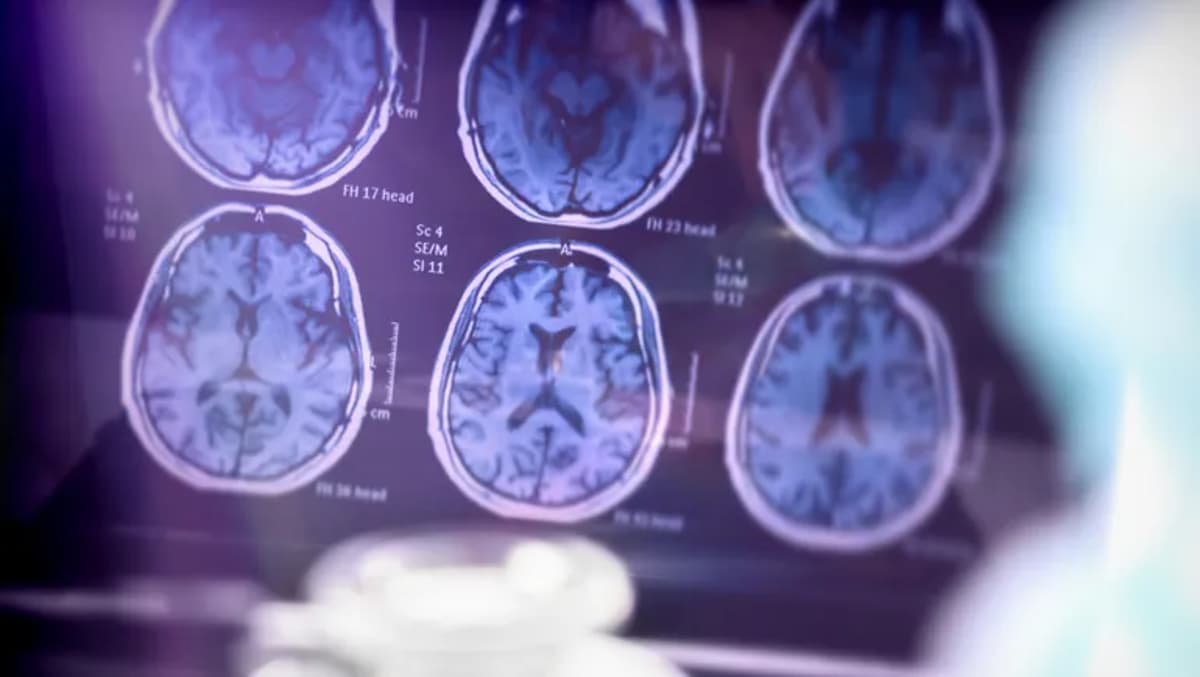
By revealing neurodegenerative disease at pre‑symptomatic stages, the assay could reshape drug development pipelines and improve patient outcomes, accelerating precision‑medicine approaches in a market projected to exceed $30 billion.
The growing prevalence of neurodegenerative disorders has pushed researchers to look beyond symptomatic treatment toward early‑stage intervention. The prion‑like hypothesis, first championed by Stanley Prusiner, suggests that misfolded proteins propagate disease much like infectious agents. Amprion Diagnostics has leveraged this concept to create a highly sensitive seed‑amplification assay that can detect trace amounts of alpha‑synuclein, a protein implicated in Parkinson’s, Lewy‑body dementia, and a substantial subset of Alzheimer’s cases. This scientific shift underscores a broader industry move toward biomarker‑driven diagnostics that can inform therapeutic strategies before irreversible brain damage occurs.
SAAmplify‑αSYN, the company’s flagship product, received FDA breakthrough‑device designation in 2019, signaling regulatory confidence in its clinical utility. By analyzing cerebrospinal fluid, the test identifies abnormal alpha‑synuclein levels that often appear decades before overt symptoms. Clinicians can now stratify patients for enrollment in targeted clinical trials, while pharmaceutical firms gain a reliable tool to select participants most likely to respond to disease‑modifying agents. Moreover, early detection empowers patients to adopt lifestyle modifications and emerging interventions—such as stem‑cell therapies or novel device‑based treatments—that have shown promise in slowing disease progression.
Looking ahead, Amprion aims to expand its platform to other misfolded proteins, including TDP‑43 for ALS and additional Alzheimer’s subtypes. A less invasive skin‑sample version is also in development, which could broaden accessibility and reduce procedural barriers. While the assay’s extreme sensitivity raises concerns about false positives and cross‑contamination, rigorous validation protocols are being refined to mitigate these risks. As the global market for neurodegenerative diagnostics approaches $30 billion, technologies that bridge early detection with precision therapeutics are poised to become pivotal assets for both biotech investors and healthcare providers.
Emerging tests offer a bridge to pharma aiming to treat neuro‑degenerative diseases in their earlier stages. · Feb. 9, 2026 · Kelly Bilodeau
Like many paradigm‑shifting breakthroughs, the science that inspired Amprion Diagnostics was once considered outlandish. It all started with Dr. Stanley Prusiner, a scientist at the University of California, San Francisco, thinking outside the box. Prusiner suspected that neurodegenerative diseases spread in the brain like infectious diseases, hijacking cells to pump out misfolded proteins.
“That violated every major rule at the time,” said Dr. Russell Lebovitz, CEO and founder of Amprion, which specializes in neurodegenerative disease diagnostics. Remarkably, the hypothesis earned the 1997 Nobel Prize and became a central focus for Amprion, which is using that science to develop highly‑sensitive tests that leverage a seed‑amplification assay.
They’re adding to the diagnostic arsenal amid growing recognition that many neurodegenerative diseases, such as Parkinson’s and Alzheimer’s, begin decades before symptoms appear, and that targeting them early may yield the best results.
One of its tests, SAAmplify‑αSYN, is already in clinical use, and the company says doctors and researchers are using it to identify early signs of diseases such as Parkinson’s, Lewy‑body dementia and Alzheimer’s years before symptoms emerge.
Lebovitz and neuroscientist Claudio Soto in 2007 began developing a test for the rare and devastating Creutzfeldt‑Jakob disease. The work expanded based on their theory that the same prion‑like mechanism might underlie other, more common brain diseases. This led to the creation of SAAmplify‑αSYN, which earned the FDA’s breakthrough‑device designation in 2019.
The test can detect tiny amounts of abnormal alpha‑synuclein protein, which underlies several neurodegenerative diseases, from a sample of spinal fluid, Lebovitz said.
While alpha‑synuclein is often associated with Parkinson’s, the company has shown that as many as half of all Alzheimer’s patients also have alpha‑synuclein in addition to the prominent disease biomarkers amyloid‑beta and tau.
“If you have alpha‑synuclein, Alzheimer’s becomes a very different disease. It progresses three times faster,” he said.
Researchers also suspect these patients may be less responsive to anti‑amyloid treatments like Leqembi or Kisunla, or may experience more side effects, he added.
Amprion was the first company to validate, commercialize and patent this testing approach.
Researchers also use their own versions of seed‑amplification‑assay tests, but the approach can be complicated to administer and interpret. Because they’re highly sensitive, they also carry the potential for false positives if a sample is cross‑contaminated, according to one analysis.
Having this test can give patients a definitive answer about their condition and provide an opportunity for prevention or early intervention as new drugs and approaches reach the market.
“There are many clinical trials going on. So, if you know that you are on a path, but you have very few symptoms, you’re the perfect target for clinical trials,” Lebovitz said.
Because the test finds disease at such an early stage, a person might be able to try emerging interventions, including devices, stem‑cell transplants or drugs, Lebovitz said.
“The data is pretty strong now that if someone, at early stages, changes their lifestyle, you can slow down progression of these diseases,” he said. For those already experiencing symptoms, the test can help guide treatment decisions.
In the long run, Amprion’s goal is to expand into other areas by developing tests for other proteins.
“We believe that four or five misfolded proteins can characterize all neurodegenerative diseases,” Lebovitz said.
Among the tests in development is one to detect amyotrophic lateral sclerosis as well as other subsets of Alzheimer’s that have misfolding in a protein called TDP‑43. The company is also working on a less invasive version of the test that uses a skin sample to make a diagnosis.
“We believe that ultimately, the more we understand, the better we are going to be able to diagnose and treat diseases accurately,” he said.
Comments
Want to join the conversation?
Loading comments...