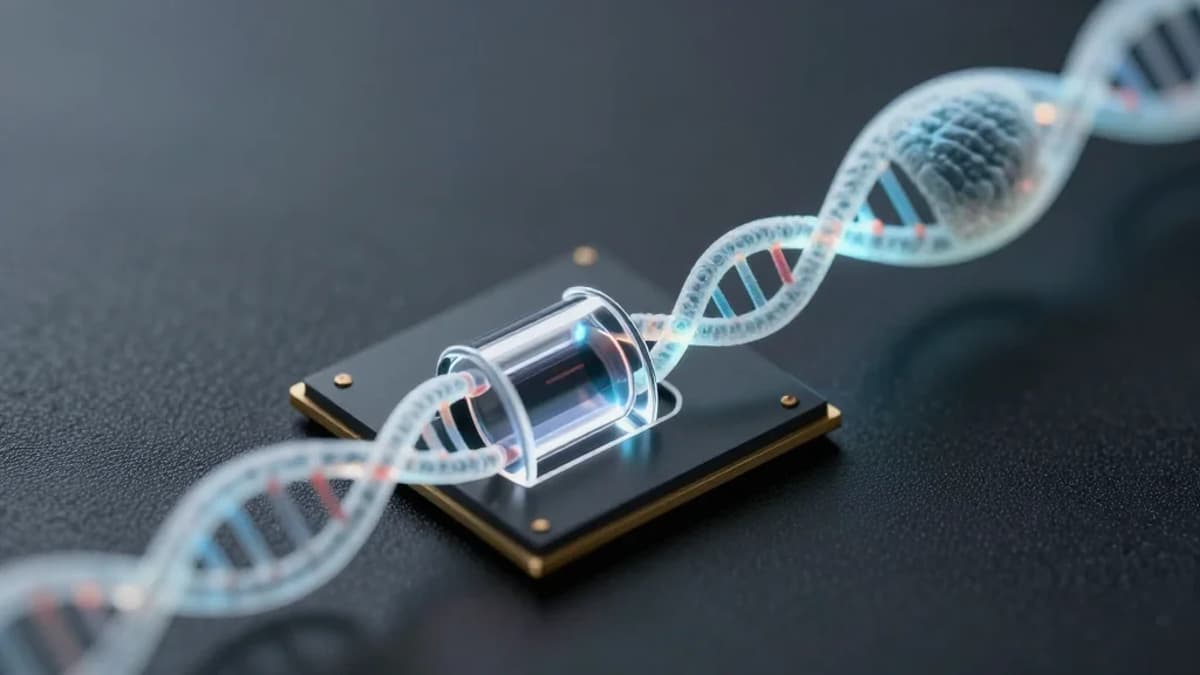
New Tool Cracks Microbial Defense Codes for Faster, Precise Bioengineering
•February 10, 2026
0
Why It Matters
The speedup dramatically lowers R&D costs and accelerates deployment of engineered microbes, strengthening the U.S. bioeconomy and energy security.
Key Takeaways
- •MIJAMP reduces genome editing time from week to hours
- •Detects methylation motifs via nanopore long reads
- •Open-source tool integrates human‑in‑the‑loop validation
- •Enables precise bypass of restriction‑modification defenses
- •Supports DOE bioenergy innovation and bioeconomy growth
Pulse Analysis
Microbial engineering has long been hampered by restriction‑modification systems, natural defenses that block foreign DNA and protect cells from viral attack. These systems rely on methyl groups marking self‑DNA, forcing synthetic biologists to painstakingly map and circumvent each pattern before successful gene insertion. The complexity has limited rapid prototyping to a handful of model organisms, slowing progress in biofuel production, specialty chemicals, and environmental applications.
MIJAMP tackles this bottleneck by combining high‑throughput nanopore sequencing with advanced pattern‑recognition algorithms to pinpoint methylated motifs across entire bacterial genomes. The software translates raw signal data into actionable maps of restriction sites, then suggests compatible methylation tags that allow engineered DNA to slip past cellular defenses. A built‑in human‑in‑the‑loop review ensures that computational predictions align with experimental realities, while the open‑source release on ORNL’s GitLab invites community enhancements and broad adoption across academia and industry.
The implications extend beyond faster lab work. By slashing design cycles from days to hours, MIJAMP reduces capital expenditures for pilot‑scale bioprocesses and accelerates time‑to‑market for renewable fuels and bioproducts. Integrated into DOE’s Center for Bioenergy Innovation, the tool strengthens the United States’ strategic position in the global bioeconomy, fostering a more resilient energy supply and encouraging private‑sector investment in next‑generation microbial platforms. As more non‑model microbes become tractable, the diversity of feedstocks and products achievable through synthetic biology will expand dramatically.
New tool cracks microbial defense codes for faster, precise bioengineering
0
Comments
Want to join the conversation?
Loading comments...