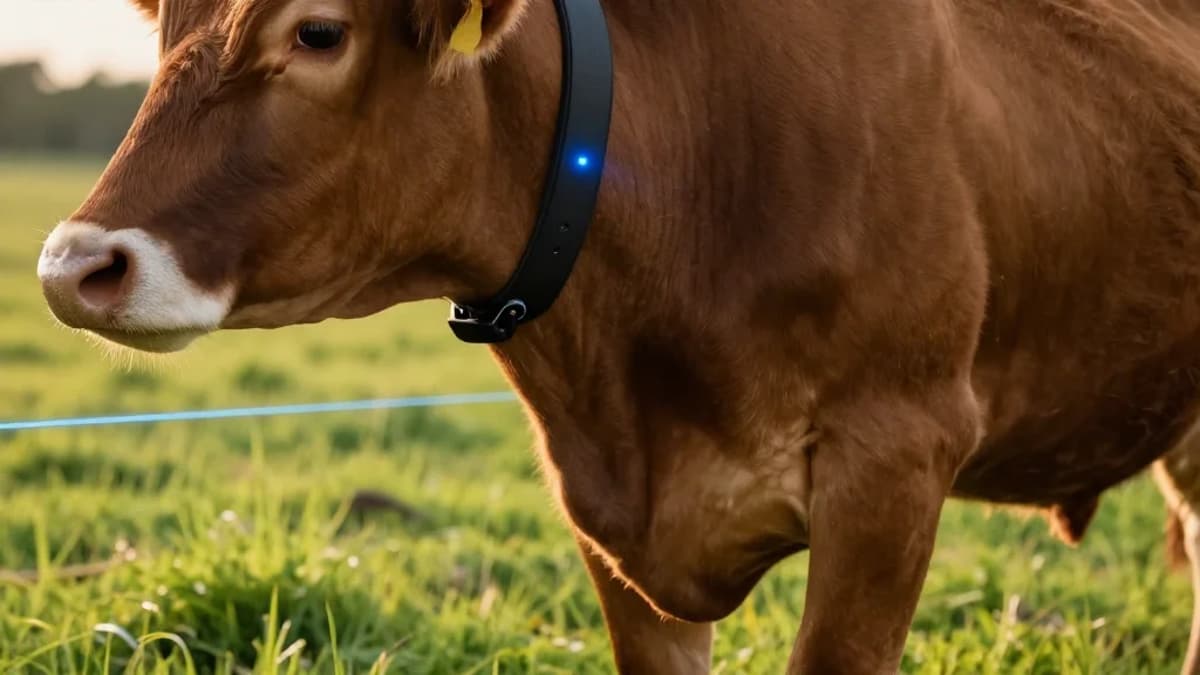
No Fences Needed: GPS Collars Show 'Virtual Fencing' Is Next Frontier of Livestock Grazing
•February 3, 2026
0
Companies Mentioned

University of Missouri

MU Extension
Why It Matters
Virtual fencing cuts labor and infrastructure costs while boosting pasture productivity, signaling a shift toward precision livestock management in regenerative agriculture.
Key Takeaways
- •GPS collars replace physical fences for rotational grazing
- •Grazing days per acre nearly doubled in pilot
- •Mobile app provides real‑time livestock location
- •Farmers report time savings and improved pasture health
- •Technology supported by University of Missouri research grant
Pulse Analysis
Virtual fencing is emerging as a cornerstone of precision livestock management, leveraging GPS technology, low‑level auditory or vibration cues, and cloud‑based analytics. The market for smart animal‑tracking devices is projected to grow double‑digit annually, driven by rising labor shortages and the need for sustainable grazing practices. By eliminating the physical infrastructure of traditional fences, producers can reconfigure paddocks instantly, respond to weather events, and integrate data streams into broader farm management platforms.
The Missouri pilot underscores tangible benefits: cover‑crop utilization jumped from 90 to 170 grazing days per acre, effectively doubling the economic return on existing land. Real‑time location data enabled a farmer to intervene when a pregnant cow strayed, preventing potential loss and illustrating how animal welfare improves alongside efficiency. Moreover, the mobile app’s visual interface reduces the time spent on manual fence adjustments, freeing up hours for value‑added activities and enhancing work‑life balance for producers.
Looking ahead, virtual fencing could reshape grazing strategies beyond the Midwest, especially as regulatory frameworks adapt to low‑impact livestock systems. Integration with satellite imagery, soil moisture sensors, and AI‑driven grazing algorithms promises fully autonomous pasture rotation, minimizing overgrazing and supporting carbon‑sequestering regenerative practices. Early adopters like the University of Missouri’s participants provide a roadmap for scaling the technology, highlighting the importance of farmer‑to‑farmer knowledge transfer and extension services in accelerating industry uptake.
No fences needed: GPS collars show 'virtual fencing' is next frontier of livestock grazing
0
Comments
Want to join the conversation?
Loading comments...