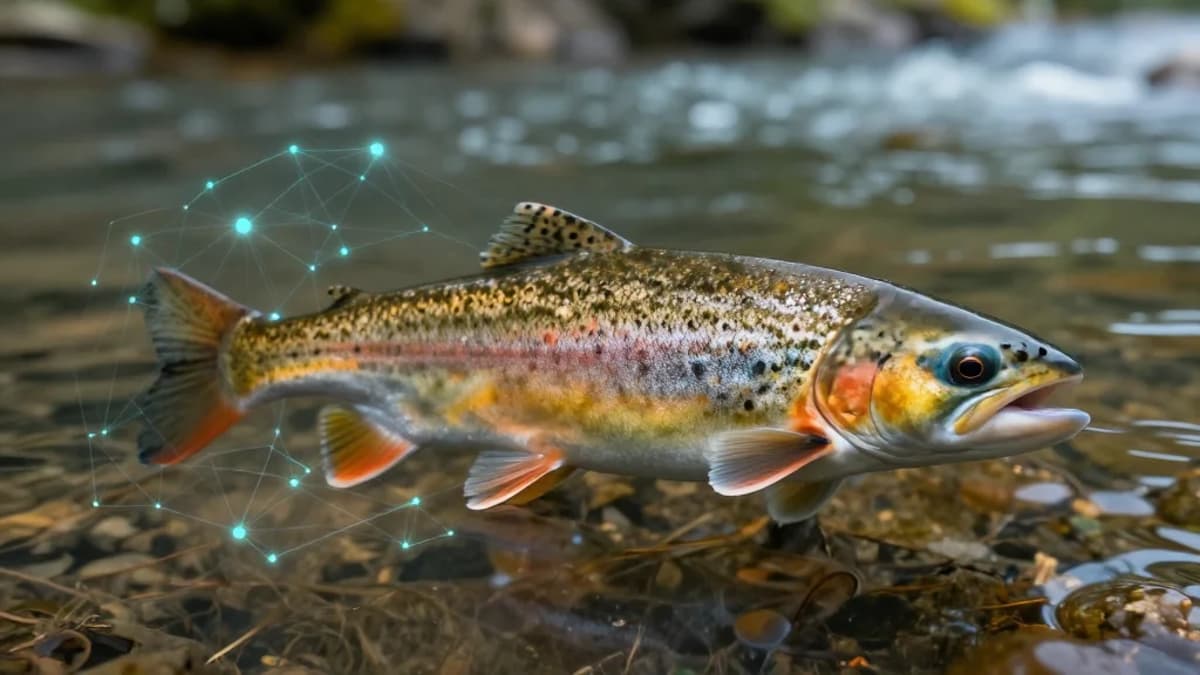
Researcher Finds Way to Predict Whirling Disease with Almost No Data
•January 21, 2026
0
Why It Matters
Early detection of river‑borne pathogens can safeguard fisheries, reduce economic losses, and inform proactive public‑health interventions. The method shows AI can operate effectively with limited training data, reshaping disease surveillance strategies.
Key Takeaways
- •AI predicts disease with single confirmed case
- •Uses readily available environmental data like air temperature
- •Model maps pathogen risk in Alberta’s Oldman River
- •Early warnings could protect fisheries and aquaculture
- •Approach adaptable to cholera, salmonella, zebra mussels
Pulse Analysis
Whirling disease, caused by the parasite Myxobolus cerebralis, has devastated trout and salmon populations across North America, with mortality rates reaching 90 % in young fish. Traditional monitoring relies on labor‑intensive sampling, often missing the early stages of an outbreak when intervention is most effective. The new study addresses this gap by demonstrating that sophisticated predictive analytics can operate with almost no historical disease data, offering a cost‑effective tool for stakeholders ranging from recreational anglers to commercial aquaculture operators.
The core of the system is a hidden Markov model that treats environmental variables—air temperature, water flow, and related metrics—as proxies for pathogen presence. Remarkably, the model achieved reliable forecasts after being trained on just one confirmed case in the Oldman River, extracting patterns from ancillary measurements to infer likely infection zones. Validation against independent samples confirmed its accuracy, and the researchers argue that the same framework can be calibrated for other water‑borne hazards such as cholera, salmonella, and invasive zebra mussels, where early signals are equally elusive.
For the fisheries industry and regulatory agencies, this technology promises a shift from reactive to proactive disease management. Early warnings enable targeted mitigation—like temporary fishing bans or habitat adjustments—thereby preserving stock health and protecting revenue streams. Moreover, the low data requirement lowers barriers for adoption in resource‑constrained regions, encouraging broader implementation of AI‑enhanced ecological monitoring. Continued refinement and integration with real‑time sensor networks could further tighten the feedback loop between detection and response, cementing AI’s role in safeguarding aquatic ecosystems.
Researcher finds way to predict whirling disease with almost no data
0
Comments
Want to join the conversation?
Loading comments...