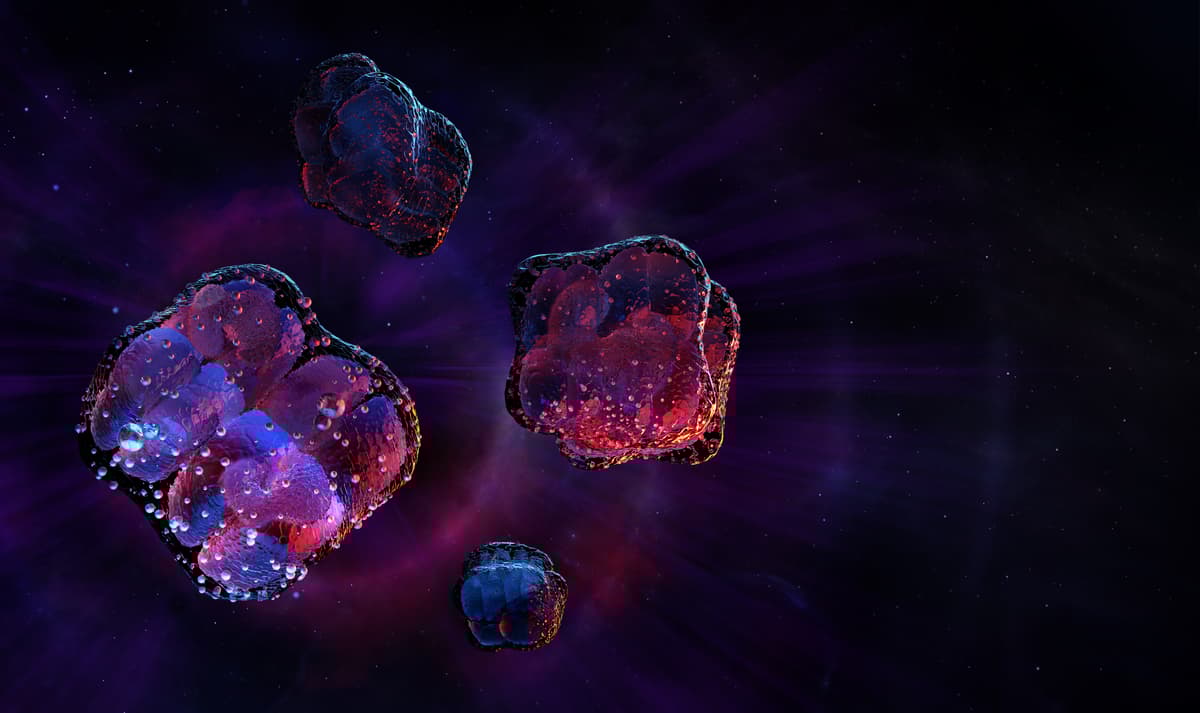
Scientists Found This Organism Can Survive Some of the Harshest Conditions in the Universe
•March 11, 2026
0
Why It Matters
The ability of microbes to survive impact‑generated pressures expands the plausible pathways for natural interplanetary dispersal of life, influencing astrobiology and planetary protection strategies.
Key Takeaways
- •D. radiodurans survives up to 2.4 GPa pressure.
- •60% of cells remained viable after simulated impact.
- •Membrane protein crystal structure provides impact resistance.
- •Findings support lithopanspermia across planetary bodies.
- •DNA repair systems enable rapid genome reassembly.
Pulse Analysis
Deinococcus radiodurans has long been celebrated as one of Earth’s toughest microbes, earning the nickname “Conan the Bacterium” for its ability to endure radiation, desiccation, extreme temperatures and oxidative stress. Its polyextremophilic nature stems from a suite of molecular defenses, including an efficient antioxidant system and a rapid DNA‑repair network that can reassemble shattered genomes within minutes. These traits make the organism a model for studying life's limits and for engineering biotechnological applications that require resilience under harsh industrial conditions. Understanding how D. radiodurans survives on Earth provides a baseline for assessing its potential beyond our planet.
In a recent study, mechanical engineers Lily Zhao and K.T. Ramesh recreated a Martian‑impact scenario by compressing D. radiodurans between steel plates and delivering shock pressures up to 3 gigapascals. Remarkably, 60 percent of the bacterial population remained viable at 2.4 GPa, the threshold where membrane rupture first appeared. The researchers traced this durability to a uniquely ordered protein lattice within the cell membrane, which distributes stress more evenly than the thicker membranes of typical piezophiles. Coupled with the bacterium’s robust DNA‑repair enzymes, this structural advantage allows it to survive the rapid unloading that follows an impact.
The experiment revives the lithopanspermia hypothesis, suggesting that microbial life could hitch a ride on ejecta from asteroid collisions and seed distant worlds, including icy moons such as Europa or Enceladus. If such organisms can survive launch, space travel, and re‑entry, planetary protection protocols may need to tighten to prevent forward contamination of extraterrestrial environments. At the same time, the findings guide astrobiologists to prioritize detection of polyextremophiles with similar membrane architectures when searching for biosignatures. Future missions that sample impact‑derived material could therefore provide direct evidence of natural interplanetary transfer.
Scientists Found This Organism Can Survive Some of the Harshest Conditions in the Universe
0
Comments
Want to join the conversation?
Loading comments...