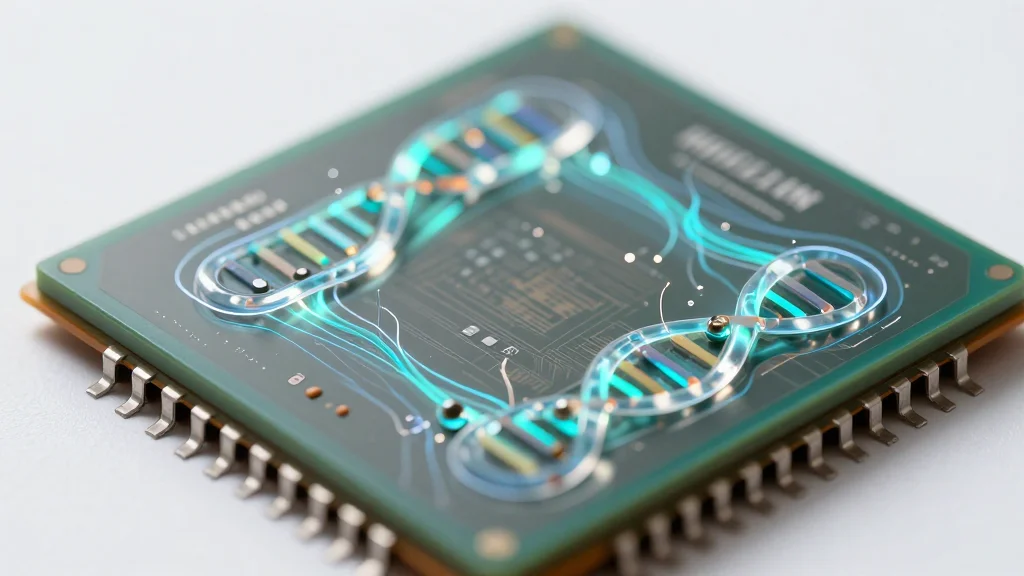
Semiconductor Chip Writes 64 DNA Sequences in Water, Setting New Enzymatic Benchmark
Why It Matters
The technology offers a greener, potentially more scalable alternative to solvent‑intensive DNA synthesis, which could lower costs and environmental impact for biotech and data‑storage markets. Overcoming the current chemical limitation could unlock massive parallelism needed for commercial DNA manufacturing.
Key Takeaways
- •Chip synthesizes 64 DNA strands in parallel using water‑based enzymatics
- •Electrochemical pH control enables site‑specific nucleotide addition
- •Demonstrates potential for greener, scalable DNA manufacturing
- •Chemistry limits further density; new deprotection methods required
Pulse Analysis
The demand for synthetic DNA has exploded across diagnostics, gene editing, and emerging data‑storage applications. Today’s dominant phosphoramidite process relies on toxic organic solvents and large centralized facilities, driving up costs and environmental footprints. As biotech firms seek faster, on‑demand synthesis, the industry is turning to enzymatic methods that mimic cellular DNA construction in aqueous media. However, enzymatic platforms have struggled to match the parallel throughput of chemical synthesis, typically producing only a handful of strands at a time.
The Harvard‑led team’s semiconductor chip bridges that gap by marrying silicon electronics with enzymatic chemistry. By embedding concentric ring electrodes beneath each DNA anchor, the device injects precise currents that locally generate protons, creating a transient low‑pH microenvironment that activates deprotection only where needed. This electrochemical choreography allowed 64 unique 39‑base sequences to be written simultaneously, a ten‑fold increase over previous enzymatic demonstrations. The water‑based workflow eliminates hazardous solvents, reduces waste, and demonstrates that digital control can orchestrate molecular assembly at scale.
Despite the breakthrough, the study uncovered a bottleneck in the deprotection chemistry, where intermediate species diffuse beyond the intended site, limiting further density. Researchers point to the need for a more direct acid‑driven deprotection reaction that can keep pace with the chip’s spatial precision. If resolved, the platform could support thousands of parallel strands, opening cost‑effective pathways for large‑scale gene‑therapy oligos, rapid diagnostic panels, and even DNA‑encoded data storage. Investors and biotech manufacturers are watching closely, as a greener, high‑throughput synthesis engine could reshape supply chains and accelerate innovation.
Semiconductor chip writes 64 DNA sequences in water, setting new enzymatic benchmark
Comments
Want to join the conversation?
Loading comments...