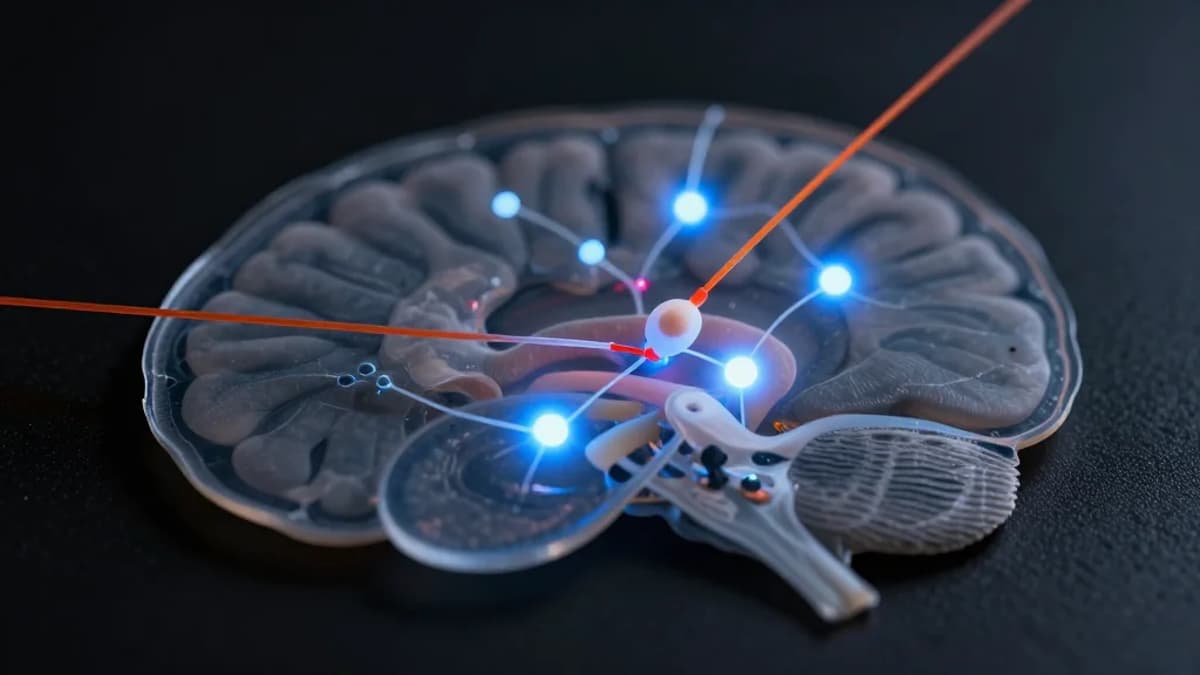
Somatostatin-Expressing Neurons in the Zona Incerta Regulate Chronic Stress Response and Modulate Depression-Like Behaviors
•January 31, 2026
0
Why It Matters
The discovery expands the neurocircuitry underlying stress and depression, offering a new anatomical target for interventions such as deep brain stimulation or pharmacological modulation, which could improve outcomes for patients unresponsive to existing therapies.
Key Takeaways
- •SOM+ ZI neurons suppress chronic stress hormone release.
- •Activating these neurons reduces depression-like immobility in tests.
- •Inhibition leads to heightened anxiety and helplessness behaviors.
- •Findings suggest ZI as novel DBS target for mood disorders.
- •Circuit links ZI to limbic structures modulating stress resilience.
Pulse Analysis
Chronic stress is a major precipitant of major depressive disorder, yet current treatments address downstream neurotransmission rather than the upstream circuitry that governs stress resilience. The zona incerta, a subthalamic region historically linked to sensorimotor integration, has emerged from recent animal work as a hub that integrates GABAergic signals with limbic structures. By situating the ZI within the broader stress‑response network, researchers can reinterpret longstanding models that focus solely on the hypothalamic‑pituitary‑adrenal axis.
In the new study, optogenetic activation of somatostatin‑positive neurons within the ZI dampened corticosterone spikes and reversed behavioral despair in forced‑ swim and tail‑suspension assays. Conversely, silencing these cells amplified anxiety‑like avoidance and helplessness, underscoring a bidirectional control mechanism. These findings dovetail with prior work on GABAergic modulation in the lateral habenula and anterior cingulate, suggesting that ZI‑mediated inhibition may recalibrate maladaptive hyperactivity across mood‑related networks.
Clinically, the ZI offers a promising target for neuromodulation. Deep brain stimulation of adjacent subthalamic nuclei already benefits Parkinson’s patients, and early trials indicate that ZI stimulation can modulate motor and affective symptoms with fewer side effects. Pharmacologically, compounds that selectively enhance somatostatin signaling could provide a less invasive route to replicate the observed benefits. Future research should map human ZI connectivity with high‑resolution imaging and test translational protocols, potentially expanding the therapeutic arsenal for treatment‑resistant depression.
Somatostatin-expressing neurons in the zona incerta regulate chronic stress response and modulate depression-like behaviors
0
Comments
Want to join the conversation?
Loading comments...