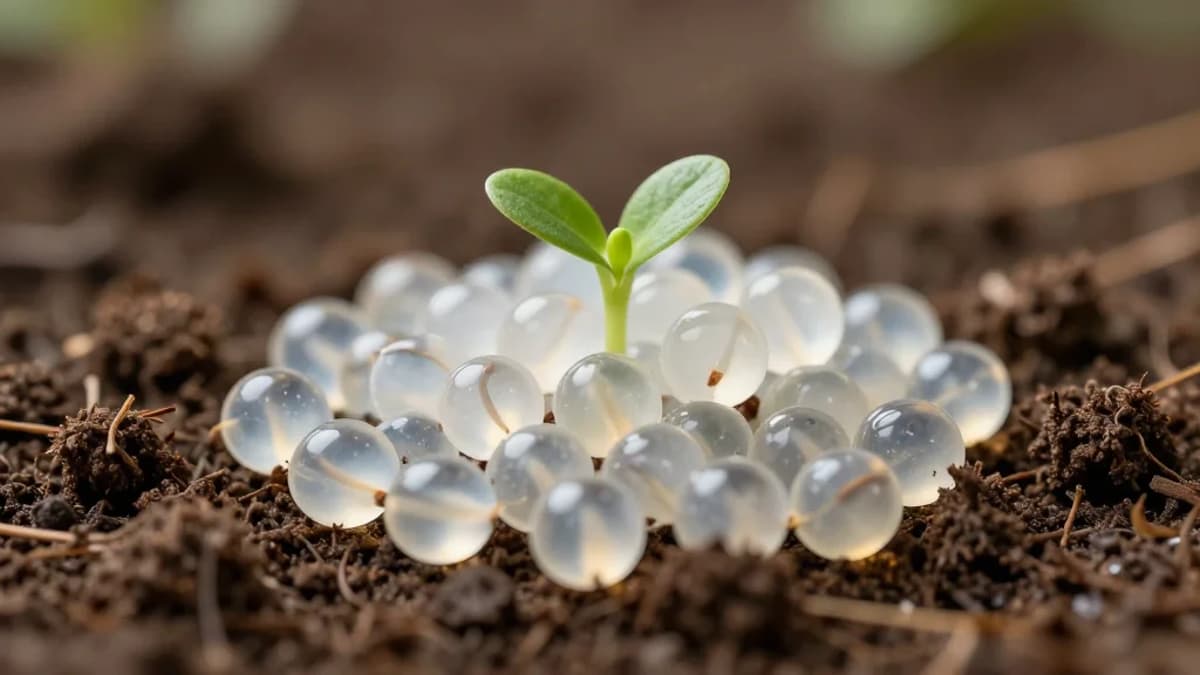
Starch Sachets Release Fertilizer in a Controlled Manner and Can Replace Petroleum-Derived Polymers
•January 13, 2026
0
Why It Matters
Controlled‑release, biodegradable fertilizer carriers can cut nutrient losses, lower environmental impact, and decrease reliance on non‑renewable plastics, offering a scalable path toward more sustainable agriculture.
Key Takeaways
- •Biodegradable starch sachets control fertilizer release
- •Copper‑zeolite adds mechanical strength and antimicrobial action
- •Optimal zeolite content capped at 3% of starch
- •Sachets improve water retention, reducing drought stress
- •Customizable formulations suit diverse crops and fertilizers
Pulse Analysis
The agricultural sector loses up to 30 % of applied nutrients through leaching, volatilization, and runoff, prompting a search for more efficient delivery systems. Conventional fertilizer carriers rely on petroleum‑derived polymers that persist in the environment and add to plastic waste. Researchers at EMBRAPA and the Federal University of São Carlos have engineered a fully biodegradable starch‑based sachet that encapsulates granular or powdered fertilizers. By leveraging starch’s natural gelatinization in soil moisture, the sachet creates a controlled‑release matrix that synchronizes nutrient availability with plant uptake, dramatically cutting losses.
The breakthrough hinges on reinforcing the starch film with copper‑modified faujasite zeolite. At a 3 % loading relative to starch, the zeolite particles boost tensile strength while remaining dispersible, preventing agglomeration that would weaken the film. Copper ions confer dual benefits: they inhibit fungal pathogens such as *Alternaria alternata* and serve as a micronutrient source. Laboratory tests showed a steady release of 300 mg L⁻¹ urea and 7 mg L⁻¹ copper over 30 days, while the porous zeolite also stores water, enhancing drought resilience.
Commercial adoption will depend on cost‑effective scaling and raw‑material sourcing. Using low‑grade or waste starch could lower production expenses, making the sachets competitive with traditional polymer carriers. Their modular design allows growers to tailor nutrient blends for specific crops—from high‑acid sachets for hydroxyapatite phosphorus to neutral formulations for soluble potassium salts. Early field trials target landscaping, hydroponics, and greenhouse production, with larger‑scale field deployment slated after economic viability studies. If successfully commercialized, these biodegradable sachets could reduce fertilizer waste, lower greenhouse‑gas emissions from plastic production, and support sustainable intensification.
Starch sachets release fertilizer in a controlled manner and can replace petroleum-derived polymers
0
Comments
Want to join the conversation?
Loading comments...