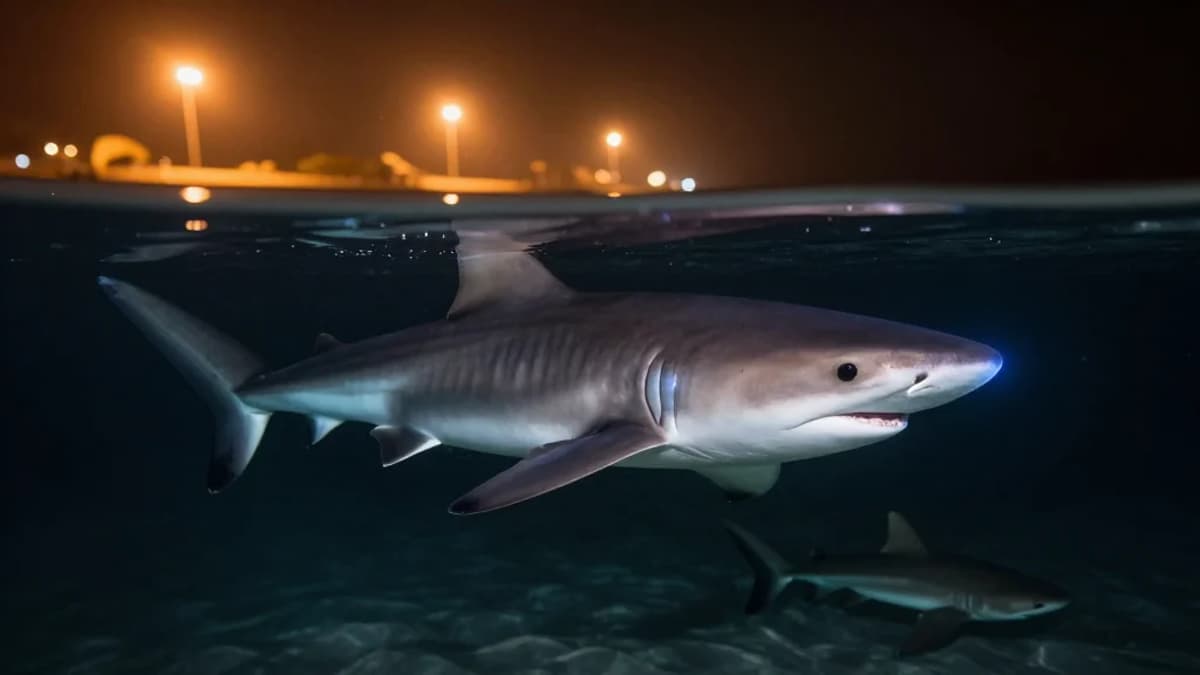
Study Reveals How Urban Light Pollution Disrupts Nighttime Hormones in Sharks
•February 3, 2026
0
Companies Mentioned

The Batchelor Foundation Inc.

Canon Solutions USA
Why It Matters
Hormonal disruption in top marine predators can destabilize coastal food webs, making light‑pollution mitigation a critical conservation priority.
Key Takeaways
- •ALAN lowers melatonin in resident nurse sharks.
- •Blacktip sharks show no significant hormonal change.
- •Hormone disruption may affect shark foraging and reproduction.
- •Findings link urban lighting to marine trophic stability.
- •Conservation plans must consider species‑specific light exposure.
Pulse Analysis
Artificial light at night (ALAN) has long been recognized as a disruptor of terrestrial ecosystems, but its reach extends far beneath the surface. Coastal cities emit a continuous glow that penetrates shallow waters, altering the natural light‑dark cycle that marine organisms rely on for timing daily activities. Recent research from the University of Miami demonstrates that this invisible stressor can interfere with the endocrine system of apex predators, highlighting a previously overlooked dimension of urbanization’s impact on ocean health.
The study compared plasma melatonin concentrations in two ecologically distinct sharks: the sedentary nurse shark and the highly mobile blacktip shark. Night‑time sampling under low‑impact red lighting revealed a pronounced melatonin suppression in nurse sharks inhabiting brightly lit bays, while blacktip sharks maintained baseline levels despite similar ambient illumination. This divergence suggests that site‑attached species experience chronic hormonal disruption, potentially impairing circadian‑driven processes such as feeding, mating and immune function. The rigorous field protocol—short‑duration drumlines, immediate blood draws, and control of temperature and depth—adds confidence to these findings.
From a management perspective, the results call for light‑pollution mitigation as a core component of marine conservation. Strategies such as shielded streetlights, dimming schedules, and dark‑sky compliant harbor lighting could reduce ALAN exposure for resident reef and coastal species. Moreover, the species‑specific response underscores the need for spatially explicit protection measures that prioritize habitats of low‑mobility predators. As urban coastlines expand globally, integrating light‑impact assessments into environmental impact statements will be essential to preserve trophic balance and safeguard the ecological services sharks provide.
Study Reveals How Urban Light Pollution Disrupts Nighttime Hormones in Sharks
0
Comments
Want to join the conversation?
Loading comments...