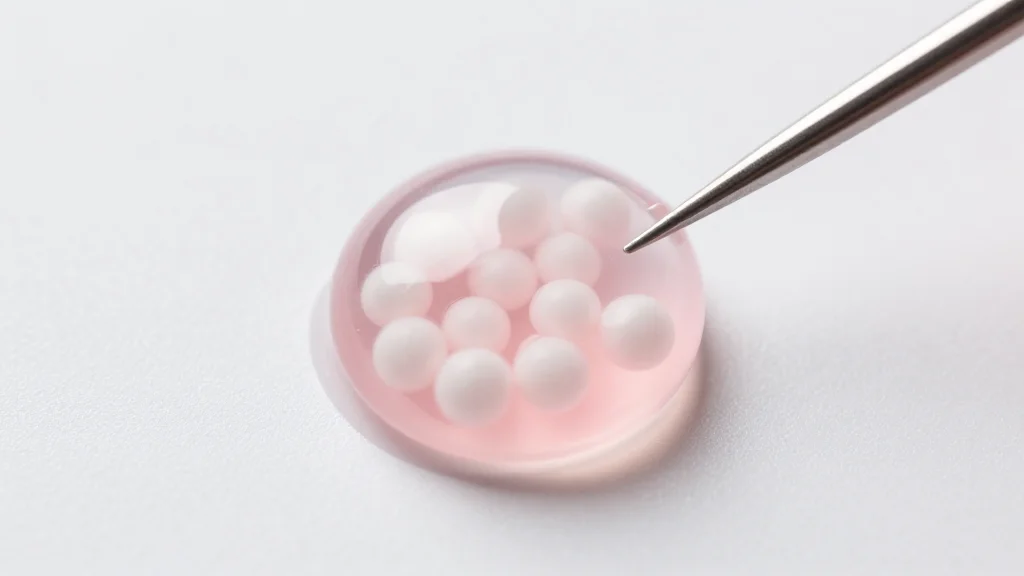
Thermoresponsive Complex Coacervates as Advanced Carriers for Cell‐Laden Liquid‐Core Capsules for Biomedical Applications
Why It Matters
The platform enables minimally invasive delivery of viable stem cells with precise spatial organization, accelerating regenerative‑medicine strategies and reducing surgical trauma.
Key Takeaways
- •Thermoresponsive coacervate gels at 37 °C, enabling in situ solidification
- •Shear‑thinning behavior supports injection of up to 54% liquid‑core capsules
- •Maintains >90% viability of adipose‑derived stem cells for at least 7 days
- •Modular platform can encapsulate multiple cell types for hierarchical tissue formation
Pulse Analysis
Injectable smart biomaterials have become a cornerstone of next‑generation regenerative therapies, offering clinicians a way to deliver cells and bioactive cues through a minimally invasive route. Among these, complex coacervates—liquid‑liquid phase‑separated polymers—provide a unique combination of biocompatibility and tunable mechanics. By grafting poly(N‑isopropylacrylamide) (PNIPAAm) onto natural polysaccharides, researchers create a thermoresponsive network that remains fluid at room temperature yet rapidly forms a stable gel at physiological heat, mirroring the behavior of many commercial hydrogel systems while adding the advantage of electrostatic self‑assembly.
The key technical breakthrough lies in the coacervate’s shear‑thinning rheology and its ability to host a high volume fraction of liquid‑core capsules. Rheological testing shows faster relaxation at 25 °C and a pronounced increase in network structuring at 37 °C, driven by PNIPAAm’s hydrophobic collapse. Even with capsules occupying more than half the formulation, the material retains injectability and quickly recovers its gel strength after shear, ensuring that encapsulated human adipose‑derived stem cells stay suspended and protected. Viability assays confirm that over 90% of the cells survive for at least a week, indicating that the polymer matrix does not compromise cell health.
Clinically, this modular coacervate platform opens the door to hierarchical tissue engineering where individual cell‑laden capsules act as building blocks for larger constructs. Because the system can accommodate multiple cell types, it could be tailored for complex organs such as cartilage, myocardium, or vascularized skin grafts. The decoupling of the transport matrix from the tissue‑forming units also simplifies manufacturing and allows on‑demand customization at the point of care. As the field moves toward personalized regenerative solutions, such thermoresponsive, injectable coacervates are poised to become a versatile tool for both research and therapeutic applications.
Thermoresponsive Complex Coacervates as Advanced Carriers for Cell‐Laden Liquid‐Core Capsules for Biomedical Applications
Comments
Want to join the conversation?
Loading comments...