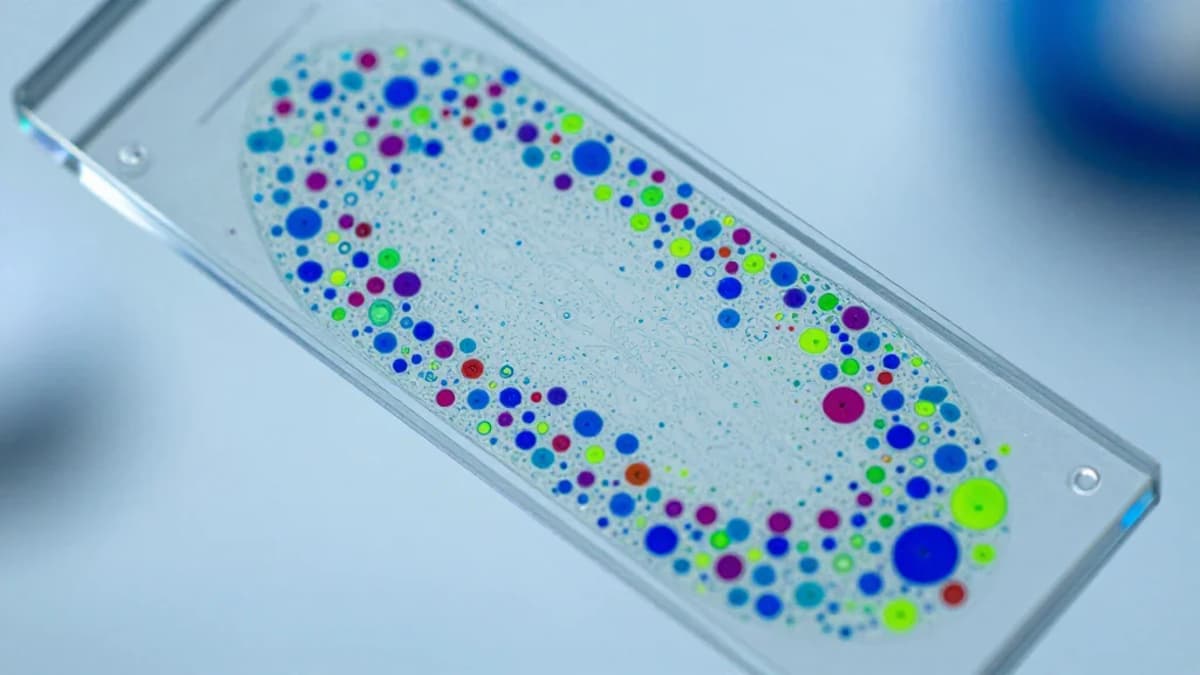
Tiny Flows, Big Insights: Microfluidics System Boosts Super-Resolution Microscopy
•March 3, 2026
0
Why It Matters
By standardizing fluid handling, the technology lowers barriers to high‑resolution cellular imaging, accelerating research in biology and drug discovery.
Key Takeaways
- •Microfluidics automates fluid exchange for multiplexed imaging.
- •System improves reproducibility and reduces sample damage.
- •Compatible with manual and automated microscopy setups.
- •Demonstrated on human cancer cells and mouse heart muscle.
- •Low-cost, adaptable platform broadens super‑resolution access.
Pulse Analysis
Super‑resolution microscopy has reshaped cell biology by breaking the diffraction limit, yet multiplexed imaging—visualizing several proteins simultaneously—remains technically demanding. Traditional protocols rely on repetitive manual pipetting to introduce labeling reagents and wash buffers, a process that introduces variability and can stress delicate specimens. The newly unveiled microfluidics system from the Göttingen Cluster of Excellence replaces these steps with computer‑controlled fluid delivery, ensuring nanoliter‑scale precision and consistent environmental conditions throughout extended imaging sessions. This shift from hand‑crafted to automated handling addresses a long‑standing bottleneck in high‑content cellular studies.
The platform’s design emphasizes accessibility: a compressed‑air‑driven pump, interchangeable chambers, and open‑source control software keep costs low while supporting both manual and fully automated operation. Researchers demonstrated the device on U2OS cancer cells and isolated ventricular cardiomyocytes, achieving clear nanometer‑scale maps without cell deformation or detachment. By eliminating a major source of experimental drift, the system improves reproducibility across laboratories, a critical factor for quantitative biology and for meeting regulatory standards in pre‑clinical imaging pipelines. Its modular architecture also allows rapid reconfiguration for emerging labeling chemistries.
Beyond academic labs, the microfluidics‑enabled workflow promises tangible benefits for pharmaceutical and biotech firms that depend on high‑throughput phenotypic screens. Consistent, high‑quality super‑resolution data can accelerate target validation, biomarker discovery, and the assessment of drug‑induced structural changes at the molecular level. As the technology matures, integration with AI‑driven image analysis pipelines could further reduce turnaround times and unlock new insights into cellular networks. Ultimately, democratizing multiplexed super‑resolution imaging may catalyze a new wave of precision medicine research, positioning microfluidic platforms as a cornerstone of next‑generation bio‑imaging.
Tiny flows, big insights: Microfluidics system boosts super-resolution microscopy
0
Comments
Want to join the conversation?
Loading comments...