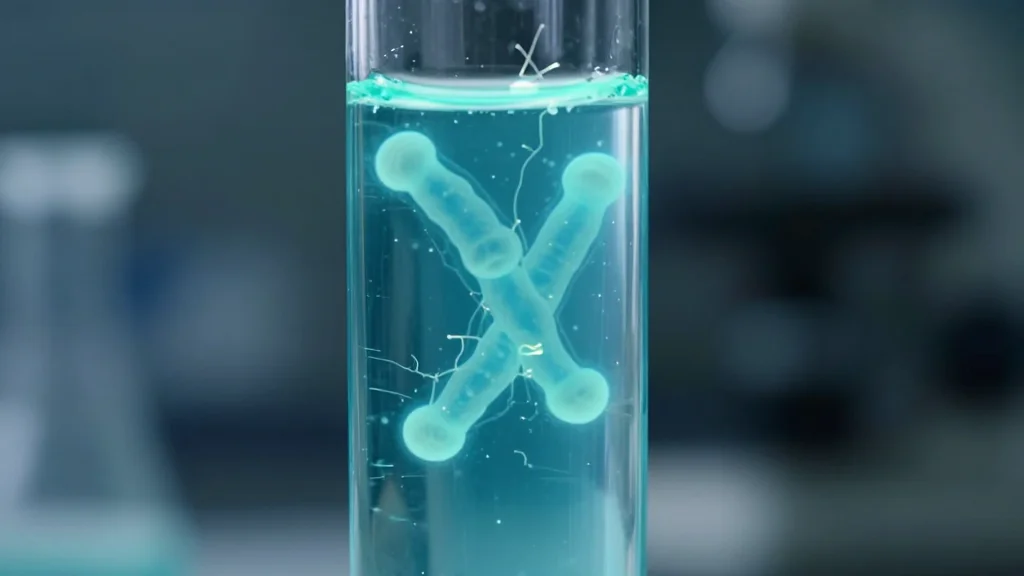
Two Bacteria Join Forces to Turn Chemical Signals Into Electricity, Opening up Low-Cost Sensing Options
Why It Matters
e‑COSENS demonstrates a scalable route to inexpensive, real‑time monitoring of contaminants and biomarkers, potentially reshaping environmental testing and point‑of‑care diagnostics. Its modular, plug‑and‑play architecture lowers barriers for deployment outside specialized labs.
Key Takeaways
- •e‑COSENS splits sensing and electricity generation across two engineered bacteria
- •Quinone acts as a chemical trigger that converts analyte detection into current
- •System detects metals, inflammation markers, peptides, antibiotics in under 20 minutes
- •Compact quarter‑size electronic disk enables field‑ready, low‑cost bioelectronic diagnostics
- •Modular design allows adaptation to environments from river water to milk
Pulse Analysis
Bioelectronic sensing has long promised rapid, on‑site detection of chemicals, yet most bacterial platforms rely on luminescence, which demands optical equipment and limits deployment in opaque or remote settings. Traditional electricity‑producing microbes are either hard to engineer or lack robustness across environments, creating a gap between laboratory proof‑of‑concepts and practical field tools. The e‑COSENS breakthrough bridges this divide by decoupling signal detection from electron transfer, assigning each task to a specialist microbe, and using quinone as a universal, tunable messenger.
In the e‑COSENS architecture, engineered *E. coli* senses a target analyte and synthesizes quinone only when the analyte is present. The quinone is then harvested by a partner bacterium—*Lactobacillus plantarum* or *Lactococcus lactis*—which converts it into a measurable current. The researchers validated four distinct assays, detecting heavy‑metal ions in bayou water, inflammation markers in artificial saliva, antimicrobial peptides in fecal samples, and antibiotics in grocery‑store milk, with electrical responses emerging as quickly as 20 minutes. The modular nature means additional bacterial partners can be swapped in to expand the sensing repertoire without redesigning the hardware.
The implications extend far beyond academic curiosity. A quarter‑size electronic disk that couples directly to off‑the‑shelf multimeters transforms the system into a low‑cost, portable diagnostic platform suitable for environmental monitoring, food safety testing, and even bedside health assessments. By leveraging synthetic biology’s design flexibility, e‑COSENS could accelerate the commercialization of bioelectronic sensors, democratizing access to real‑time data in sectors where rapid decision‑making is critical. Future work will likely focus on scaling production, enhancing signal stability, and integrating wireless readouts, positioning e‑COSENS as a cornerstone of the next generation of affordable, modular biosensing solutions.
Two bacteria join forces to turn chemical signals into electricity, opening up low-cost sensing options
Comments
Want to join the conversation?
Loading comments...