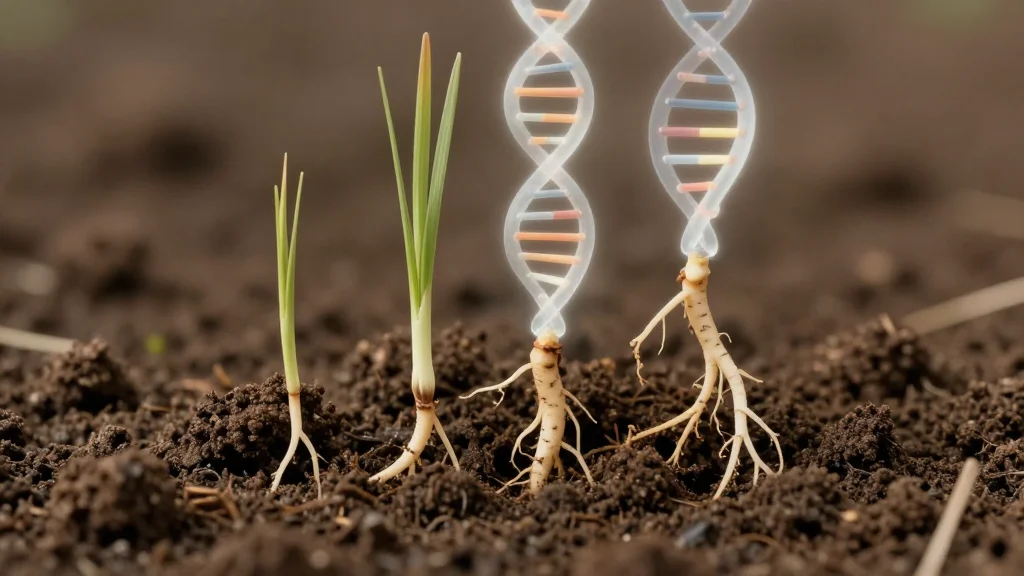
Unlocking Designer Roots for Future Cereal Crops
Why It Matters
Optimizing root systems can boost climate resilience and lower input costs for farmers, but must avoid compromising grain yields to be commercially viable.
Key Takeaways
- •CEPR1 controls root architecture across multiple cereals
- •Knockout yields steeper roots but reduces barley grain yield
- •Gene editing aims to balance deep roots with yield stability
- •Potential to cut fertilizer use and runoff
- •Field trials underway to validate greenhouse results
Pulse Analysis
Root system architecture has long been the hidden half of crop improvement, yet it determines a plant’s ability to access water and nutrients from deeper soil layers. As climate variability intensifies, breeders are turning to root traits to enhance drought resilience and reduce reliance on external inputs. Traditional selection prioritized above‑ground yield components, leaving a vast reservoir of underground genetic diversity untapped. Modern phenotyping platforms and high‑resolution imaging now make it feasible to quantify root angles, depth, and density at scale, opening new avenues for sustainable intensification.
The recent University of Queensland and Australian National University collaboration pinpointed the CEPR1 signaling gene as a conserved regulator of root steepness in barley, rice, maize and the model plant Arabidopsis. By swapping CEPR1 alleles between species, researchers demonstrated that loss‑of‑function mutants develop narrower, deeper root systems but suffer grain‑yield penalties in barley. This trade‑off highlights the need for precise modulation rather than outright knockout. Ongoing field trials in Germany’s high‑tech root scanning facilities aim to fine‑tune the pathway, combining CEPR1 edits with complementary targets to retain productivity while deepening roots.
If successful, CEPR1‑based breeding could lower fertilizer demand by improving nutrient capture efficiency, translating into cost savings for growers and reduced runoff into waterways. Deeper, steeper roots also promise better performance under water‑limited conditions, aligning with climate‑smart agriculture goals. However, commercial deployment will require robust validation across diverse environments and regulatory clearance for gene‑edited crops. The ARC Linkage partnership with InterGrain positions the project to move from proof‑of‑concept to field‑ready varieties, potentially reshaping cereal production in drought‑prone regions worldwide.
Unlocking designer roots for future cereal crops
Comments
Want to join the conversation?
Loading comments...