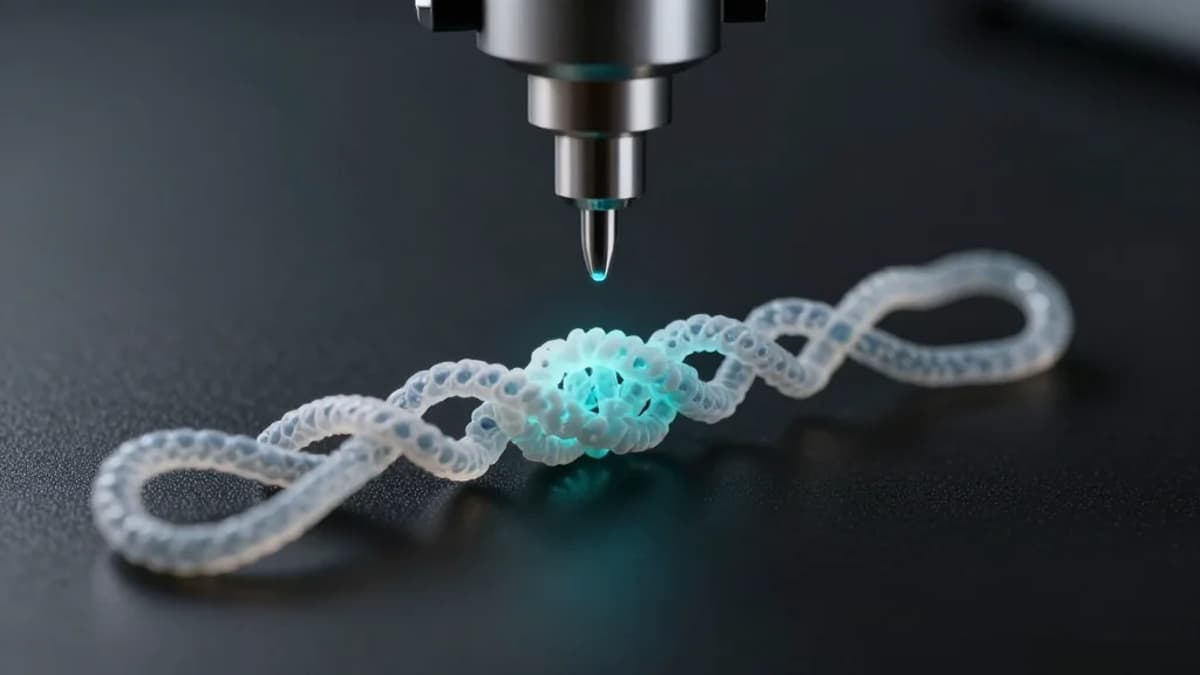
Visualizing How Cancer Drugs Reshape Proteins Linked to Lung Cancer
•January 26, 2026
0
Why It Matters
The study links drug‑induced structural remodeling to therapeutic efficacy, offering a molecular explanation for resistance in ALK‑positive lung cancer. It suggests that future therapies must address both enzymatic activity and protein dynamics to sustain patient responses.
Key Takeaways
- •HS‑AFM visualizes EML4‑ALK oligomer dynamics in real time
- •Alectinib compacts EML4 region, suppressing protein clustering
- •G1202R mutation blocks drug‑induced structural compaction
- •Variant 3 shows unstable oligomerization, linked to poorer response
- •Targeting protein dynamics offers new resistance‑overcoming strategies
Pulse Analysis
High‑speed atomic force microscopy (HS‑AFM) is reshaping how scientists interrogate intrinsically disordered proteins that were previously invisible to X‑ray crystallography or cryo‑EM. By capturing nanometer‑scale movements of single EML4‑ALK molecules, the technique reveals a dynamic equilibrium among monomeric, dimeric and trimeric states. This level of detail uncovers how subtle conformational shifts can dictate signaling strength, providing a new structural lens for drug discovery teams focused on fusion oncogenes.
The findings also clarify why ALK inhibitors such as alectinib achieve durable responses in many patients yet eventually fail. Beyond blocking kinase activity, alectinib forces the flexible EML4 segment into a compact configuration, dismantling the protein clusters that amplify downstream pathways. The G1202R resistance mutation restores the protein’s extended form, negating the drug’s structural impact and allowing signaling to resume. Clinicians now have a tangible molecular marker—loss of compaction—to monitor when resistance emerges, potentially guiding early therapeutic switches.
Looking ahead, drug developers can leverage this mechanistic insight to design molecules that both inhibit catalytic sites and stabilize non‑clustering conformations. Such dual‑action agents could preempt resistance mechanisms tied to protein plasticity. Moreover, the ability to visualize single‑molecule behavior opens avenues for personalized treatment, where a patient’s specific EML4‑ALK variant and its dynamic profile inform tailored therapy choices. As HS‑AFM becomes more accessible, its application may extend beyond lung cancer to other fusion‑driven malignancies, accelerating the next generation of precision oncology solutions.
Visualizing how cancer drugs reshape proteins linked to lung cancer
0
Comments
Want to join the conversation?
Loading comments...