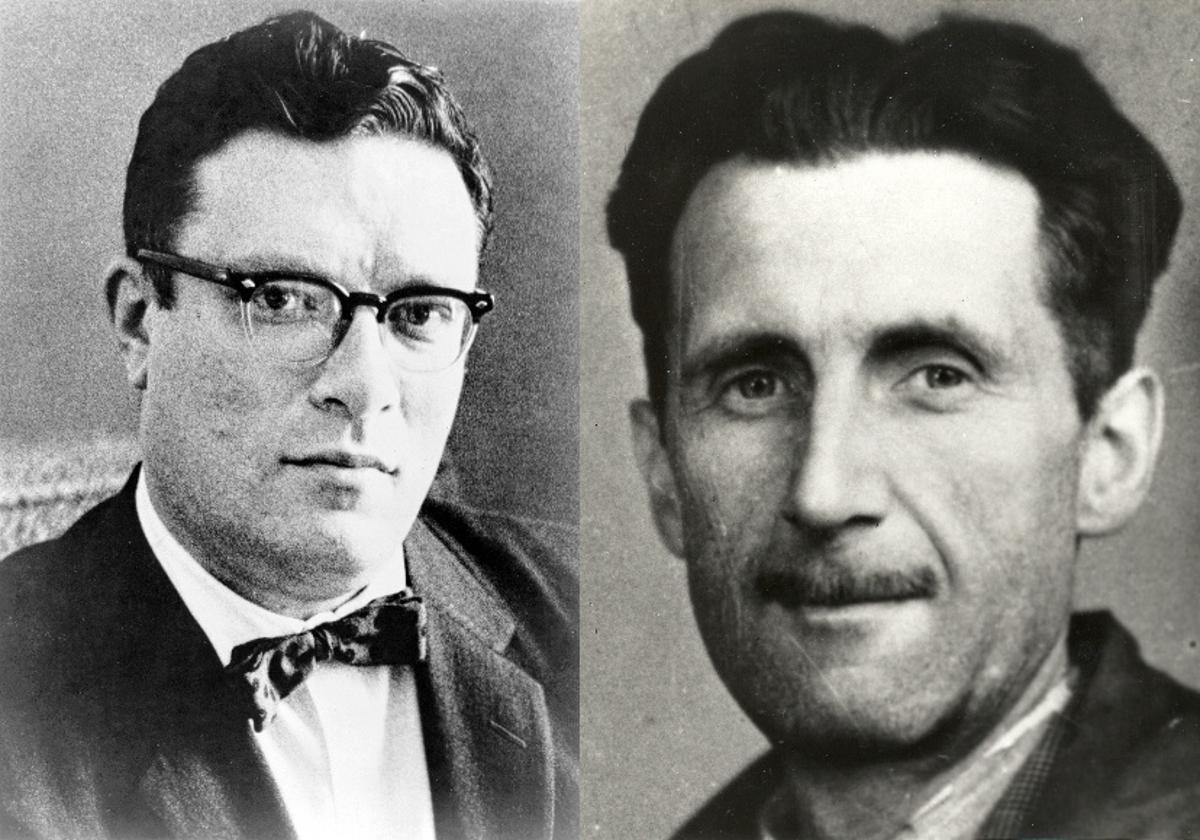
Isaac Asimov Reviews George Orwell’s Nineteen Eighty-Four and Calls It “Not Science Fiction, But a Distorted Nostalgia for a Past that Never Was”
Why It Matters
Asimov’s assessment challenges the enduring myth of *1984* as prophetic sci‑fi, prompting readers to reconsider the novel’s cultural weight and its influence on contemporary political discourse.
Key Takeaways
- •Asimov dismissed 1984 as lacking genuine science‑fiction vision
- •He argued Orwell copied Stalinist England, not imagined future technology
- •Asimov praised Orwell’s geopolitical foresight despite literary shortcomings
- •The term “Orwellian” now more associated with China than USSR
- •Asimov’s 1980 column reflects shifting cultural perception of dystopian fiction
Pulse Analysis
Isaac Asimov’s 1980 review of George Orwell’s *Nineteen Eighty‑Four* offers a rare insider’s perspective from a titan of science‑fiction. Rather than celebrating the novel’s prophetic aura, Asimov labeled it a nostalgic transplant of mid‑century England onto a fictional Moscow, pointing out its reliance on antiquated social habits and implausible surveillance tech. This critique underscores a tension that persists in literary circles: the line between speculative imagination and political allegory. By dismissing the book’s futuristic credentials, Asimov invites modern readers to separate the novel’s cultural mythos from its actual narrative scope.
The column also illuminates how Orwell’s imagined language, Newspeak, was perceived in the early 1980s. Asimov argued that political obfuscation historically expands vocabulary rather than compresses it, countering Orwell’s claim that fewer words could limit thought. While Asimov’s linguistic assessment may seem dated, it sparks ongoing debates about the power of language control in authoritarian regimes, a theme that resonates in today’s digital surveillance landscape. The discussion bridges classic literature with contemporary concerns about data privacy and algorithmic bias.
Beyond literary analysis, Asimov’s acknowledgment of Orwell’s geopolitical intuition remains striking. He noted the novel’s three super‑states—Oceania, Eurasia, Eastasia—mirrored the United States, Soviet Union, and China of the 1980s. Ironically, the term “Orwellian” has since shifted, now most often invoked to describe China’s information controls rather than the defunct USSR. Asimov’s review thus serves as a historical waypoint, marking how interpretations of dystopia evolve alongside global power dynamics, and reminding business leaders that cultural narratives can shape, and be reshaped by, shifting geopolitical realities.
Isaac Asimov Reviews George Orwell’s Nineteen Eighty-Four and Calls It “Not Science Fiction, But a Distorted Nostalgia for a Past that Never Was”
Comments
Want to join the conversation?
Loading comments...