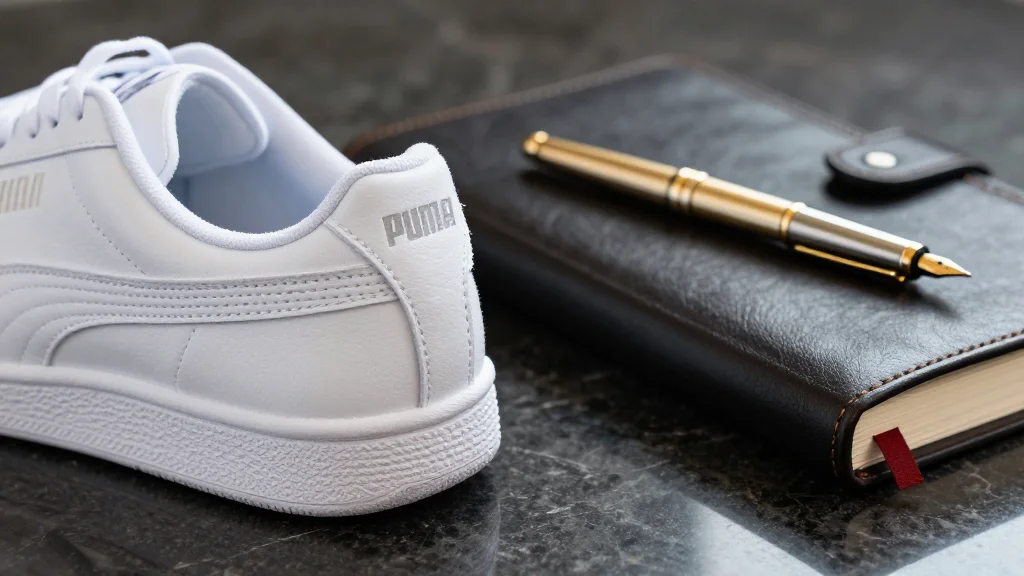
Puma Appoints Former Hugo Boss CEO Mark Langer as CFO to Drive Turnaround

Companies Mentioned
Why It Matters
Puma’s appointment of a seasoned executive from the luxury fashion sector underscores the growing convergence between apparel and sportswear finance, where brand equity, supply‑chain agility, and capital efficiency are increasingly intertwined. By bringing in Mark Langer, Puma signals a commitment to rigorous financial discipline, a prerequisite for regaining market share in a crowded segment dominated by Nike and Adidas. The hire also aims to restore investor confidence after a sales dip, which could influence the company’s cost of capital and its ability to fund growth initiatives. For CFOs across the industry, Langer’s move highlights the value of cross‑industry experience in navigating macro‑economic headwinds, inventory challenges, and shifting consumer preferences. As sportswear brands grapple with inflationary pressures and geopolitical uncertainty, the emphasis on strong financial stewardship is likely to shape boardroom decisions and talent pipelines for years to come.
Key Takeaways
- •Mark Langer, former Hugo Boss CEO, appointed Puma CFO effective September 30
- •Puma’s Q1 2026 sales fell 1% currency‑adjusted to €1.86 bn (≈ $2.0 bn)
- •Fourth senior hire in a month, part of broader leadership overhaul
- •Langer previously CFO of Douglas and long‑time Hugo Boss executive
- •Goal: restore profitable growth and boost investor confidence
Pulse Analysis
Puma’s decision to tap a luxury‑fashion veteran for its finance helm reflects a strategic pivot toward tighter cost control and brand‑centric growth. Langer’s dual experience as a CEO and CFO equips him to bridge operational execution with capital‑market expectations, a blend that is increasingly prized as sportswear firms confront margin compression. His background at Hugo Boss, where he navigated a high‑profile turnaround, suggests he can apply similar rigor to Puma’s inventory‑laden balance sheet and under‑performing North‑American channel.
The broader market context amplifies the significance of this hire. Nike and Adidas have both leaned heavily on data‑driven supply‑chain optimization and aggressive pricing power, leaving Puma to catch up on efficiency. By reinforcing its finance function, Puma aims to accelerate cash‑flow generation, a critical lever for funding product innovation and expanding its footprint in fast‑growing regions such as Latin America and the Middle East. If Langer can deliver disciplined capital allocation, Puma may not only stabilize its stock but also position itself as a viable acquisition target or strategic partner in the evolving sportswear consolidation landscape.
However, the success of this appointment hinges on execution speed. The company’s projected low‑ to mid‑single‑digit sales decline signals that macro‑economic headwinds will persist, and any misstep in cost‑cutting or investment timing could erode margins further. Stakeholders will watch closely for early indicators—such as inventory turnover improvements, operating expense ratios, and cash‑conversion cycles—in Puma’s upcoming interim reports. In sum, Langer’s arrival is a litmus test for whether a finance‑first approach can revive a brand that has struggled to keep pace with its larger rivals.
Puma appoints former Hugo Boss CEO Mark Langer as CFO to drive turnaround
Comments
Want to join the conversation?
Loading comments...