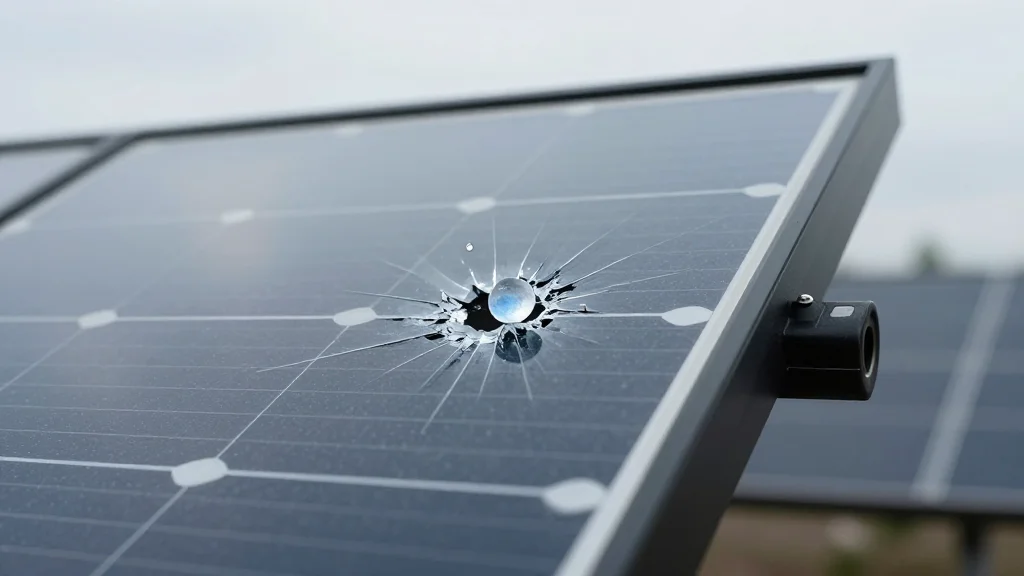
Cost-Effective Hail Resistance Comes From R&D and Insurance Feedback
Why It Matters
As hail damage drives rising insurance claims, more durable modules protect revenue and make solar projects financially viable in high‑risk regions.
Key Takeaways
- •Heliene uses 3.2 mm front glass and aluminum frames for hail durability
- •Collaboration with Sandia Labs provides validated models for destructive hail testing
- •Insurers now rank hail as top cause of PV project financial loss
- •Thicker glass and robust frames lower insurance premiums and improve bankability
- •Midwest and South growth drives need for stronger modules beyond thin glass
Pulse Analysis
Hail resistance has shifted from a niche concern to a core risk factor for utility‑scale solar developers. Insurance carriers now flag hail as the primary source of financial loss, prompting owners to demand modules that can survive high‑velocity ice impacts. Heliene’s approach—leveraging Canada’s generous R&D tax credit and partnering with Sandia National Labs—creates a data‑driven feedback loop that accelerates product hardening. By subjecting modules to destructive testing and cross‑validating with sophisticated mathematical models, the company builds a performance database that informs design choices and satisfies increasingly stringent insurer criteria.
The move eastward into the Midwest and Southern United States exposed a weakness in legacy thin‑glass designs. Early projects in California and Arizona could afford 2‑2.5 mm glass for its light weight and efficiency, but those modules falter under the region’s more frequent hailstorms. Heliene’s decision to standardize 3.2 mm tempered glass and aluminum frames strikes a balance between durability, weight, and cost, delivering a product that can absorb impact without compromising energy yield. This engineering shift not only reduces the likelihood of catastrophic module failure but also translates into lower insurance premiums, enhancing the overall financial model of a solar plant.
Beyond material upgrades, the industry is seeing a collaborative ecosystem of insurers, engineering firms, and research institutions. Companies like VDE Americas are refining stow‑mode algorithms to orient trackers away from vertical exposure during storms, while insurers push for verifiable testing standards. Heliene’s transparent image‑record process and willingness to share test data foster trust across the value chain, reinforcing project bankability. As the solar market matures, the convergence of rigorous R&D, real‑world insurance feedback, and cross‑sector partnerships will be the cornerstone of resilient, cost‑effective solar deployments.
Cost-effective hail resistance comes from R&D and insurance feedback
Comments
Want to join the conversation?
Loading comments...