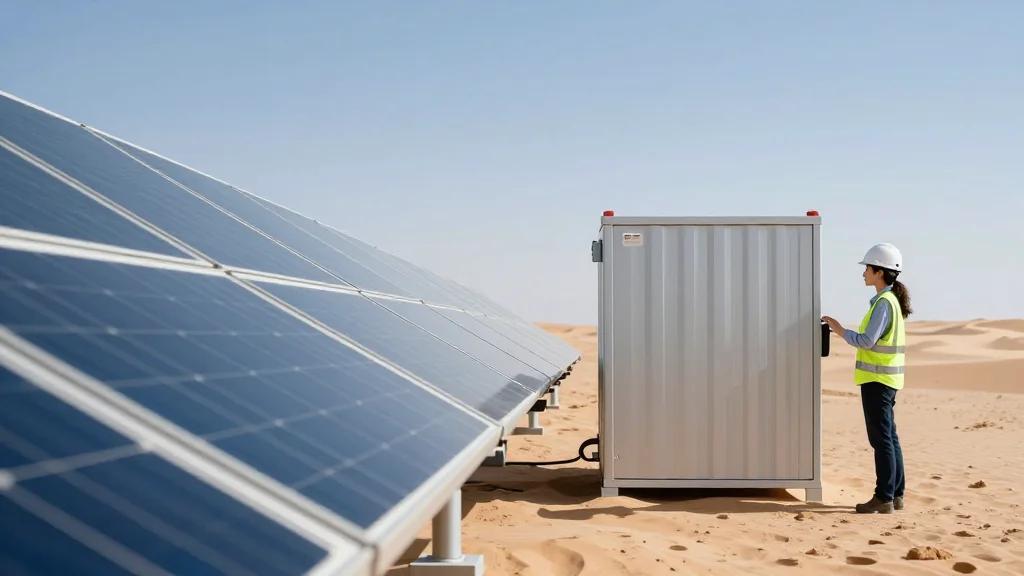
EBRD Grants $65 Million to Power Egypt’s 200 MW Solar‑Plus‑Storage Project

Companies Mentioned
Why It Matters
The loan marks a pivotal infusion of capital into Egypt’s renewable‑energy pipeline, a market that is rapidly scaling to meet ambitious national targets. By coupling financing with gender‑inclusive training, the EBRD is attempting to address both the supply‑side constraints of clean‑energy deployment and the demand‑side need for a diversified workforce. Successful execution could accelerate Egypt’s transition away from imported fossil fuels, improve grid resilience, and set a precedent for socially responsible financing in the region. Moreover, the Benban project demonstrates the growing commercial viability of solar‑plus‑storage configurations in emerging markets. As battery costs continue to fall, such hybrid assets become essential for integrating higher shares of variable renewable energy, reducing curtailment, and providing ancillary services that were traditionally supplied by fossil‑fuel plants. The EBRD’s involvement signals confidence that similar financing structures can be replicated across Africa, unlocking further gigawatts of clean capacity.
Key Takeaways
- •EBRD approved a $65 million loan to HAU Energy for a 200 MW solar‑plus‑120 MWh storage project in Benban, Egypt.
- •The loan includes a gender‑focused technical cooperation package to fund two green‑skills training programmes.
- •HAU Energy is owned by Meridiam, Hassan Allam Utilities and the EBRD; the project targets commercial operation in Q3 2026.
- •Egypt has attracted over €14.6 billion ($17.2 billion) from the EBRD across 225 projects since 2012.
- •The project is part of a broader portfolio delivering 1.2 GW solar and 720 MWh storage under PPAs, supporting Egypt’s 42 % renewable‑energy target for 2035.
Pulse Analysis
The EBRD’s $65 million loan is more than a line of credit; it is a strategic lever to accelerate Egypt’s renewable‑energy transition while embedding social outcomes. Historically, large‑scale financing in the region has focused on pure generation assets, often overlooking the ancillary services needed for grid stability. By explicitly financing a battery system alongside solar, the EBRD is acknowledging the operational realities of high‑penetration renewables and positioning Egypt to reduce reliance on costly peaker plants.
From a market perspective, the loan also reflects a shift toward blended finance models that combine debt, equity, and technical assistance. The EBRD’s equity stake in Infinity Power and its recent $40 million equity increase illustrate a willingness to share risk and align incentives with local developers. This approach can de‑risk projects for commercial lenders, encouraging broader private‑sector participation. If the Benban plant meets its timeline and performance targets, it could unlock additional financing for the 1 GW Minya project and other pipeline assets, potentially adding several gigawatts of capacity across North Africa.
Finally, the gender‑inclusion component could have ripple effects beyond the immediate project. By creating certified training pathways for women, the EBRD is addressing a chronic talent shortage in the renewable‑energy sector while fostering inclusive growth. Should the outcomes be measurable—higher female participation rates, improved retention, and career progression—other multilateral lenders may adopt similar frameworks, making social impact a standard criterion in climate‑tech financing.
EBRD Grants $65 Million to Power Egypt’s 200 MW Solar‑Plus‑Storage Project
Comments
Want to join the conversation?
Loading comments...