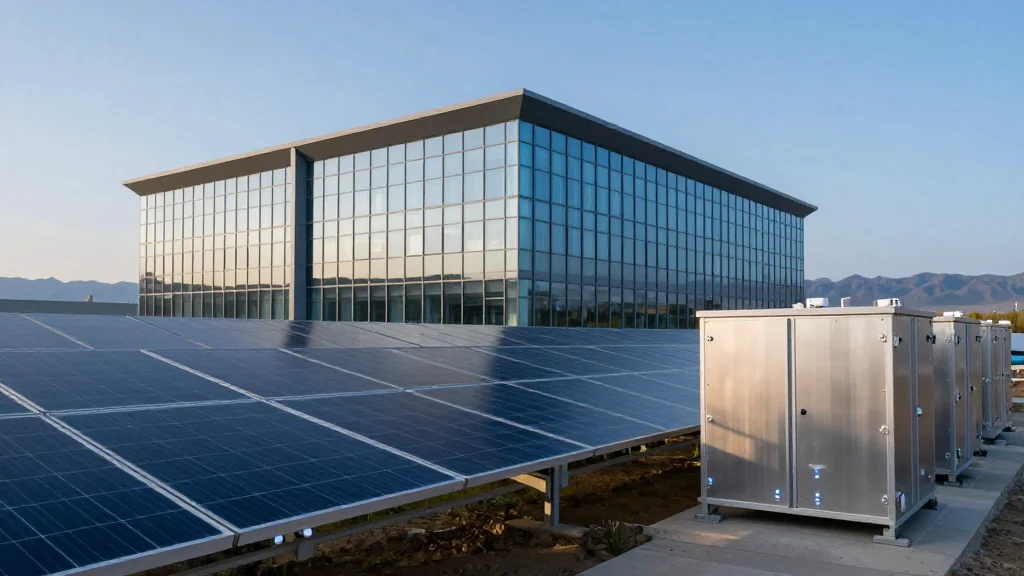
Enbridge to Invest $1.2B in 365‑MW Solar, 200‑MW Battery Project Powering Meta’s Wyoming Data Center

Companies Mentioned
Why It Matters
The Enbridge‑Meta solar‑plus‑storage project illustrates how utility‑tech collaborations can unlock large‑scale renewable capacity tailored to the unique load profiles of hyperscale data centers. By securing a dedicated clean‑energy supply, Meta advances its net‑zero commitments while reducing reliance on fossil‑fuel peaker plants that traditionally support data‑center demand spikes. The use of the LPCS tariff also demonstrates a policy innovation that balances corporate energy needs with consumer rate protection, a model other jurisdictions may emulate. Beyond the immediate power supply, the project signals a shift in capital allocation toward integrated renewable‑plus‑storage assets. Investors are seeing lower risk profiles for projects that combine generation with firming capabilities, potentially accelerating financing for similar ventures. As more data‑center operators lock in long‑term renewable contracts, utilities like Enbridge can achieve economies of scale, lower per‑megawatt costs, and accelerate the broader decarbonization of the electricity grid.
Key Takeaways
- •Enbridge will invest $1.2 billion to build a 365‑MW solar farm and 200‑MW/1,600 MWh battery in Wyoming.
- •The facility will supply 100 percent of power to Meta’s Cheyenne data‑center campus under Wyoming’s LPCS tariff.
- •Phase I is slated for service by end‑2027; Phase II could add 370 MW of solar and double storage capacity.
- •Tesla will provide the battery modules; Clayco is handling construction management.
- •The partnership expands Enbridge‑Meta clean‑energy collaborations to a total of 1.6 GW of renewable assets.
Pulse Analysis
Enbridge’s $1.2 billion bet on a solar‑plus‑storage hub for Meta reflects a broader strategic pivot among traditional utilities toward serving high‑intensity, low‑carbon customers. Historically, utilities have focused on residential and commercial load, but the data‑center segment offers predictable, high‑value demand that can justify the upfront capital intensity of large‑scale batteries. By locking in a long‑term offtake with Meta, Enbridge mitigates revenue risk and creates a stable cash flow that can attract lower‑cost debt financing, a critical factor in the current low‑interest‑rate environment.
The project also highlights the importance of policy levers like Wyoming’s LPCS tariff, which decouples corporate renewable procurement from residential rate impacts. This design reduces political friction and could inspire similar frameworks in other states eager to attract data‑center investment without inflating consumer bills. As more tech firms pursue renewable PPAs, utilities that can offer bundled generation‑storage solutions under such tariffs will likely capture a disproportionate share of the emerging market.
Looking ahead, the success of the Cowboy Project could accelerate a cascade effect: other utilities may replicate the model, and data‑center developers may prioritize sites with ready‑made renewable‑plus‑storage infrastructure. This could compress the timeline for achieving sector‑wide emissions reductions, a key component of the U.S. climate agenda. However, the project's reliance on battery technology supplied by Tesla introduces supply‑chain dependencies that could become a bottleneck if demand for lithium‑ion cells outpaces production capacity. Monitoring battery cost trajectories and potential recycling pathways will be essential to ensure the economic viability of future phases.
Enbridge to Invest $1.2B in 365‑MW Solar, 200‑MW Battery Project Powering Meta’s Wyoming Data Center
Comments
Want to join the conversation?
Loading comments...