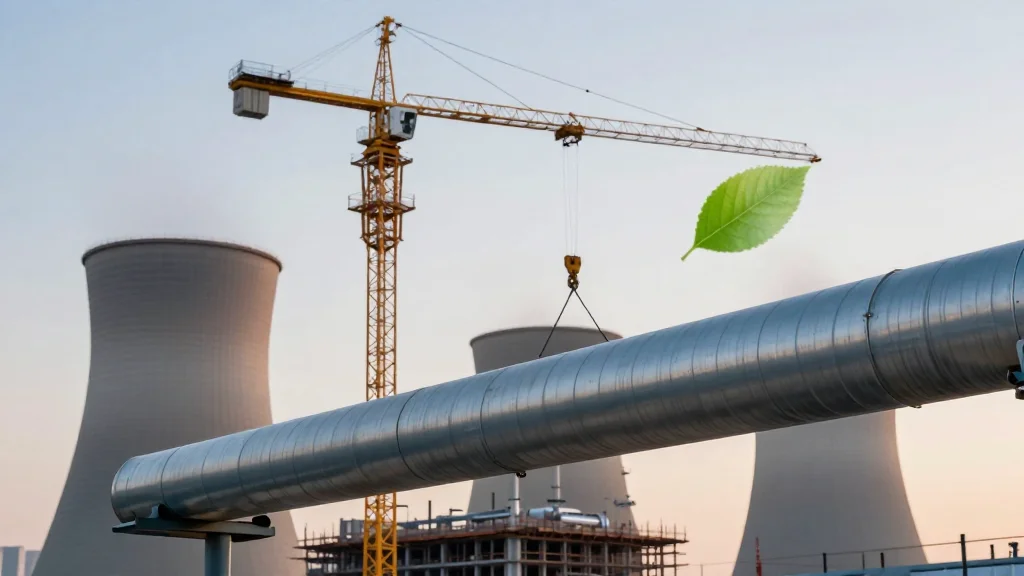
EPA Proposes Rule to Let Power Plants and Data Centers Begin Construction Before Air Permits

Companies Mentioned

Why It Matters
The EPA’s proposal could reshape the permitting landscape that climate‑tech companies rely on to demonstrate compliance and secure financing. By allowing early construction, developers may lock in capital and accelerate timelines, but the move also risks sidelining air‑quality reviews that are central to community health and climate‑impact assessments. If adopted, the rule could set a precedent for other sectors seeking regulatory shortcuts, potentially weakening the Clean Air Act’s enforcement and complicating efforts to meet national emissions reduction targets. For climate‑tech investors and innovators, the rule creates both opportunity and risk. Faster build‑outs could enable quicker deployment of data‑center infrastructure needed for AI and high‑performance computing, yet the associated rise in natural‑gas generation threatens to lock in additional fossil‑fuel emissions at a time when the sector is under pressure to decarbonize. The outcome will influence how climate‑tech firms balance speed, cost and sustainability in future projects.
Key Takeaways
- •EPA proposes allowing construction of non‑emitting components for gas plants, data centers and factories before air permits are issued.
- •Administrator Lee Zeldin frames the change as a solution to infrastructure delays and a boost for the AI race.
- •Environmental groups warn the rule could undermine Clean Air Act protections and increase community health risks.
- •Sierra Club reports planned gas‑power capacity could rise by nearly 50 % nationwide, often paired with new data‑center projects.
- •The proposal opens a 45‑day public comment period; lawsuits are expected if the rule is finalized.
Pulse Analysis
The EPA’s draft rule reflects a broader policy tilt toward expediting high‑tech infrastructure at the expense of traditional environmental safeguards. Historically, permitting delays have been a major friction point for large‑scale energy projects, prompting periodic calls for reform. However, the current administration’s emphasis on speed—driven by geopolitical competition in AI—appears to prioritize short‑term economic gains over the long‑term climate objectives that have guided recent regulatory trends.
If the rule passes, developers could front‑load capital expenditures, reducing financing risk and potentially attracting more private investment into data‑center and power‑plant projects. Yet the environmental cost could be substantial: early construction may lock in fossil‑fuel pathways, making it harder to pivot to renewable alternatives later. This creates a strategic dilemma for climate‑tech firms that must decide whether to align with faster, carbon‑intensive supply chains or to advocate for stricter permitting that safeguards future decarbonization pathways.
Stakeholders should monitor the comment period closely. A strong coalition of environmental NGOs, public‑health advocates and some state regulators could force the EPA to scale back the proposal or introduce mitigating provisions, such as stricter post‑construction emissions testing. Conversely, a swift approval could accelerate the rollout of data‑center capacity, reinforcing the United States’ position in the AI market but potentially locking in additional greenhouse‑gas emissions that conflict with national climate commitments.
EPA Proposes Rule to Let Power Plants and Data Centers Begin Construction Before Air Permits
Comments
Want to join the conversation?
Loading comments...