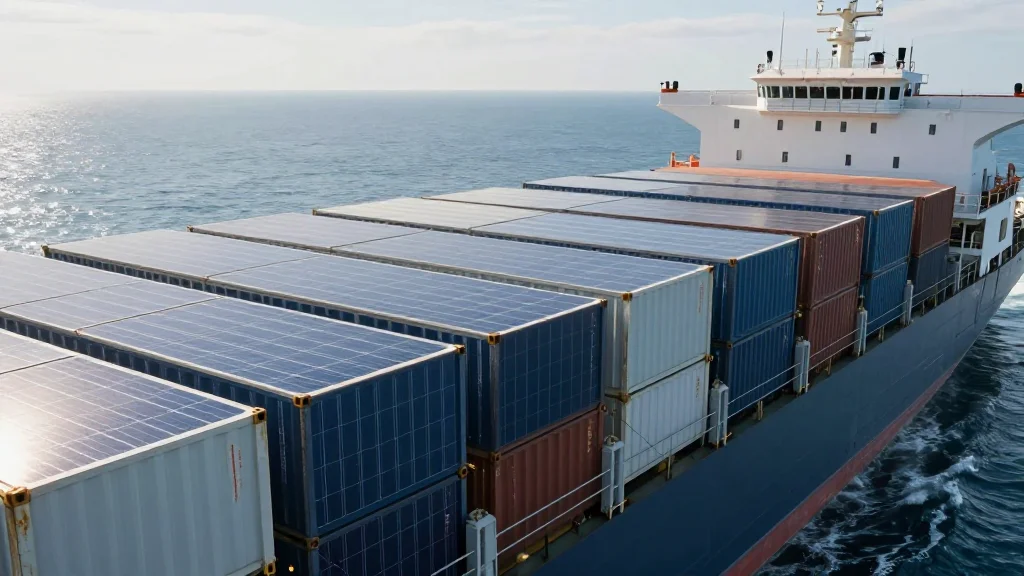
Iran War Fuels $22.3 Bn Surge in Chinese Clean‑tech Exports, Boosting BYD and CATL

Companies Mentioned

Why It Matters
The Iran war has exposed the fragility of global fossil‑fuel supply chains, accelerating a pivot to renewable energy that favors manufacturers with scale and cost advantages. China’s near‑monopoly in battery cells, EVs and solar modules positions it to capture a larger slice of the $1.5 trillion global clean‑tech market, reshaping trade flows and geopolitical influence. For climate‑tech investors, the surge signals both heightened demand for low‑carbon solutions and heightened exposure to Chinese policy and trade dynamics. For policymakers in Europe and Asia, the rapid influx of Chinese clean‑tech offers a short‑term buffer against energy price spikes but also raises strategic concerns about supply‑chain dependence. Balancing immediate energy security with long‑term diversification will be a key challenge as nations negotiate renewable‑energy targets and consider domestic manufacturing incentives.
Key Takeaways
- •Chinese clean‑tech exports hit $22.3 bn in December, up 47% YoY.
- •BYD and CATL shares rose 11% and 24% in March on export optimism.
- •China produces >70% of global EVs and ~85% of battery cells.
- •Fitch expects renewable‑power and storage investment to surge in Europe.
- •U.S. tariffs keep Chinese EVs out of the American market, boosting export share.
Pulse Analysis
The Iran war has acted as a catalyst, not a creator, of the structural shift toward clean‑technology that began under China’s five‑year plan. What is new is the speed at which import‑dependent economies are re‑routing capital to Chinese suppliers, a trend that could lock in market share for years. Historically, geopolitical shocks have spurred temporary demand spikes—think the 1970s oil crises—but the confluence of China’s manufacturing scale, aggressive subsidies, and a global policy push for net‑zero creates a more durable realignment.
Investors should view the current rally as a two‑stage opportunity. In the near term, companies like BYD and CATL are likely to enjoy order‑book expansions as European utilities and automotive OEMs scramble for batteries and EVs to hedge against oil volatility. In the medium term, the risk shifts to policy and supply‑chain resilience. If the U.S. eases tariffs or if Europe accelerates domestic battery‑cell projects, Chinese dominance could face headwinds. Conversely, prolonged geopolitical tension could deepen reliance on Chinese imports, prompting strategic stockpiling and potentially sparking a new wave of industrial policy in the West.
From a climate perspective, the surge in Chinese clean‑tech sales is a net positive for emissions reductions, assuming the products replace fossil‑fuel‑intensive alternatives. However, the environmental footprint of rapid manufacturing scale‑up—particularly in mining for lithium and rare earths—must be managed. Stakeholders will need to monitor how Chinese firms address supply‑chain sustainability, as any backlash could erode the market gains achieved under the current geopolitical backdrop.
Iran war fuels $22.3 bn surge in Chinese clean‑tech exports, boosting BYD and CATL
Comments
Want to join the conversation?
Loading comments...