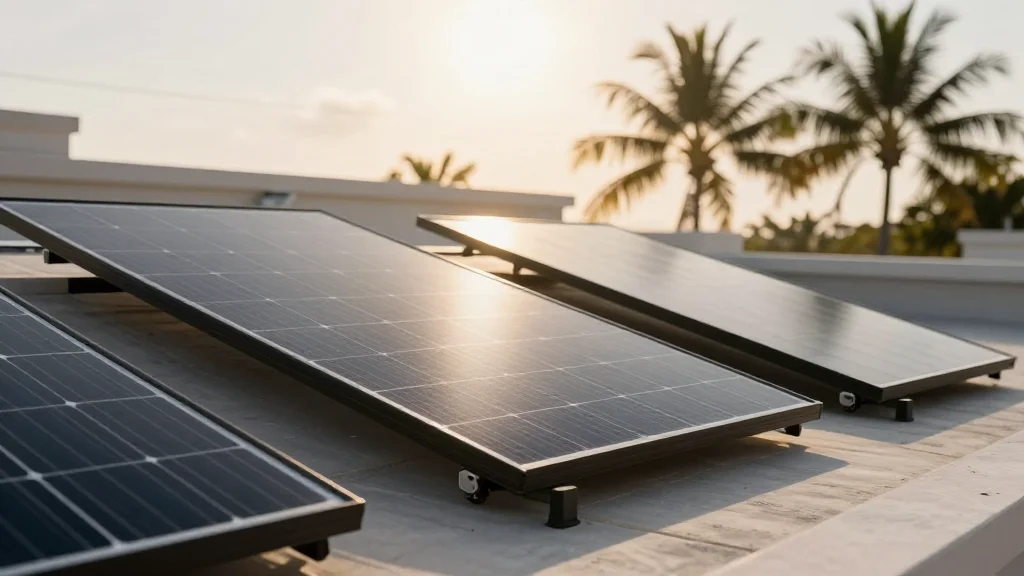
Iran War Fuels 70% Surge in Philippine Rooftop Solar, Boosting Chinese Exporters

Companies Mentioned
Why It Matters
The rapid uptake of rooftop solar in the Philippines illustrates how geopolitical shocks can accelerate renewable adoption in energy‑intensive economies. By turning a fuel‑price crisis into a catalyst for clean‑energy investment, the region is reducing its reliance on imported oil and gas, enhancing energy security, and creating new demand for Chinese solar technology. This shift also pressures neighboring governments to fast‑track solar-friendly policies, potentially reshaping the Southeast Asian energy mix for decades. If the trend endures, Chinese solar manufacturers could cement their dominance in a market traditionally fragmented across multiple suppliers. At the same time, the surge may spur local supply‑chain development, job creation, and grid‑integration challenges that will test the capacity of regional utilities and regulators to accommodate distributed generation.
Key Takeaways
- •Philippine rooftop solar installations rose 70% weekly after the Iran war spiked fuel prices.
- •Customer inquiries increased sixfold, from 115 in February to over 450 by mid‑April.
- •Fuel and gas price spikes have cost Filipino consumers and businesses more than $600 million.
- •Chinese clean‑tech exports reached a record high in March, driven by demand for LONGi panels and Dyness batteries.
- •Indonesia, Vietnam and Thailand are revising rooftop‑solar targets in response to the energy crisis.
Pulse Analysis
The Iran‑driven fuel shock has acted as a catalyst that compresses a multi‑year adoption curve into a matter of weeks. Historically, rooftop solar growth in Southeast Asia has been hampered by high upfront costs and limited financing options. The sudden surge in consumer willingness to invest, as evidenced by a six‑fold rise in inquiries, suggests that price‑elastic demand can be unlocked when conventional energy becomes prohibitively expensive. This mirrors past spikes in solar uptake during oil crises, but the current wave is amplified by a mature Chinese supply chain that can meet demand at scale and at competitive prices.
China’s record export performance underscores a strategic advantage: its ability to flood the market with affordable, high‑efficiency modules and batteries. For regional installers, this reduces capital barriers and shortens project timelines, but it also raises concerns about supply‑chain concentration. Dependence on a single exporter could expose the market to geopolitical retaliation or trade restrictions, a risk that policymakers may need to mitigate through diversification or local manufacturing incentives.
Looking ahead, the durability of this boom hinges on two variables: sustained policy support and the trajectory of global fuel prices. If governments lock in favorable net‑metering rates, tax incentives, or financing schemes, the solar market could retain its momentum even after fuel prices normalize. Conversely, a rapid de‑escalation of the Iran conflict could blunt the price shock, potentially slowing installations unless backed by robust policy frameworks. Investors and utilities should therefore monitor both geopolitical developments and legislative actions to gauge the long‑term viability of this emergent renewable wave.
Iran War Fuels 70% Surge in Philippine Rooftop Solar, Boosting Chinese Exporters
Comments
Want to join the conversation?
Loading comments...