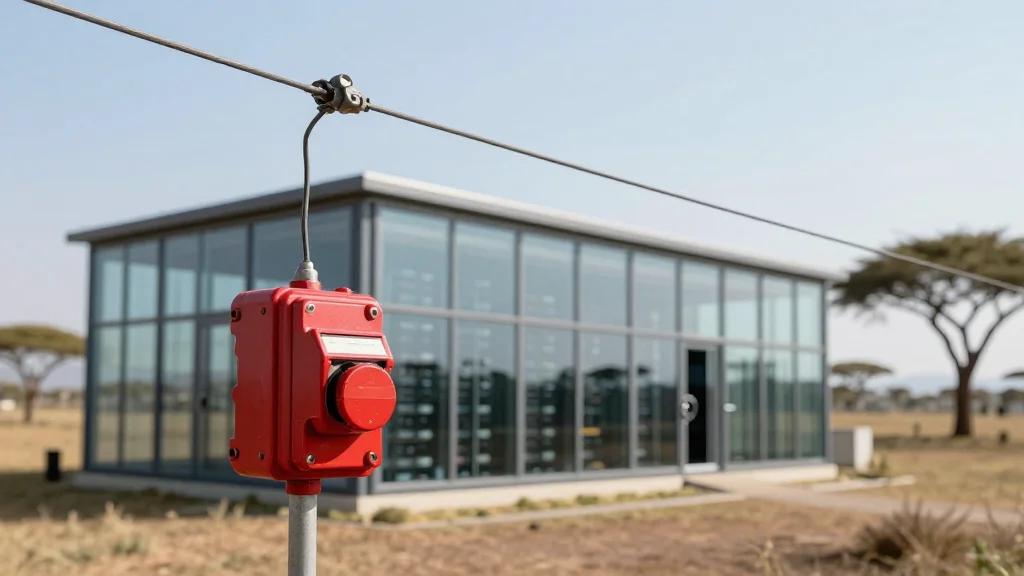
Kenya Stalls $1 Bn Microsoft AI Data Centre over Power Shortage

Companies Mentioned
Why It Matters
The suspension of a high‑profile AI data centre signals that Africa’s rapid digital transformation may be throttled by energy bottlenecks. As global cloud providers race to capture market share, the ability of host countries to deliver reliable, large‑scale power will become a decisive factor in where future data‑centre ecosystems emerge. Kenya’s experience could serve as a cautionary tale for other nations courting similar projects without first securing sufficient grid capacity. Moreover, the episode highlights the interplay between geopolitics and infrastructure. The data centre was touted as a flagship of U.S.–Kenya cooperation, yet the practical constraints of energy supply have forced a reassessment. How Kenya resolves its power deficit will influence not only its own tech ambitions but also the strategic positioning of competing powers, notably China, in the African digital arena.
Key Takeaways
- •Kenyan President William Ruto halted a $1 bn Microsoft‑G42 data centre due to power constraints.
- •The project would require roughly 1,000 MW, about one‑third of Kenya’s current 3,000 MW installed capacity.
- •Kenya aims to increase national generation to 10,000 MW by 2030, seeking $38 bn in financing.
- •Airtel Africa’s Nxtra is building a 44 MW data centre in Tatu City, the region’s largest to date.
- •Microsoft announced a separate $329 million cloud investment in South Africa in April 2024.
Pulse Analysis
Kenya’s decision to suspend the Microsoft‑G42 data centre is a textbook example of the infrastructure‑first dilemma facing emerging markets. While the allure of hosting a hyperscale AI hub promises economic uplift, job creation, and geopolitical clout, the underlying requirement—massive, reliable electricity—remains a hard constraint. Historically, data‑centre rollouts have thrived in regions with abundant, low‑cost power, such as the Pacific Northwest in the United States or the Nordic countries in Europe. Kenya’s reliance on geothermal energy is a strategic advantage, yet the current grid’s limited capacity forces a trade‑off between expanding renewable generation and meeting immediate compute demand.
The pause also reshapes the competitive landscape for cloud providers in Africa. Microsoft’s broader African strategy, underscored by a $329 million injection into South Africa, suggests the company is diversifying its risk across multiple markets rather than betting on a single flagship project. Competitors like Amazon Web Services and Google Cloud may view Kenya’s grid shortfall as an opening to propose modular, renewable‑micro‑grid‑powered data centres that sidestep national grid limitations. Such approaches could accelerate deployment timelines and reduce political risk.
Looking forward, the key question is whether Kenya can marshal the $38 bn financing needed to quintuple its generation capacity within the next seven years. Success would not only revive the Microsoft project but also cement Kenya’s status as a digital hub for East Africa. Failure, however, could push multinational investors toward markets with more mature power infrastructure, slowing the continent’s AI adoption curve. Stakeholders should monitor policy reforms, private‑sector power‑purchase agreements, and the rollout of new geothermal or solar farms as leading indicators of whether Kenya can bridge the energy gap before the next wave of AI‑driven demand arrives.
Kenya stalls $1 bn Microsoft AI data centre over power shortage
Comments
Want to join the conversation?
Loading comments...