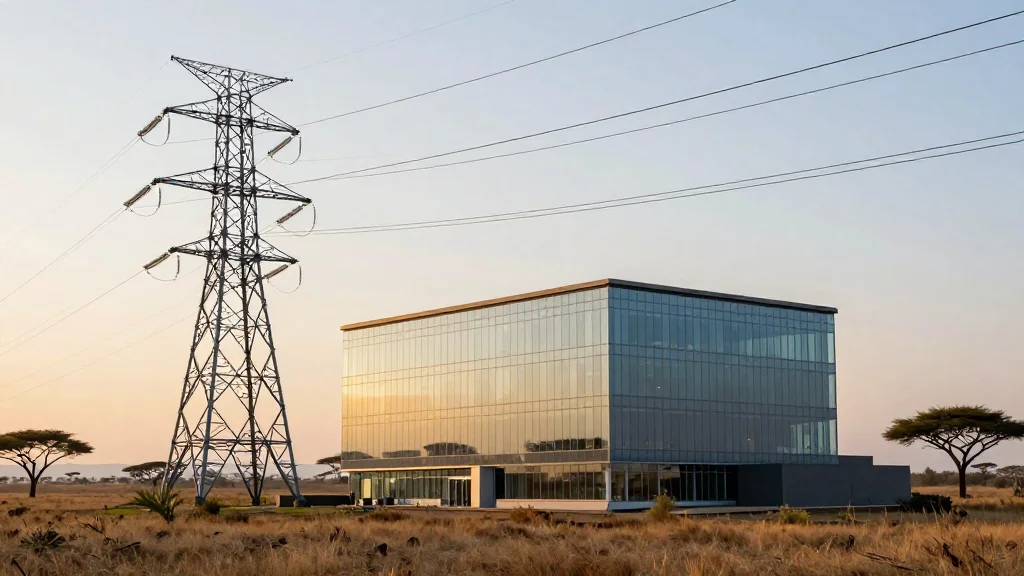
Kenya's $860 M Microsoft‑G42 Data Centre Faces Power Shortfall

Companies Mentioned
Why It Matters
The power shortfall exposes a fundamental tension between rapid digitalisation and climate‑tech goals in developing economies. Large AI data centres are energy‑intensive, and without reliable, low‑carbon power, they risk undermining renewable‑energy targets and increasing reliance on fossil‑fuel peakers. Kenya’s experience could shape policy frameworks for future AI‑driven infrastructure, prompting stricter assessments of grid readiness and encouraging co‑investment in renewable generation. Beyond Kenya, the episode signals to global tech firms that securing adequate, clean power is a prerequisite for large‑scale AI deployments in emerging markets. It may accelerate the industry’s shift toward more modular, energy‑efficient designs and spur partnerships that bundle data‑centre construction with renewable‑energy projects, aligning digital growth with climate‑tech imperatives.
Key Takeaways
- •Microsoft‑G42 data centre valued at Sh129 billion (~$860 million) announced in 2024.
- •President William Ruto warned the 1,000 MW power demand exceeds Kenya’s 2,300 MW capacity.
- •Peak national demand reached 3,000 MW in 2025, straining the grid during evening peaks.
- •Daily load‑shedding (5 p.m.–10 p.m.) already in place to stabilise supply.
- •Potential solutions include on‑site renewables, battery storage, or redesigning the facility.
Pulse Analysis
Kenya’s grid bottleneck is a textbook case of infrastructure lagging behind digital ambition. Historically, large‑scale data‑centre projects have thrived in regions with abundant, cheap electricity—think the Pacific Northwest or the Gulf Coast. Kenya’s push to leapfrog into AI without a commensurate power strategy risks repeating the ‘energy‑first’ missteps seen in other fast‑growing economies. The government’s reliance on load‑shedding as a stop‑gap underscores the urgency of scaling renewable capacity, yet financing such projects remains a hurdle.
From a market perspective, the uncertainty could deter not only Microsoft and G42 but also other multinational cloud providers eyeing Africa. Investors may demand clearer power‑purchase agreements and guarantees of carbon‑neutral supply, potentially reshaping deal structures. Conversely, the crisis could catalyse a new wave of climate‑tech financing, where data‑centre developers partner directly with renewable‑energy firms to co‑locate generation assets, creating bundled revenue streams and reducing grid strain.
Looking ahead, Kenya’s ability to resolve the power gap will be a litmus test for the continent’s readiness to host next‑generation AI infrastructure. Success would validate a model where digital and climate investments are synchronized, while failure could reinforce the narrative that emerging markets must first secure reliable, clean energy before scaling AI‑intensive workloads.
Kenya's $860 M Microsoft‑G42 Data Centre Faces Power Shortfall
Comments
Want to join the conversation?
Loading comments...