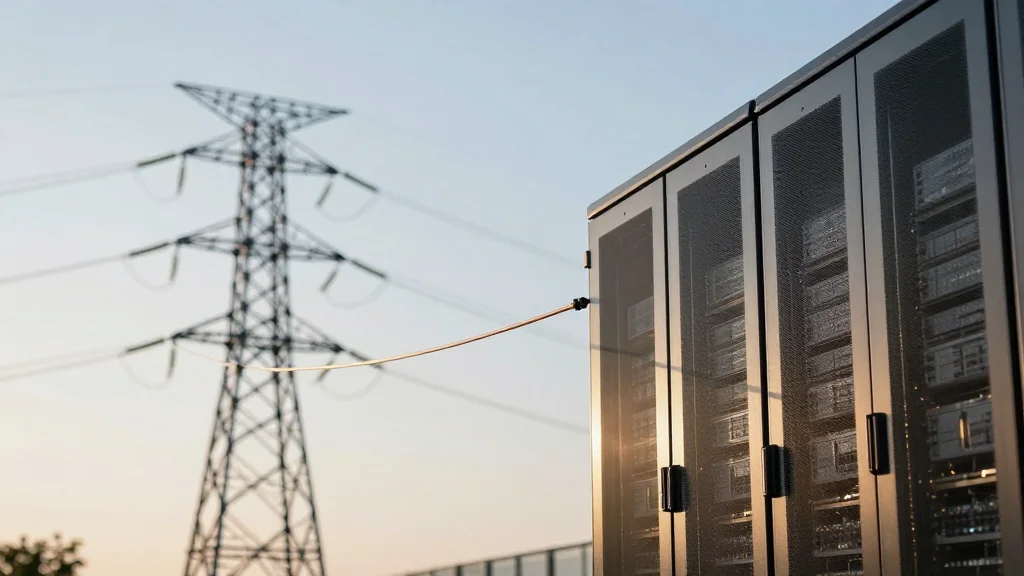
Senate Bill Forces AI Data Centers to Foot Grid Upgrade Costs

Companies Mentioned
Why It Matters
The act targets a pivotal friction point in the climate‑tech transition: the balance between expanding AI-driven digital infrastructure and maintaining an affordable, reliable electricity grid. By forcing AI data centers to internalize the cost of transmission upgrades, the legislation could accelerate the shift toward on‑site renewable generation and demand‑response solutions, directly supporting decarbonization targets. At the same time, the policy may reshape competitive dynamics, favoring firms with deep capital reserves and potentially slowing AI deployment in cost‑sensitive regions, influencing the geographic distribution of future data‑center investments. Furthermore, the bill sets a precedent for how regulators might handle other emerging high‑load technologies, such as green‑hydrogen electrolyzers or large‑scale battery factories. If successful, it could provide a policy framework that aligns massive electricity consumers with grid resilience and climate objectives, reinforcing the United States' broader climate‑tech strategy.
Key Takeaways
- •Sen. Adam Schiff introduced the Energy Cost Fairness and Reliability Act of 2026.
- •Facilities over 50 MW must pay 100% of interconnection study and transmission upgrade costs.
- •FERC would establish a formal load interconnection queue for large‑load customers.
- •The bill prohibits utilities from passing upgrade costs onto other ratepayers.
- •Operators must demonstrate demand flexibility and secure new generating resources.
Pulse Analysis
The Senate's proposal arrives at a moment when AI workloads are outpacing traditional grid planning cycles. Historically, utilities have absorbed the cost of new large‑scale loads, spreading them across all customers—a model that worked when demand growth was modest. Today's AI‑driven data centers, however, can consume the equivalent of a small city, prompting a rethink of cost allocation. By shifting the financial responsibility to the users, the bill mirrors European approaches where high‑load industrial customers pay for dedicated grid reinforcement.
From a market perspective, the legislation could catalyze a wave of private investment in renewable generation tied to data‑center sites. Companies already experimenting with solar farms, wind projects, and battery storage to secure clean, reliable power may find a clearer business case under the new rules. This aligns with the broader climate‑tech agenda of decarbonizing electricity demand, but it also raises the capital threshold for entry, potentially consolidating the market around the biggest players.
Looking ahead, the act's demand‑flexibility requirement could become a de‑facto standard for all high‑load technologies, encouraging the development of advanced load‑shifting algorithms and real‑time grid services. If the Senate passes the bill, we may see a new class of AI‑optimized, grid‑responsive data centers that not only reduce emissions but also provide ancillary services to the grid, creating a feedback loop that benefits both the climate and the bottom line. The key question remains whether the policy will be fine‑tuned enough to avoid stifling innovation while delivering the intended consumer protection.
Senate Bill Forces AI Data Centers to Foot Grid Upgrade Costs
Comments
Want to join the conversation?
Loading comments...