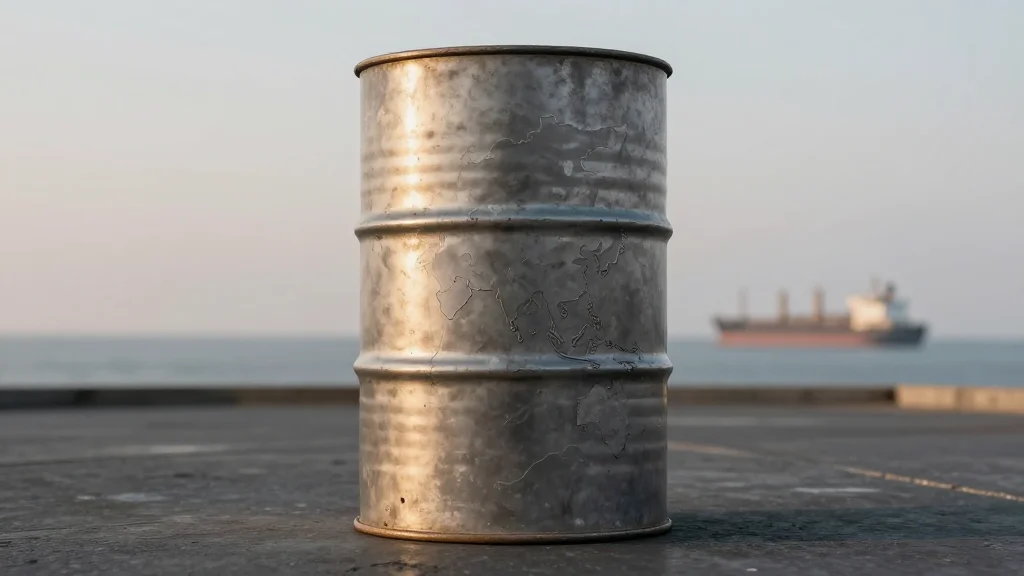
Asia‑Pacific Faces Deepening Fuel Shock as Middle East Conflict Persists

Companies Mentioned

Bloomberg
Why It Matters
The fuel shock highlights the fragility of Asia‑Pacific’s reliance on Middle Eastern oil and the limited buffer capacity of national reserves. Prolonged supply constraints risk cascading effects on food security, manufacturing output and trade balances, potentially reshaping global commodity flows. Moreover, the fiscal burden of subsidies and export controls could limit governments’ ability to respond to future crises, prompting a strategic pivot toward diversified energy sources and stronger regional coordination. If the Strait of Hormuz remains closed, the region may accelerate a shift toward alternative fuels, including coal‑to‑gas projects, LNG imports from new regions, and increased investment in renewable energy. These adjustments could alter demand dynamics for crude oil, affect global price benchmarks, and influence the strategic calculations of oil‑producing nations seeking new markets.
Key Takeaways
- •Asia‑Pacific governments have rolled out subsidies, export curbs and WFH mandates to blunt fuel price spikes.
- •Singapore announced a S$1 billion ($784 million) support package for energy security.
- •Japan’s strategic oil reserves are estimated at up to 1.4 billion barrels, but the country has avoided tapping them.
- •China will receive nearly 16 million barrels of Venezuelan crude in May‑June and is reviving coal‑to‑gas projects.
- •Truck owners in Japan report diesel rationing, threatening logistics that move ~70 % of cargo.
Pulse Analysis
The current fuel shock is a stress test for Asia‑Pacific’s energy architecture, exposing the limits of ad‑hoc policy tools. While subsidies and export restrictions provide immediate relief, they also inflate fiscal deficits and distort market signals that would otherwise encourage longer‑term diversification. Historically, the region has relied on a thin set of supply routes; the prolonged closure of the Strait of Hormuz forces a re‑evaluation of that dependence.
China’s aggressive procurement of Venezuelan and Russian crude signals a willingness to sidestep geopolitical constraints, but it also raises questions about the sustainability of such imports amid sanctions and price volatility. Japan’s restraint in tapping its 1.4 billion‑barrel reserves reflects a strategic calculus to preserve buffer capacity for future shocks, yet the reported diesel rationing suggests that commercial reserves are already under strain. Singapore’s sizable support package underscores the fiscal elasticity smaller economies can deploy, but it also highlights the uneven capacity across the region to absorb shock.
Looking ahead, the reopening of the Strait of Hormuz could provide a rapid reprieve, but the episode will likely accelerate policy shifts toward energy security—greater strategic stockpiles, diversified import sources, and a faster transition to renewables. Investors should watch for increased capital flows into LNG infrastructure, coal‑to‑gas conversions, and renewable projects, as well as potential consolidation among regional refiners seeking economies of scale to weather future disruptions.
Asia‑Pacific Faces Deepening Fuel Shock as Middle East Conflict Persists
Comments
Want to join the conversation?
Loading comments...