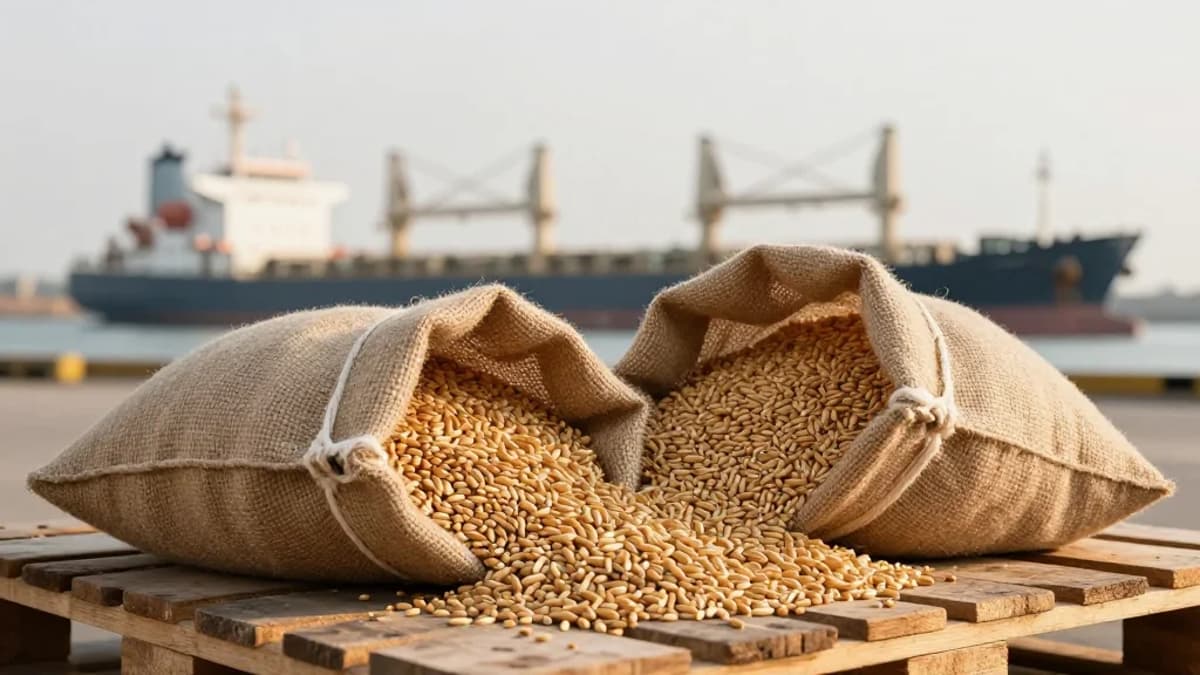
Government Allows Export of 25 Lakh Tonnes of Wheat
•February 24, 2026
0
Why It Matters
The quota offers farmers higher price incentives while preserving domestic food security, and signals a more market‑responsive trade stance that could affect global wheat dynamics.
Key Takeaways
- •Export limit set at 25 lakh tonnes wheat
- •Additional 5 LMT wheat products also permitted
- •Overall wheat export ban remains in place
- •Policy aims to boost farmer incomes
- •Detailed export procedures to be released later
Pulse Analysis
India produces roughly 108 million tonnes of wheat annually, making it one of the world’s top grain exporters. Historically, the government has imposed a blanket export ban to safeguard domestic food security, especially during monsoon failures or price volatility. In January 2026, the Ministry of Commerce announced a limited exemption, allowing the shipment of 25 lakh metric tonnes of raw wheat and an extra five lakh tonnes of processed wheat products. The move reflects a calibrated approach, balancing farmer incentives with the need to keep staple supplies stable. The exemption also aligns with the government's broader goal of diversifying agricultural export baskets.
For Indian cultivators, the approved quota translates into a potential price premium, as export opportunities often lift farmgate rates above domestic averages. By channeling a controlled volume abroad, the government hopes to prevent a sharp domestic price dip that could arise from oversupply, while still rewarding producers for a bumper harvest. The policy also signals a shift toward market‑oriented interventions, encouraging agribusinesses to invest in storage and logistics to meet export standards. Enhanced earnings can stimulate rural consumption, feeding back into the domestic economy.
On the global stage, releasing 2.5 million tonnes of Indian wheat adds modest supply to a market already grappling with climate‑induced shortages in the Black Sea region. While the quantity is unlikely to sway world prices dramatically, it enhances India’s credibility as a reliable, albeit cautious, exporter. Analysts will watch how the detailed modalities—such as licensing, quality checks, and destination caps—shape trade flows, and whether future windows will expand as domestic stocks remain ample. If successful, the scheme could pave the way for larger export licences in subsequent seasons.
Government allows export of 25 lakh tonnes of wheat
0
Comments
Want to join the conversation?
Loading comments...