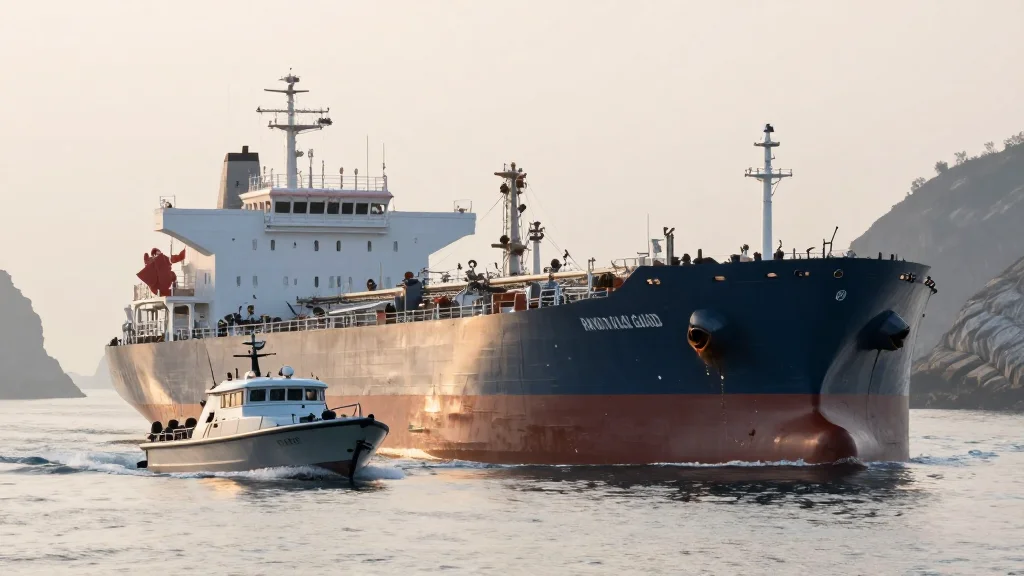
Iranian Gunboats Fire on Tanker as Strait of Hormuz Closed, Threatening Global Oil Flow

Why It Matters
The Strait of Hormuz is a chokepoint for the world’s energy supply; a full closure can instantly tighten global oil markets, raise prices, and strain economies already coping with inflationary pressures. By using the strait as a geopolitical lever, Iran is testing the limits of U.S. economic sanctions and signaling that it can disrupt the flow of revenue critical to its own regime and to global trade. Beyond immediate price spikes, the incident highlights the fragility of maritime security in a region where naval confrontations can quickly spill over into broader supply‑chain disruptions. Prolonged closure would force shippers onto longer routes, inflating freight costs, lengthening delivery times, and potentially accelerating a shift toward alternative energy sources or strategic stockpiling.
Key Takeaways
- •IRGC gunboats fired on a tanker and a container ship near Oman, prompting India to summon Iran’s ambassador.
- •Iran re‑closed the Strait of Hormuz, halting passage for vessels that move roughly 20% of global oil daily.
- •President Trump warned Iran it "cannot blackmail" the United States, while Tehran cited the U.S. blockade as justification.
- •Crude futures rose sharply after the incident; analysts warn shipping could remain disrupted for months.
- •The ceasefire set to expire on Wednesday adds urgency to diplomatic talks, with both sides threatening further escalation.
Pulse Analysis
The rapid reversal from a limited reopening to a full closure underscores how volatile the Hormuz corridor has become as a diplomatic bargaining chip. Iran’s decision to fire on commercial vessels marks a departure from previous, more restrained signaling and suggests a calculation that the economic pain inflicted on global markets will outweigh the risk of further sanctions or military retaliation. Historically, even brief disruptions in Hormuz have sent oil prices soaring; this episode could be a catalyst for a longer‑term re‑pricing of risk in the oil market, prompting investors to seek hedges and governments to reassess strategic petroleum reserves.
From a U.S. perspective, maintaining the naval blockade while refusing to lift it signals a hardline stance intended to extract concessions on Tehran’s nuclear program and regional behavior. However, the approach also risks alienating key partners like India, whose energy imports are heavily dependent on Hormuz transit. If the ceasefire expires without a new agreement, the region could see a cascade of retaliatory measures, including possible naval engagements that would further destabilize shipping lanes. In the medium term, the incident may accelerate diversification efforts, such as increased reliance on alternative routes, strategic stockpiles, and accelerated investment in non‑oil energy sources, reshaping the global commodities landscape.
Iranian Gunboats Fire on Tanker as Strait of Hormuz Closed, Threatening Global Oil Flow
Comments
Want to join the conversation?
Loading comments...