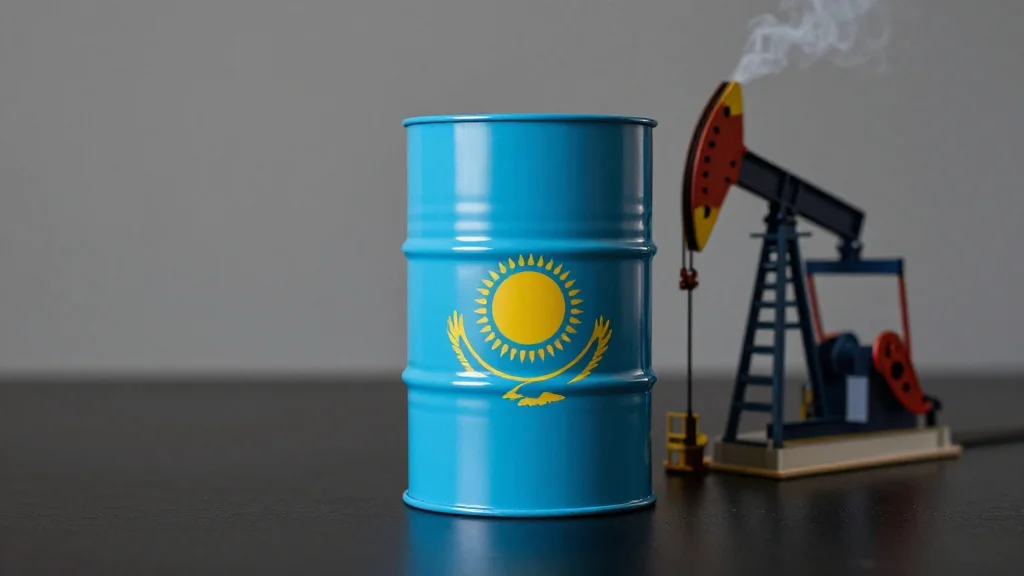
Kazakhstan Boosts Oil Output Under New OPEC+ Plan Amid Middle East Tensions

Why It Matters
Kazakhstan’s decision to raise oil output under the OPEC+ framework is a pivotal development for the global commodities market. As one of the group’s larger non‑core producers, its production levels directly influence global supply balances and price trajectories. In the context of renewed Israel‑Iran hostilities, any additional supply can help dampen price volatility that typically follows geopolitical shocks in the Middle East, a region that controls a substantial share of the world’s oil transit. Moreover, the move underscores OPEC+’s flexibility in responding to external risks. By coordinating output adjustments among members, the alliance aims to preserve market stability, protect revenue streams for oil‑exporting economies, and mitigate the impact of supply‑side disruptions on downstream industries ranging from transportation to petrochemicals. The decision also signals to investors that central Asian producers are willing to play an active role in global energy security, potentially reshaping trade flows and investment patterns in the sector. The broader implication is a test of OPEC+ cohesion: if the group can successfully navigate the dual challenges of regional conflict and shifting demand, it may reinforce its credibility as a stabilizing force in the oil market, influencing everything from futures pricing to strategic planning for energy‑intensive industries worldwide.
Key Takeaways
- •Kazakhstan will increase crude oil production under a new OPEC+ plan (source: Trend.az, June 8).
- •The output hike aligns with OPEC+ consensus to support market stability amid geopolitical risk.
- •Recent Israel‑Iran missile exchanges have revived concerns over oil transit route security.
- •Brent crude rose about 1.2% to $84 per barrel following the OPEC+ announcement.
- •The next OPEC+ review is scheduled for later 2026, with potential further adjustments.
Pulse Analysis
Kazakhstan’s production boost reflects a strategic pivot by OPEC+ members to pre‑emptively address supply‑side vulnerabilities that arise from geopolitical flashpoints. Historically, OPEC+ has used output adjustments as a lever to smooth price volatility, but the current context is distinct: the Israel‑Iran conflict introduces a non‑economic shock that can instantly curtail shipments through the Strait of Hormuz, a chokepoint responsible for roughly 20% of global oil flow. By increasing output now, Kazakhstan not only cushions the market against a potential supply squeeze but also signals confidence in the alliance’s collective response capability.
From a market‑behavior perspective, the modest rise in Brent prices suggests traders are pricing in a risk premium rather than a fundamental demand surge. This premium is likely to persist as long as the conflict remains unresolved, creating a window for OPEC+ to fine‑tune output in response to real‑time developments. Investors should monitor the upcoming OPEC+ meeting for any signals of further production changes, especially if the Middle‑East tension escalates into direct attacks on oil infrastructure.
In the longer term, Kazakhstan’s willingness to adjust output could encourage other non‑core OPEC+ members to adopt a more proactive stance, potentially reshaping the supply curve in a way that dampens the impact of future geopolitical disruptions. Energy‑intensive sectors—airlines, shipping, and petrochemicals—should factor this added supply flexibility into their risk models, while policymakers in oil‑importing nations may find a modest buffer against price spikes, buying time for diplomatic efforts to de‑escalate the regional conflict.
Kazakhstan Boosts Oil Output Under New OPEC+ Plan Amid Middle East Tensions
Comments
Want to join the conversation?
Loading comments...