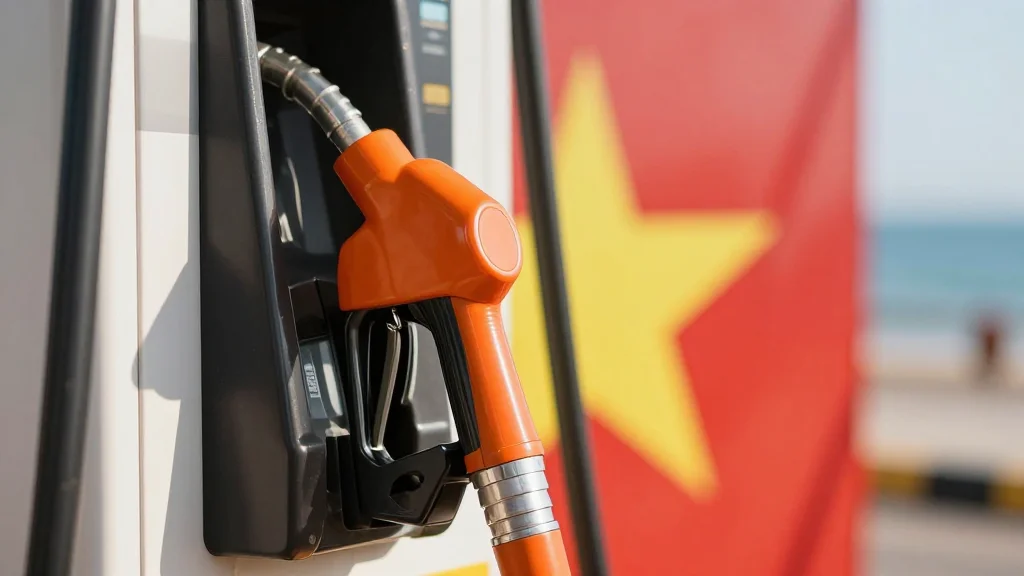
Vietnam Cuts Fuel Taxes to Zero Through June, Aiming to Spur Demand Amid Global Oil Price Surge

Companies Mentioned
Why It Matters
The tax exemption directly affects the cost of living for millions of Vietnamese consumers, offering immediate relief in a period of high global oil prices. By reducing the effective price of gasoline and diesel, the policy can stimulate demand in transport‑heavy sectors, supporting economic growth at a time when many Southeast Asian economies are wrestling with inflationary pressures. On a broader scale, Vietnam’s move signals how emerging markets may use fiscal tools to buffer domestic economies against external commodity shocks. If the tax holiday proves effective, other oil‑importing nations could adopt similar measures, potentially reshaping regional demand dynamics and influencing global oil price trajectories during periods of geopolitical tension.
Key Takeaways
- •Vietnam's National Assembly set fuel taxes to zero from April 16‑June 30, removing VAT (7.4%), environmental tax (2.7‑6%) and special consumption tax (6.7%).
- •The tax cut translates to roughly a 16.8% reduction in pump prices for gasoline, diesel and aviation fuel.
- •Global oil prices remain high: Brent futures around $109 per barrel, spot physical oil near $145 per barrel.
- •Vietnam aims to curb inflation and support socio‑economic growth amid Middle East‑driven price spikes.
- •Fiscal impact could cost the state several hundred million dollars, prompting future budget adjustments or extensions.
Pulse Analysis
Vietnam’s decision to zero out fuel taxes is a textbook example of a demand‑side fiscal stimulus in a commodity‑sensitive economy. By targeting the tax components that together make up nearly one‑fifth of fuel prices, the government delivers a swift price shock absorber that can stabilize consumer sentiment and keep logistics costs from spiraling. Historically, similar tax holidays in oil‑importing nations have produced short‑lived consumption spikes, but the current context—marked by an unprecedented spot‑futures price gap—means the stimulus could be more pronounced.
However, the fiscal trade‑off cannot be ignored. The lost tax revenue will have to be sourced elsewhere, potentially through higher indirect taxes or increased borrowing, which could sow longer‑term macro‑economic risks. Moreover, the policy may inadvertently encourage higher fuel consumption, clashing with Vietnam’s environmental commitments and exacerbating road congestion. The government’s pledge to monitor global price movements suggests a willingness to fine‑tune the approach, but the real test will be whether the short‑term demand boost outweighs the fiscal cost and any environmental externalities.
Regionally, Vietnam’s move could set a precedent for other emerging markets facing similar import‑price shocks. If the tax holiday stabilizes domestic inflation without triggering a fiscal crisis, neighboring countries may emulate the strategy, potentially amplifying demand in a market already strained by supply disruptions in the Strait of Hormuz. This could tighten spot oil markets further, feeding back into global price dynamics. In sum, Vietnam’s tax cut is both a domestic economic lever and a potential catalyst for broader commodity market adjustments in a volatile geopolitical environment.
Vietnam Cuts Fuel Taxes to Zero Through June, Aiming to Spur Demand Amid Global Oil Price Surge
Comments
Want to join the conversation?
Loading comments...