

RAG Shows Its Work. That’s Not the Same as Being Right.
At the Generative AI Summit Austin, Ramkumar Shanker warned that the death of third‑party cookies forces publishers to monetize first‑party signals, not identifiers. He advocated using large language models combined with Retrieval‑Augmented Generation (RAG) to infer reader intent and provide an auditable trace of how segments are created. Shanker stressed that the real competitive edge lies in turning consented behavior into actionable meaning while embedding rigorous governance, cost controls, and continuous monitoring. The approach mirrors his work in medical‑imaging AI, where explainability and safety are non‑negotiable.
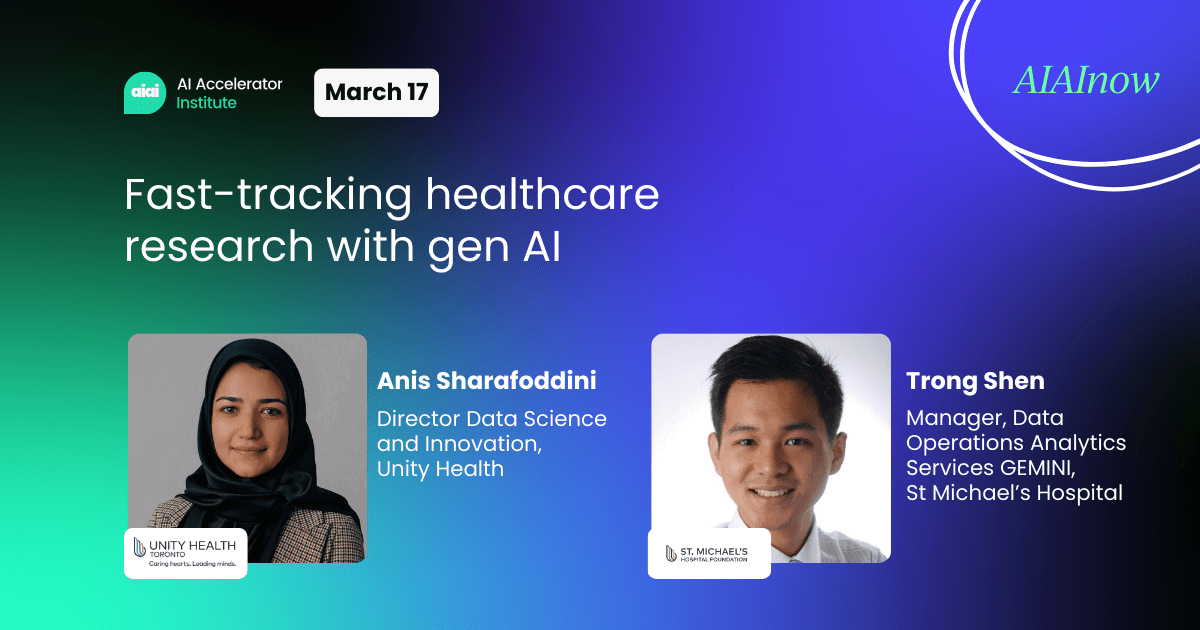
Fast-Tracking Healthcare Research with Gen AI
AIAInow is hosting a deep‑dive session on using generative AI to accelerate healthcare research through Unity Health’s Gemini network. The program showcases Gemini’s ability to process massive clinical notes, automate ICD coding via the ICD Assist project, and generate synthetic...

Defusing the MCP Ticking Time Bomb
The AI Accelerator Institute highlighted a looming security crisis in Model Context Protocol (MCP) deployments after analyzing 281 MCP servers and finding that ten of them carry a 92% security risk. The report warns that vulnerabilities such as prompt injection,...

Apple: Anchoring Austin’s AI Ecosystem
Apple is cementing its role as an anchor of Austin’s burgeoning AI ecosystem by extending its full‑stack, privacy‑first AI capabilities across silicon, operating systems, and developer tools. The company’s vertical leverage encourages local startups to design on‑device, edge‑native solutions that...

Revolutionizing Healthcare: The Transformative Impact of Artificial Intelligence
Artificial intelligence is moving from hype to concrete healthcare applications, as highlighted in a new AIAInow session featuring Stanford Medicine and Starkey Hearing. The event showcases AI’s role in diagnostics, where neural networks now exceed human specialists, and the transformation...

Unlocking Your Retail Insights with LLMs
Best Buy is leveraging large language models to clean and enrich messy retail data, turning unstructured customer signals into actionable insights. The article stresses that LLM adoption must start with a clear business case rather than hype, especially for tasks like...
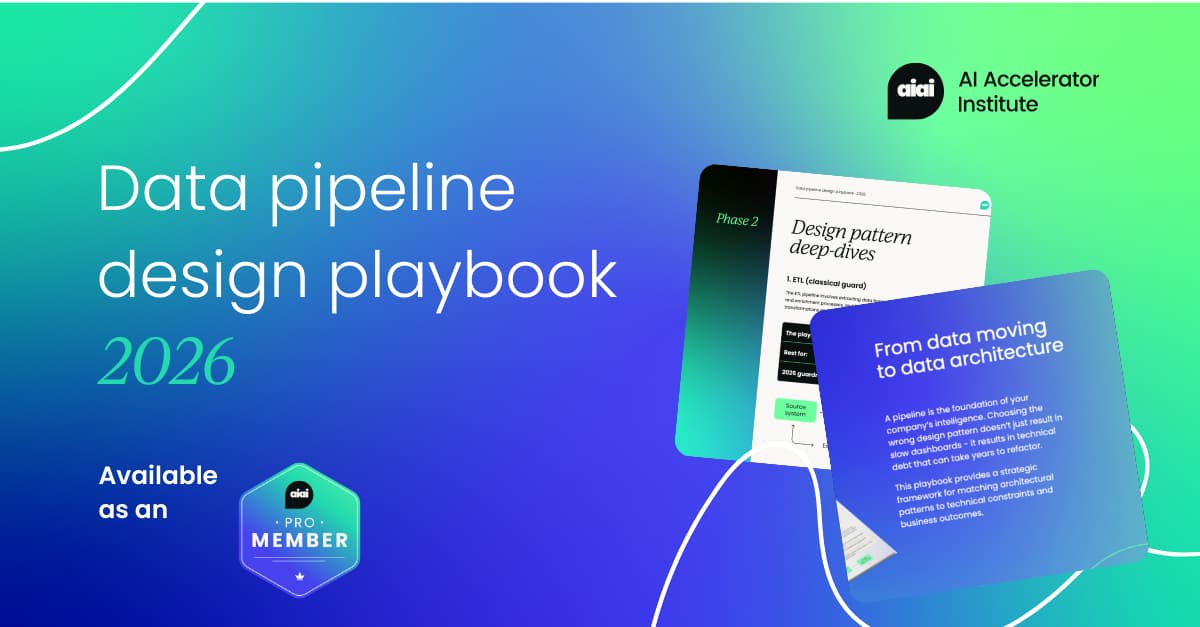
Data Pipeline Design Playbook 2026
The 2026 Data Pipeline Design Playbook positions pipeline architecture as the decisive factor separating data‑driven firms from laggards. It outlines seven modern frameworks—including the kappa shift, ELT over ETL, medallion data lakes, microservice pipelines, and lambda balancing—to achieve real‑time consistency,...

Case Study: Citi
Citi is using its Austin hub as a testing ground for a tech‑first banking model, shifting from experimental AI pilots to enterprise‑scale execution in early 2026. The bank deployed agentic AI for real‑time fraud mitigation, migrated its North American loan...

Real-World LLMOps: Two Case Studies in Healthcare AI Deployment
The article outlines two real‑world LLMOps case studies in healthcare, showing how Boost Medical Group and Sema Therapeutics built AI solutions by beginning with user stories and workflow mapping rather than jumping straight to model selection. At Boost, the team...
A New Framework for Keeping AI Accountable
A University of Waterloo research team unveiled the Social Responsibility Stack (SRS), a six‑layer framework that embeds societal values directly into AI system design and treats accountability as a continuous control problem. The stack translates abstract ethics such as fairness...
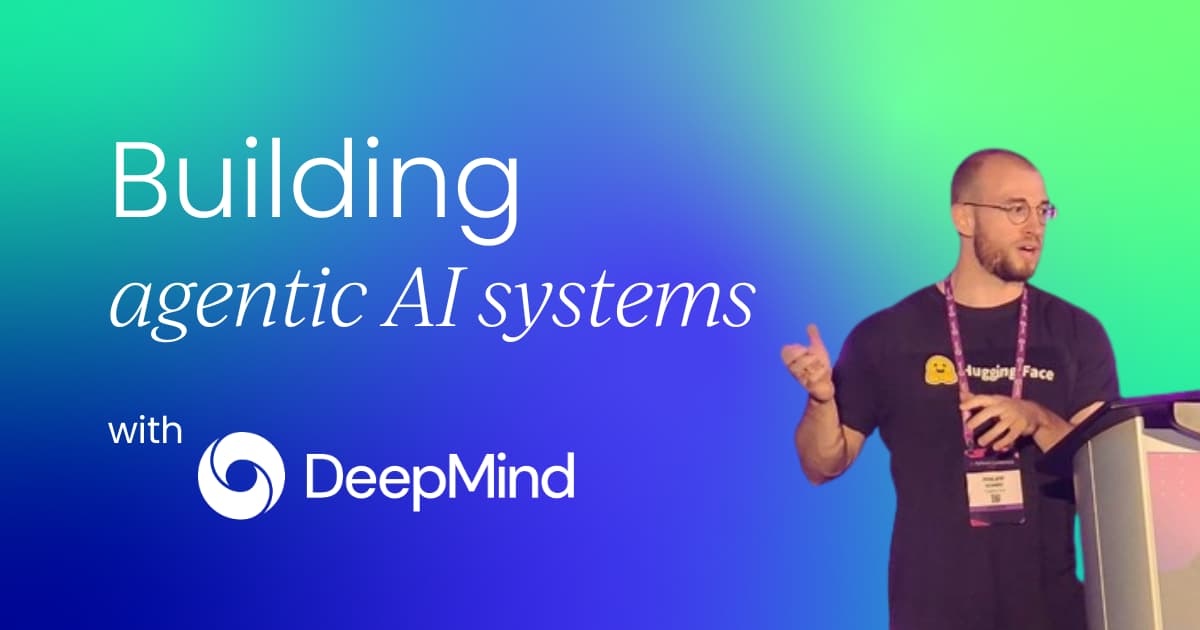
Beyond Chatbots: How to Build Agentic AI Systems
Google DeepMind’s senior AI relations engineer highlights the shift from chat‑based LLMs to autonomous agents that can pursue goals and invoke tools on their own. Early models acted as text autocompleters, then evolved into instruction‑following chatbots with function‑calling capabilities. The...

AIAI London
The supplied material is merely a membership‑only notice, showing an image, a subscription prompt, and a sign‑in link, with no article title, author, date, or body. It indicates that the full content is gated behind a paywall, preventing immediate access....

The Hidden Risk of One-Size-Fits-All AI Advice
Researchers at Saarland and Durham Universities expose a blind spot in AI safety: generic advice that passes standard tests can be unsafe for vulnerable users. Their study shows safety scores for high‑vulnerability profiles drop two points on a seven‑point scale...
Forking Data for AI Agents: The Missing Primitive for Safe, Scalable Systems
Agentic AI systems frequently fail because they share mutable state without snapshot isolation, leading to nondeterministic behavior and debugging dead‑ends. Traditional object stores such as S3 lack version‑aware reads, consistent snapshots, and isolation primitives, making concurrent agent workflows error‑prone. Tigris...

Building Your Agentic Stack: A Roadmap to Real Integration
The article outlines a practical roadmap for building an agentic AI stack, emphasizing a five‑layer architecture that spans API, orchestration, language models, memory, action, and governance. It stresses that microservices must remain stateless, with state offloaded to systems like Kafka,...

AIAI Toronto, 2025
The provided link leads only to a membership‑only notice, lacking any article title, author, date, or substantive content. No news story or analysis is available for extraction. Consequently, the request cannot be fulfilled with standard article insights. The response instead...

When GPT-5 Thinks Like a Scientist
OpenAI’s GPT‑5 is evolving from a powerful search tool into a research collaborator, delivering full solutions to four long‑standing mathematical problems and uncovering hidden links across physics, biology, and computer science. The model’s “compression factor” enabled six hours of AI‑augmented...

Case Study: Loveable
Loveable, a Stockholm‑based AI startup, has become Europe’s flagship “vibe coding” platform, reaching a $1.8 billion unicorn valuation and $100 million ARR within eight months of its Series A. The service lets users describe a concept in natural language and automatically generates full‑stack,...

The Role of AI in Modern Marketing: Personalization at Scale
Artificial intelligence is reshaping marketing by turning massive data sets into real‑time, individualized experiences. Recommendation engines, predictive models, and dynamic content delivery enable brands to personalize at a scale humans cannot achieve. Case studies from Spotify and Nike show that...

Small AI Models Can Now See for Powerful Language Models Like GPT-4
Researchers from Microsoft, USC and UC Davis introduced BeMyEyes, a framework that couples lightweight vision models with powerful text‑only language models such as GPT‑4 and DeepSeek‑R1. By having the vision model describe images and engaging in multi‑turn dialogue, the system...

Case Study: OpenAI
OpenAI is projected to generate about $12 billion in revenue in 2025, reinforcing its $300 billion valuation and leadership in foundational AI models. To sustain scale, the company has deepened its partnership with the UK, launching the sovereign Stargate UK compute project that...

Case Study: GitLab
GitLab is confronting the AI paradox by unifying the entire software development lifecycle into a single, AI‑driven DevSecOps platform. Its Duo AI agents automate code review, testing, vulnerability triage and compliance, turning generative AI speed into secure, compliant delivery. In...

6-Figure Secure AI Solutions that Deliver 7-Figure ROI
Disney has been quietly leveraging AI for 22 years, embedding it in everything from crowd control to ride scheduling while keeping the human experience front‑center. The article highlights that 95 % of generative‑AI pilots fail because leaders start with technology rather...

Case Study: Synthesia
Synthesia secured a $200 million investment in late 2025, lifting its valuation to $4 billion and cementing its status as the UK’s most valuable private AI firm. Its text‑to‑video platform now serves over 60,000 businesses, including more than 90 % of the Fortune 100,...