AM Best: Market Segment Outlook – Japan Life Insurance Segment
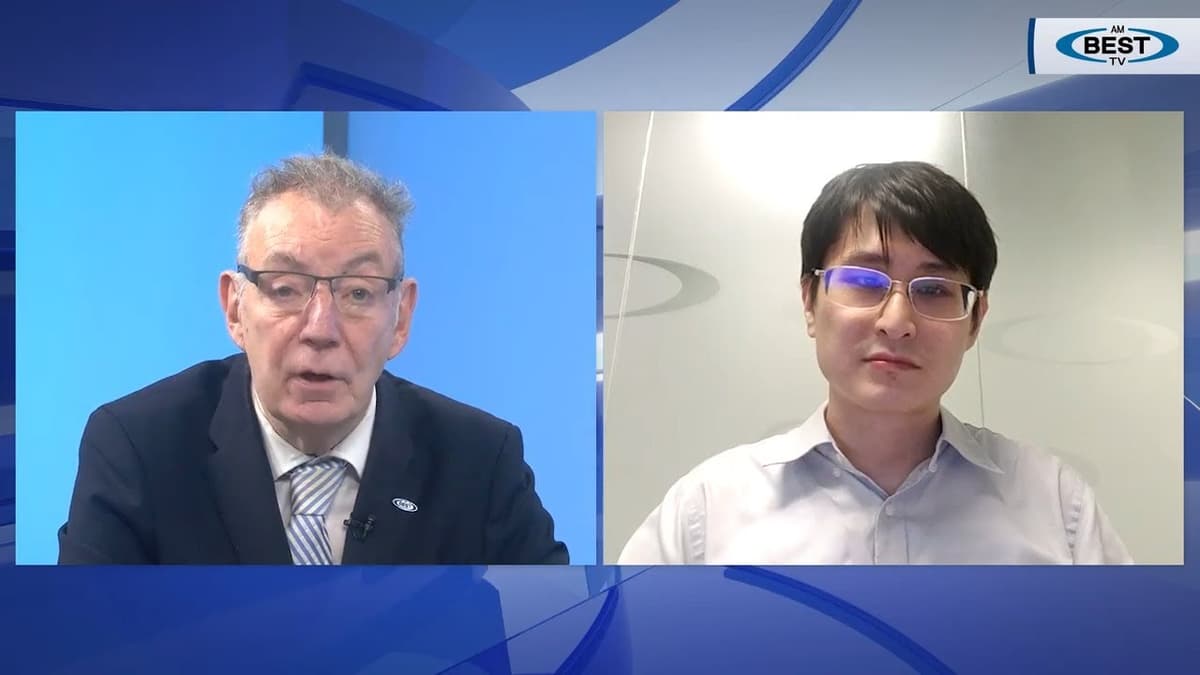
AM Best reaffirmed a stable outlook for Japan’s life‑insurance segment, citing a modest but steady macro backdrop. The IMF projects GDP growth of about 1.1% this year, tapering to 0.6% by 2026, while inflation runs near 3.3% and the Bank of Japan has lifted its benchmark rate to 0.75%, creating a structural tailwind for insurers’ investment yields. Premium inflows remain flat as low economic growth and an aging, shrinking population limit new business. Insurers are responding by emphasizing yen‑denominated saving products, dementia and nursing‑care cover, and digitizing agency channels. Investment income has become a core profit driver, with firms rotating out low‑yield Japanese government bonds for newer 30‑year issues yielding 2.5‑3% and shifting toward alternative fixed‑income assets. Charles Giang highlighted that major insurers now report a noticeable lift in core profits from higher net investment income and are actively managing legacy guarantee policies. He cited overseas acquisitions in North America, Australia and select Asian markets, and noted that firms already exceed the upcoming JICS solvency ratio of 100%—most sit above 200%—thanks to stronger yields and prudent balance‑sheet management. The outlook remains stable for the next 12 months, but profitability will hinge on sustaining investment returns, expanding product mixes for an aging demographic, and successfully integrating international assets while navigating the new economic‑value‑based solvency framework.

AM Best: Market Segment Outlook – London Market Insurance
AM Best has reaffirmed a stable outlook for the London market insurance segment, citing a softening market environment that should keep pricing conditions adequate through 2026. The firm’s associate director of analytics, Kaneka Thuck, highlighted three pillars supporting this view:...

AM Best: Market Segment Outlook – United Kingdom Non-Life Insurance
AM Best released its 2026 market segment outlook for the United Kingdom’s non‑life insurance industry, maintaining a stable rating. Senior financial analyst Dale Kirby explained that the outlook reflects a mix of balanced headwinds and tailwinds as the sector moves...

AM Best: Proposed Risk-Based Capital Changes Credit Positive for Hong Kong’s Non-Life (Re)insurers
The video discusses AM Best’s commentary on the Hong Kong Insurance Authority’s proposed revisions to its risk‑based capital (RBC) framework for non‑life insurers. The regulator, two years after the July 2024 rollout, launched a public consultation in February to fine‑tune capital requirements,...

Risky Science Podcast Explores the Models Behind Modern Risk
The Risky Science podcast, hosted by veteran financial journalist Christopher Westall, delves into the science of risk modeling for both natural catastrophes and man‑made threats. Produced by AM Best Audio, the series has released roughly thirty episodes since its summer launch,...

Strong 2025 Results Mask Softening Reinsurance Pricing
Reinsurers posted robust 2025 results, buoyed by low catastrophe losses, solid investment income and heightened demand from perceived geopolitical, economic and technology risks. Yet AM Best’s David Pillah notes that revenue growth softened in parts of the market as pricing pressure...

AM Best: Five US Life/Health Companies, One US Property/Casualty Company Impaired in 2024
AM Best’s 2024 impairment review shows a dramatic contraction in U.S. property‑casualty (PC) write‑offs, falling from 14 in 2023 to a single auto insurer in 2024. The report, presented by director Joseph Rosel, underscores that no catastrophe‑related PC impairments were...

AM Best: Cat Bond Growth Accelerates as Loss Multiples Compress
The AM Best report highlights that the insurance‑linked securities (ILS) market reached roughly $120 billion at the close of 2025, propelled by robust demand for reinsurance capacity and a three‑year streak of strong cat‑bond returns. Supply‑side earnings have been redeployed into the...

AM Best: US Life/Annuity Industry Continues to Shift More Focus to Annuities
The AM Best annual review highlights a paradox in the U.S. life‑annuity market: overall capital is expanding, yet the quality of that capital is eroding. Through the first three quarters of 2025, carriers reported roughly a 4% increase in surplus,...

AM Best: D&O Liability Market – Prioritizing Long-Term Profitability Amid Competition Emerging Risks
The AM Best report released on the U.S. directors and officers (D&O) liability market shifts its outlook from negative to stable, citing tighter risk selection and more disciplined underwriting as the primary drivers of recent performance gains. While insurers...

Hawaii Homeowners Market Reprices Risk After Wildfires
The 2023 Lahaina wildfires triggered a seismic shift in Hawaii’s homeowners insurance market, prompting insurers to impose steep, double‑digit rate hikes and to reevaluate their underwriting strategies. Insurers such as RLI, a long‑time market participant, have used the disruption to...
AM Best: Outlook for US D&O Revised to Stable
AM Best announced a revision of its outlook for the United States directors and officers (D&O) liability market, moving the rating from negative to stable. The change reflects a broader market shift after a period of aggressive pricing and deep...

AM Best: Losses From Winter Storms to Carve Into 2026 First Quarter Earnings
The video features AM Best industry analyst Helen Anderson discussing how the twin winter storms—Hernando and Fern—are expected to erode property‑casualty insurers’ first‑quarter 2026 earnings. Anderson notes that while the hit will be material, it will not match the severity...

Issues & Answers: Program for Success
Nationwide E&S Specialty introduced a specialized Program for Success targeting property and ocean marine lines. Vice President Brooke Shirazi emphasized that the program’s deep segment expertise translates into tailored risk solutions for policyholders. The dedicated program administrator space allows insurers...

AM Best: Outlook for US D&O Revised to Stable
AM Best has lifted its outlook for the United States directors and officers (D&O) liability market from negative to stable, signaling a shift after two years of aggressive pricing and a soft market. The firm cites flattening rate declines—now expected in...
Mining Insurance Market Stays Competitive Despite Rising Nat Cat Losses
Mining insurers are navigating a surge in natural‑catastrophe losses while maintaining ample capacity, according to brokers cited by AM Best. Recent high‑profile events in Australia and Indonesia have tested the market, yet underwriters continue to offer competitive terms, keeping the specialty...
AM Best: Administration’s Executive Order Could Provide Impetus Towards Stabilizing the Cannabis I
An executive order from President Trump to reclassify marijuana from Schedule I to Schedule III could rapidly change the legal and commercial landscape for cannabis-related businesses, AM Best analysts say. Rescheduling would permit medical prescriptions and long-term institutional research, generating...
AM Best: Caribbean Insurers’ Reinsurance Costs, Capacity Constraints Moderate, Climate Vulnerability
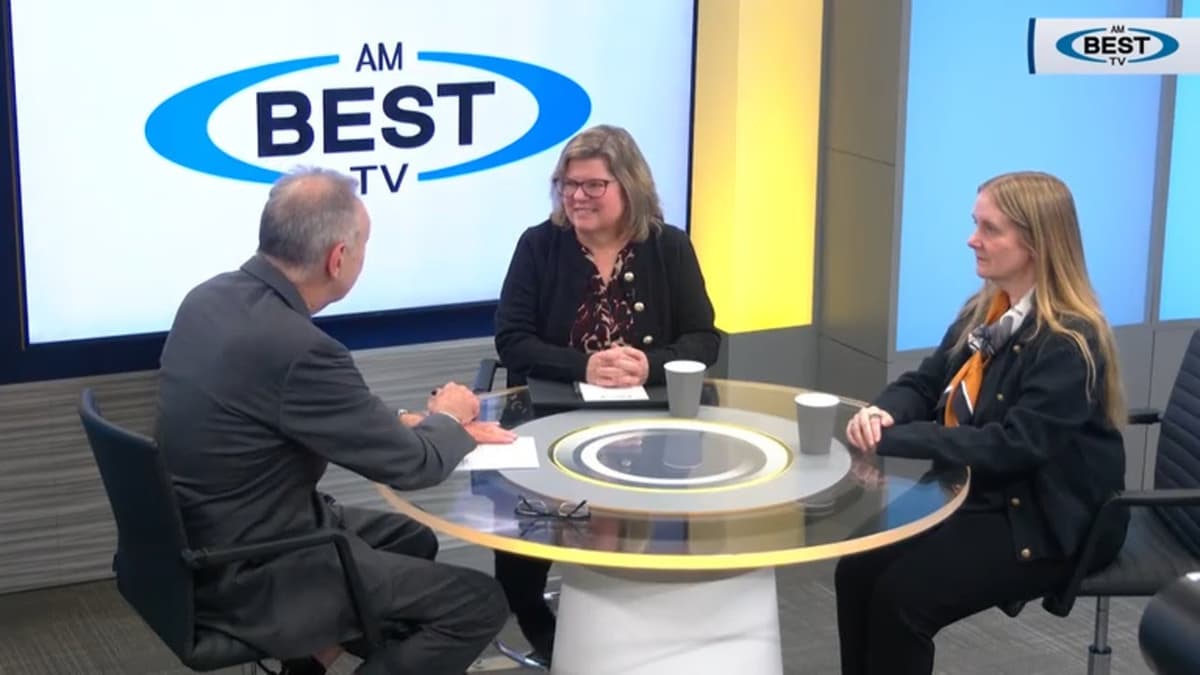
AM Best reports that reinsurance costs and capacity constraints for Caribbean insurers have moderated amid an accelerated softening in property reinsurance pricing and modest easing of some terms and conditions. Favorable insurer results through 2024 reflect a low catastrophe year...

AM Best: Surplus Lines Market Premium Moderates Through Nine Months of 2025
AM Best’s latest report shows that U.S. excess and surplus lines (ENS) premium growth moderated during the first three quarters of 2025, signaling the market’s transition from the rapid expansion seen in previous years. Total ENS premium rose 9.7% year‑over‑year, down...
AM Best: 3Q25 Snapshot – Personal Lines Momentum Continues to Drive P/C Underwriting Result Improv
AM Best’s 3Q 2025 snapshot highlights that personal‑lines momentum is propelling a notable turnaround in property‑casualty underwriting after a volatile start to the year marked by the January California wildfires. The firm’s analysts, Helen Anderson and David Blades, note that direct premiums...
Coalition’s Toomey: Rising Cyber Interconnectedness Pushes Insurers to Boost Detection, Response
Coalition highlighted the rapid cascade from disclosure to exploitation in the recent React-to-Shell vulnerability, which targeted React server components and left Next.js-hosted sites especially exposed. The firm said threat actors began scanning immediately after disclosure and that working exploits appeared...