
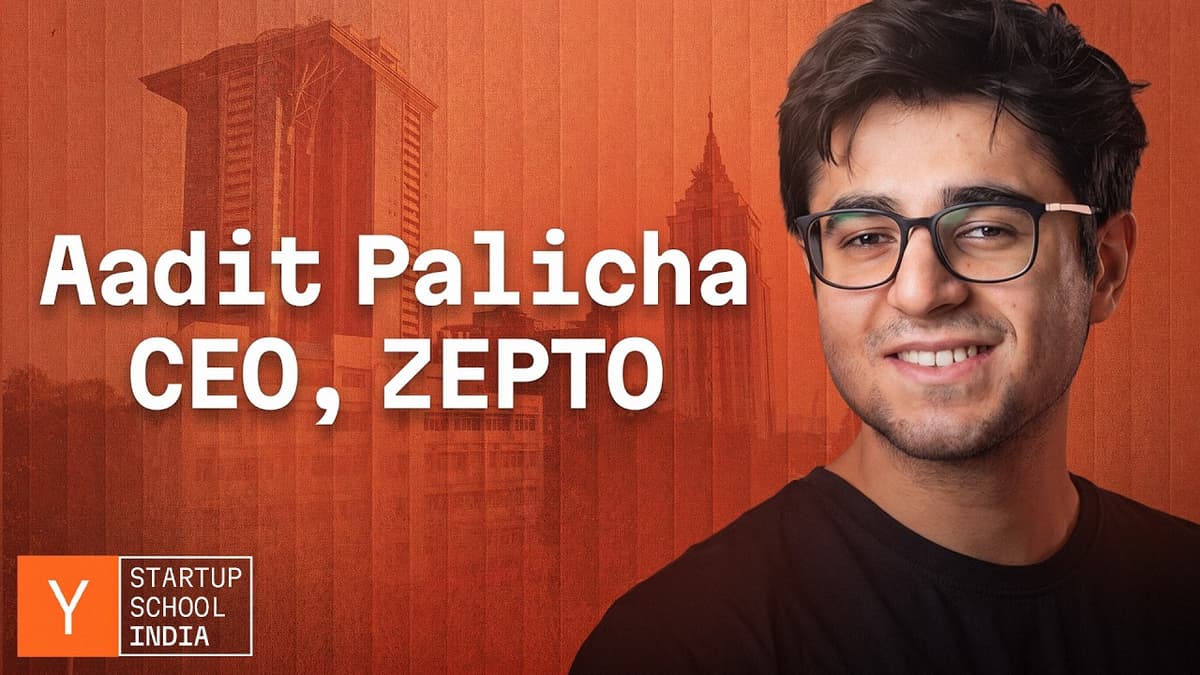
Why Zepto's Aadit Palicha Turned Down Stanford to Deliver Groceries
Aadit Palicha’s decision to forgo a Stanford education in favor of building Zepto is the centerpiece of the talk. He and co‑founder Keville began during the pandemic by coordinating grocery deliveries through a WhatsApp group, then evolved the concept into an app called Kiranakart before joining Y Combinator. The founders emphasized a relentless focus on the customer experience, asking what the most extreme positive outcome would look like and working backwards. By converting a co‑founder’s apartment into the first “dark store” and later scaling mini‑warehouses, they achieved 10‑minute deliveries, hitting 10,000 orders a day and a ₹60‑70 cr GMV run‑rate before seeking external capital. Key moments include the quote, “remove all constraints, think from first principles,” and the data point that a single dark‑store neighborhood generated three to four times the volume of traditional mom‑and‑pop deliveries. Their YC mentor, Jared, helped secure a term sheet once these metrics proved sustainable. The story illustrates that a customer‑centric, experiment‑driven model can outpace larger incumbents, lower unit costs, and create a defensible market position. For founders, it underscores the importance of achieving tangible product‑market fit before taking the leap from academia to entrepreneurship.
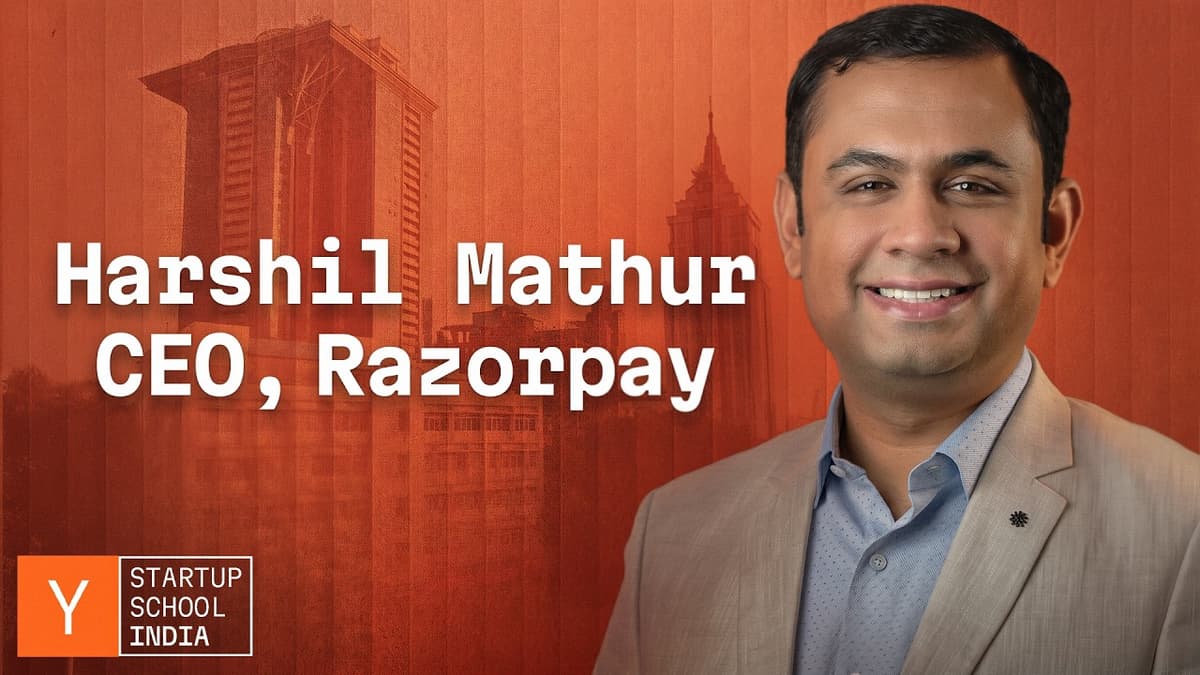
How Razorpay Became India’s Largest Payments Company
The video chronicles how Razorpay, founded by Harshil Mathur, grew from a college‑side project into India’s largest payments platform, highlighting its Y Combinator entry in winter 2015 and the regulatory hurdles that shaped its trajectory. Initially the team tried to sell...
Inference Chips for Agent Workflows
The video highlights a growing mismatch between conventional AI hardware and the emerging class of agentic AI workloads. While most inference chips are optimized for a simple prompt‑in‑response‑output pattern, autonomous agents execute long, branching loops that call external tools, maintain...

AI-Native Discovery Engines
The video introduces AI‑native discovery engines, a new paradigm that moves scientific research beyond the traditional hypothesize‑experiment‑interpret loop toward fully automated, closed‑loop cycles powered by advanced foundation models. Frontier models now perform at PhD‑level on scientific reasoning benchmarks, enabling them to...
The AI Operating System for Companies
The video introduces an "AI operating system" concept that makes an entire enterprise legible to artificial intelligence. By capturing every meeting, ticket, code change, and customer interaction, companies can shift from an open‑loop decision process—where outcomes are reviewed weeks later—to...
SaaS Challengers
The video argues that generative‑AI coding is dismantling the traditional SaaS model, prompting investors to slash billions from legacy software valuations while simultaneously creating a fertile ground for new challengers. AI can shrink software development costs by more than a hundredfold,...

Software for Agents
The video argues that the next trillion users of the internet will be AI agents, not humans, and that today’s software—designed for clicks and forms—is ill‑suited for autonomous operation. It calls for a shift toward building tools that agents can...

Hardware Supply Chain
The video highlights a widening gap in hardware development speed between the United States and China, arguing that iteration time—not just raw supply‑chain capacity—is the decisive advantage for Chinese manufacturers. In Shenzhen, a team can move from concept to a physical...
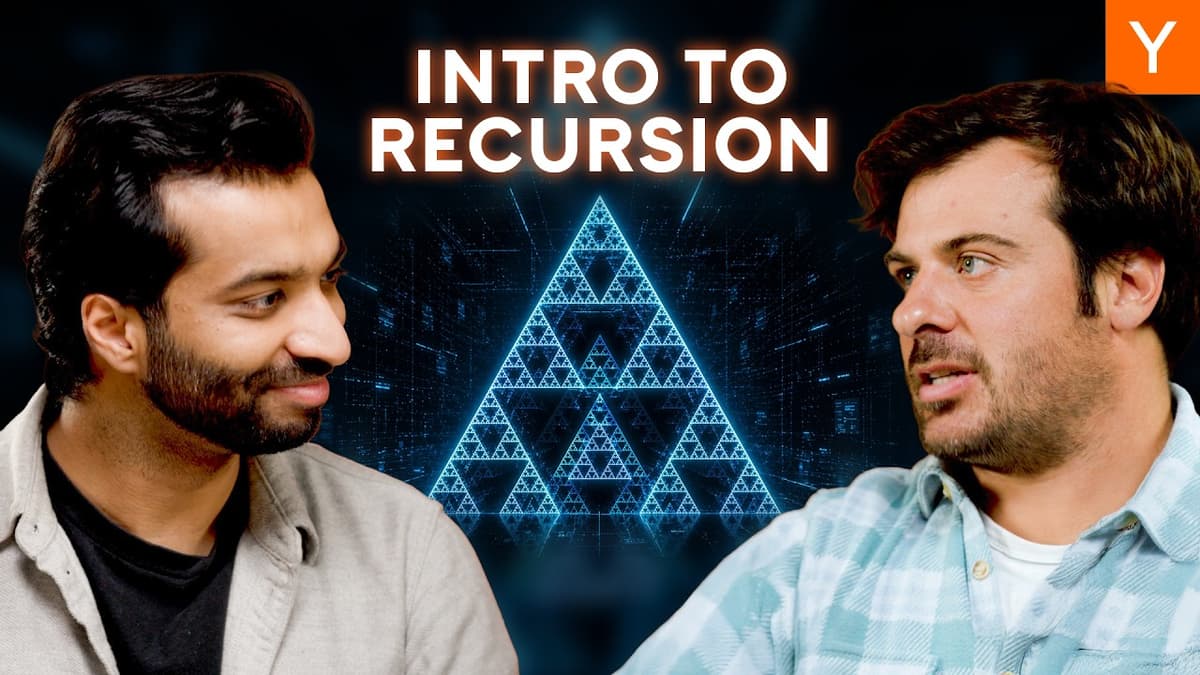
Recursion Is The Next Scaling Law In AI
The Decoded episode spotlights recursion as the emerging scaling law in AI, focusing on two 2025 papers—Hierarchical Reasoning Models (HRM) and Tiny Recursive Models (TRM)—that demonstrate how repeated inference steps can boost reasoning performance without simply enlarging model size. The hosts...
Dynamic Software Interfaces
The video argues that today’s software still presents a one‑size‑fits‑all interface, even as users demand personalized experiences akin to Netflix’s content curation. It posits that advances in AI‑driven coding agents now allow end‑users to act as their own forward‑deployed engineers,...
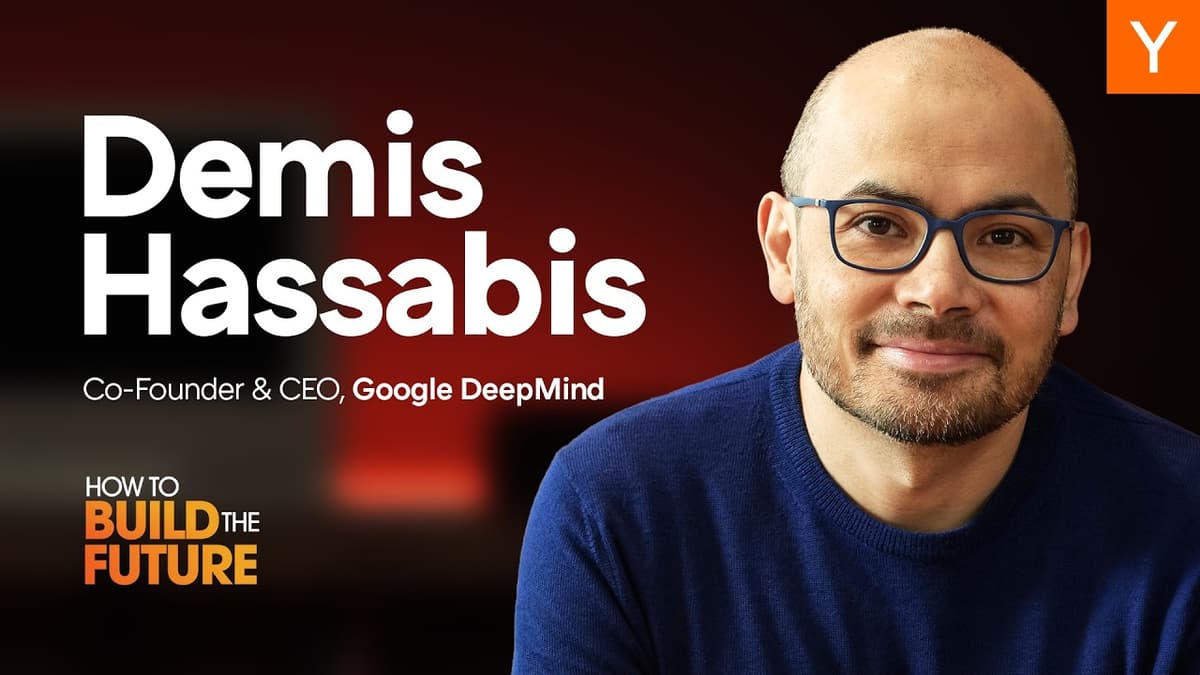
How to Build the Future: Demis Hassabis
Demis Hassabis, DeepMind CEO, outlined the current roadmap toward artificial general intelligence, emphasizing that while large‑scale pre‑training, RL‑HF and chain‑of‑thought have propelled capabilities, core ingredients such as continual learning, long‑term reasoning and robust memory systems are still missing. He positioned...

AI-Personalized Medicine
The video outlines how intelligent agents are driving a new wave of personalized medicine by integrating diverse health data sources—from genomic scans to wearable metrics—into precise, patient‑specific recommendations. It highlights two cost‑driven revolutions: genome sequencing prices are falling faster than Moore’s...

AI for Low-Pesticide Agriculture
The video outlines a looming crisis in modern agriculture: pervasive pesticide residues in food, water and soil, coupled with evolving weeds and pests that erode the effectiveness of traditional chemicals. Farmers are trapped in a feedback loop—spraying more to combat resistance,...
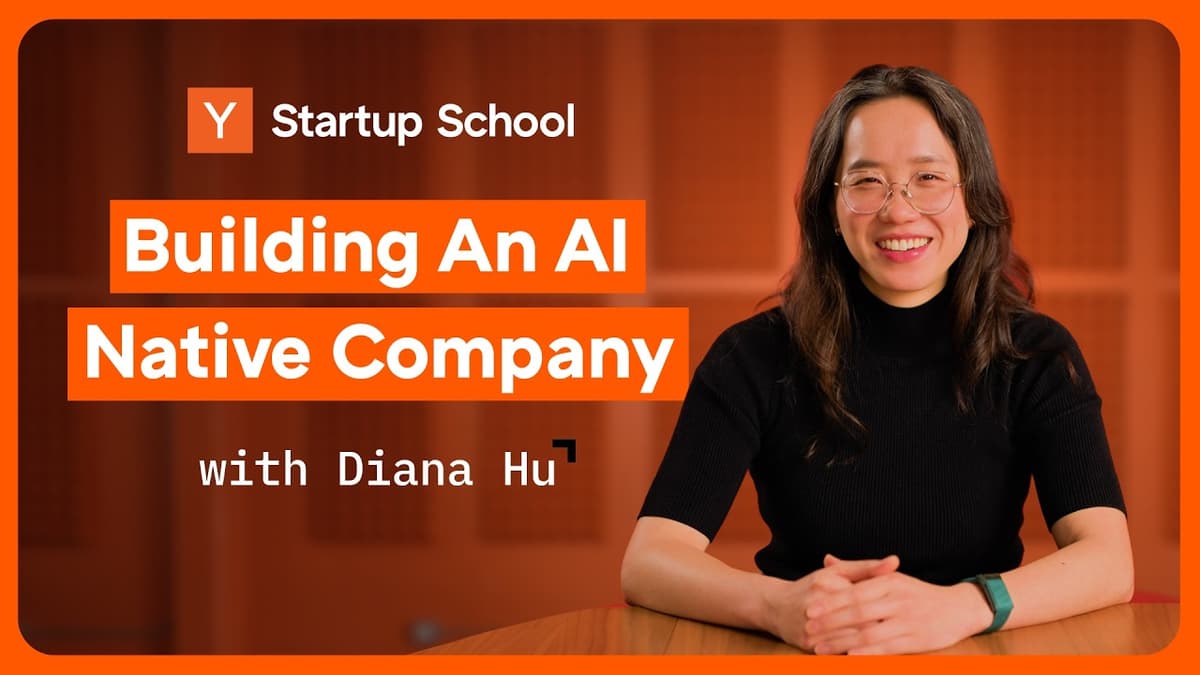
How To Build A Company With AI From The Ground Up
In this talk, Diana, a YC partner, argues that AI should be treated as a company’s operating system rather than a peripheral productivity add‑on. She urges founders to redesign every workflow as a closed‑loop system where decisions are continuously measured,...

India’s Fastest Growing AI Startup
The video spotlights Emergent, a YC‑backed AI startup that has become one of the fastest‑growing companies in the accelerator’s history. In just eight months the platform’s AI agents have powered the creation of more than seven million applications, positioning Emergent...