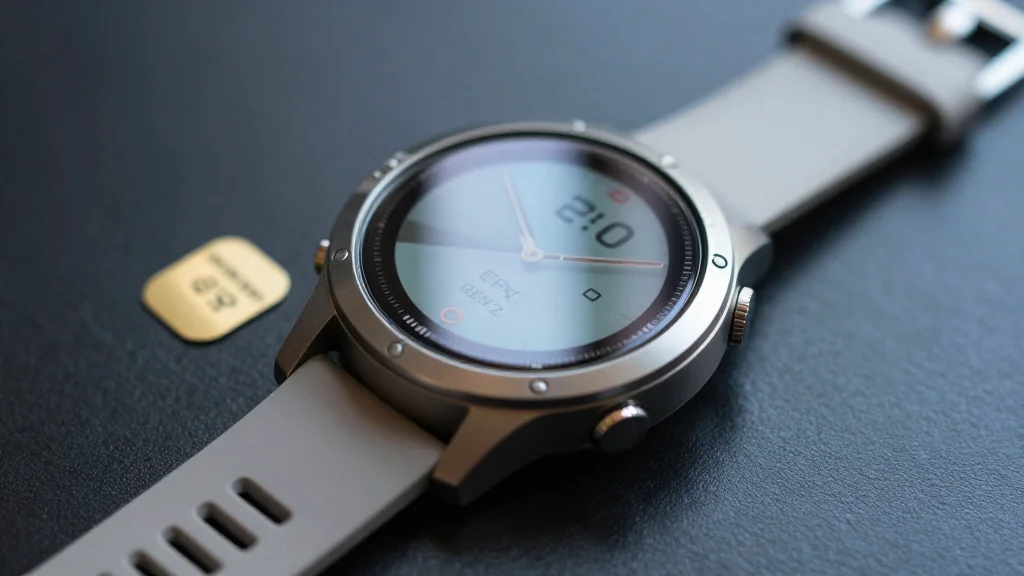
Garmin Cuts Epix Pro Gen 2 Price by 50%, Undercutting Samsung and Google

Companies Mentioned
Why It Matters
The 50% price cut on Garmin’s flagship Epix Pro Gen 2 signals a shift in premium wearable pricing dynamics, forcing rivals to reconsider value propositions in a market where battery life and ruggedness are increasingly prized. By making a high‑spec, outdoor‑oriented watch affordable to a broader audience, Garmin could expand its user base beyond dedicated athletes, driving ecosystem growth for its Garmin Connect platform. For consumers, the discount lowers the barrier to entry for advanced health tracking, potentially accelerating adoption of continuous biometric monitoring. For the industry, the move may trigger a cascade of promotional tactics, compressing margins but also stimulating volume growth as brands vie for market share in a segment that has seen modest year‑over‑year growth.
Key Takeaways
- •Garmin Epix Pro Gen 2 Sapphire Edition discounted to $500 on Amazon, a 50% cut from $1,000 MSRP.
- •Watch offers heart‑rate, pulse‑ox, stress, sleep tracking, GPS maps, and up to ten days of battery life.
- •Durable titanium and sapphire construction targets outdoor and fitness enthusiasts.
- •Price undercuts Samsung Galaxy Watch 6 and Google Pixel Watch 2, intensifying premium smartwatch competition.
- •Deal could boost Garmin’s unit sales and force rivals into deeper discount cycles or added-value bundles.
Pulse Analysis
Garmin’s decision to halve the price of its Epix Pro Gen 2 is a calculated gamble that leverages the brand’s reputation for rugged, health‑centric hardware. Historically, Garmin has occupied a niche that commands a premium, but the broader consumer market has been dominated by Samsung and Google, whose devices prioritize sleek design and ecosystem integration over raw durability. By slashing the price, Garmin is effectively democratizing its premium features, a move that could translate into a significant uptick in unit sales and a larger data pool for its health analytics services.
From a market perspective, the discount reflects a broader trend of price elasticity in the wearables sector. As discretionary spending tightens, manufacturers are forced to compete on value rather than just innovation. Samsung and Google have responded to similar pressures in the past with bundled offers and software perks, but they lack Garmin’s deep‑rooted credibility among serious athletes and outdoor adventurers. If Garmin can convert price‑sensitive shoppers into long‑term users, it may secure a more resilient revenue stream that is less vulnerable to the cyclical nature of flagship releases.
Looking ahead, the key question is whether this aggressive pricing will be a one‑off promotional event or the start of a sustained strategy to capture market share. If the former, Garmin may see a short‑term sales spike without lasting impact on its brand positioning. If the latter, competitors will need to innovate beyond superficial discounts, perhaps by enhancing health AI capabilities or expanding cross‑platform integrations. Either scenario underscores the growing importance of health data as a differentiator in the consumer tech arena, and Garmin’s move places it squarely at the forefront of that battle.
Garmin cuts Epix Pro Gen 2 price by 50%, undercutting Samsung and Google
Comments
Want to join the conversation?
Loading comments...