Nintendo Switch Online Adds Virtual Boy Library in Surprise Retro Expansion

Companies Mentioned
Why It Matters
The Virtual Boy expansion illustrates how legacy content can be monetized in the subscription era, turning a commercial failure into a revenue generator. By bundling physical accessories with digital access, Nintendo blurs the line between hardware and service, a tactic that could reshape how other platforms approach retro gaming. The move also reinforces Nintendo’s brand identity as a curator of its own history, differentiating its subscription offering in a crowded market. For consumers, the expansion expands the value proposition of Nintendo Switch Online, giving existing subscribers fresh reasons to stay and enticing lapsed fans to re‑engage. For the industry, it signals that surprise, niche‑focused content can still drive subscriber growth, encouraging competitors to explore similar deep‑catalog strategies.
Key Takeaways
- •Nintendo Switch Online adds the full Virtual Boy library: 7 launch titles, 9 more later (total 16 games).
- •Virtual Boy sold only 770,000 units and had 22 games before its 1996 discontinuation.
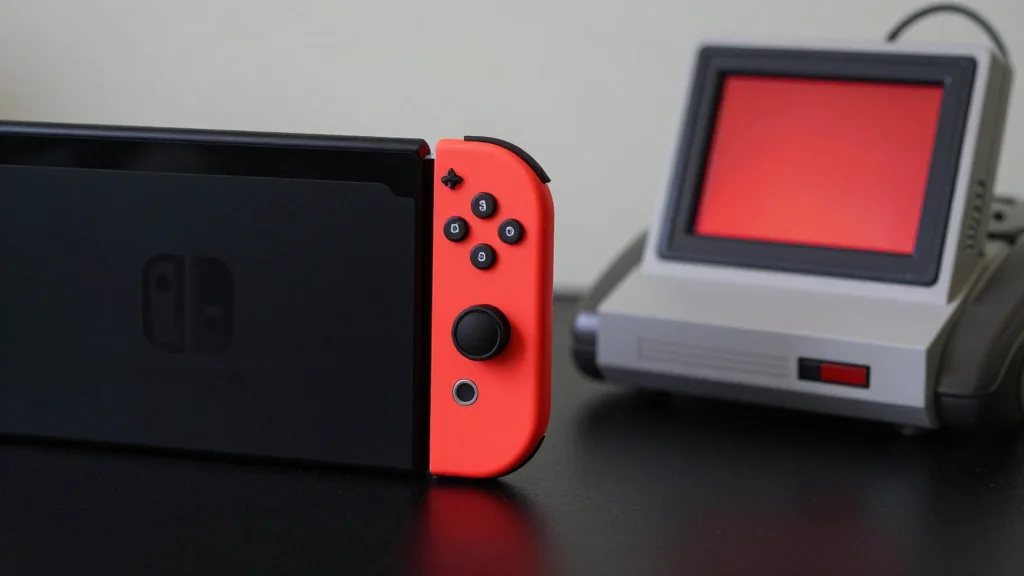
- •Optional accessories—a replica console and cardboard model—require a standard Switch or Switch 2; Switch Lite is excluded.
- •Retro tiers added since 2021: N64, Genesis, Game Boy Advance (2023), GameCube (2025).
- •Unreleased prototypes Zero Racers and D‑Hopper are part of the post‑launch lineup.
Pulse Analysis
Nintendo’s Virtual Boy rollout is less about resurrecting a failed console and more about leveraging scarcity to create perceived value. By packaging unreleased prototypes with physical accessories, Nintendo taps into collector psychology, turning a niche audience into a revenue stream. This approach mirrors the broader trend of ‘experience‑first’ content, where the novelty of how a game is delivered can be as compelling as the game itself.
From a market perspective, Nintendo’s strategy differentiates its subscription service in a space where Xbox and PlayStation are doubling down on first‑party releases and third‑party back catalogs. Nintendo’s emphasis on exclusive, surprise‑driven retro drops could force competitors to reconsider the depth of their own legacy libraries, potentially leading to a wave of similar niche revivals. However, the reliance on physical accessories introduces supply‑chain risk and may limit adoption among casual subscribers who prefer a pure‑digital experience.
Looking forward, the success of the Virtual Boy expansion will likely dictate whether Nintendo continues to mine its less‑successful hardware for content. If subscriber metrics and accessory sales meet internal targets, we can expect a pipeline of obscure hardware—perhaps the 64DD or even the Nintendo 64 DD—being repackaged for modern consumption. This could cement Nintendo’s reputation as the premier curator of gaming nostalgia, while also setting a new benchmark for how legacy content can be monetized in the subscription age.
Nintendo Switch Online Adds Virtual Boy Library in Surprise Retro Expansion
Comments
Want to join the conversation?
Loading comments...