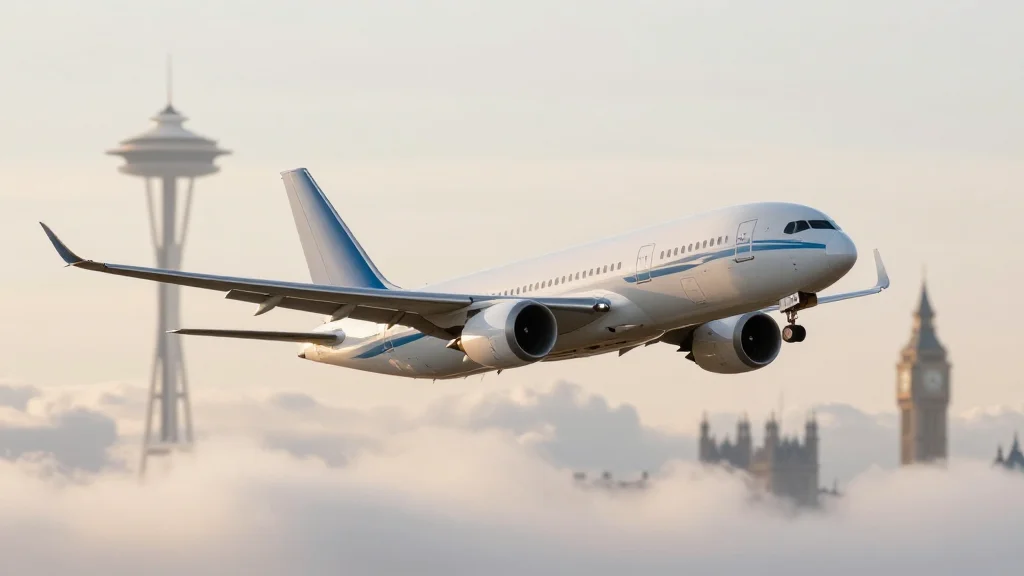
Alaska Airlines Takes on Jet Fuel Surge While Adding Seattle‑London Premium Service

Why It Matters
Alaska Airlines’ dual approach—absorbing a sizable portion of jet‑fuel cost increases while expanding premium international capacity—highlights a growing operational playbook for U.S. carriers facing volatile input costs. By leveraging alliance slots and premium‑cabin differentiation, Alaska aims to protect margins without passing the full cost to price‑sensitive travelers, a tactic that could reshape fare strategies across the industry. The move also strengthens oneworld’s competitive position at Heathrow, a hub that handles more than 29 million alliance passengers annually. Alaska’s presence adds a Seattle‑London connection that enhances network connectivity for business travelers, potentially shifting market share away from legacy carriers that rely more heavily on price competition.
Key Takeaways
- •Alaska Airlines launched a nonstop Seattle‑London service on May 22, 2026.
- •The carrier is absorbing up to 50% of the recent jet‑fuel price surge.
- •New business‑class suites and a planned premium‑economy cabin target high‑yield travelers.
- •Alaska leased a Heathrow slot from American Airlines to secure a foothold at the alliance’s biggest hub.
- •Oneworld’s Heathrow hub now serves 14 member airlines, with Alaska adding daily Seattle‑London flights.
Pulse Analysis
Alaska’s aggressive expansion into the transatlantic premium segment reflects a broader shift among U.S. airlines: prioritize revenue‑rich cabins to counterbalance rising variable costs. Historically, carriers have leaned on price elasticity to manage fuel spikes, but the current environment—characterized by limited hedging and geopolitical supply shocks—makes that approach riskier. By shouldering a larger share of fuel expenses, Alaska signals confidence in its premium product’s ability to command higher yields, a bet that could pay off if business travel rebounds post‑pandemic.
The strategic use of alliance slots at Heathrow is equally noteworthy. Heathrow’s capacity constraints have long limited new entrants, but Alaska’s partnership with American Airlines demonstrates how collaborative slot management can unlock growth for smaller network carriers. This model may inspire other oneworld members to pursue similar arrangements, intensifying competition for premium seats and potentially driving alliance‑wide service enhancements.
Looking forward, the success of Alaska’s Seattle‑London route will hinge on two variables: the trajectory of jet‑fuel prices and the elasticity of premium demand. If fuel costs stabilize and business travel resumes its pre‑COVID growth rate, Alaska’s premium‑focused strategy could set a template for other U.S. airlines. Conversely, prolonged price volatility may force the carrier to revisit its cost‑absorption stance, possibly leading to fare adjustments or accelerated hedging initiatives. The next quarterly earnings report will be a critical barometer for this operational experiment.
Alaska Airlines Takes on Jet Fuel Surge While Adding Seattle‑London Premium Service
Comments
Want to join the conversation?
Loading comments...