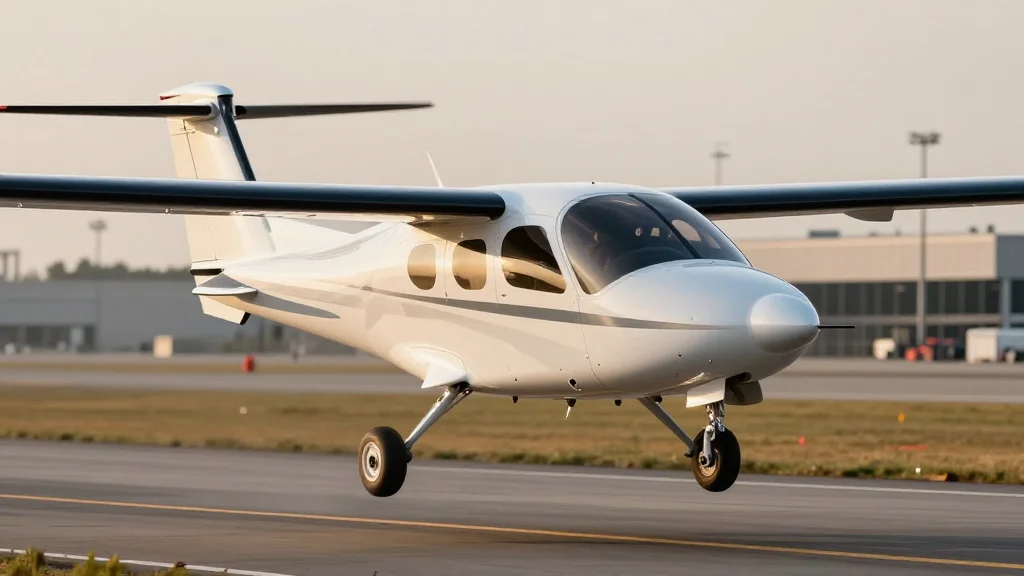
Archer Aviation’s COO Thomas Muniz Charts Turnaround as Q1 Revenue Surges

Companies Mentioned
Why It Matters
Archer’s Q1 performance provides a rare glimpse into how an eVTOL startup can balance heavy R&D spend with early revenue generation. The COO’s focus on operational execution—particularly the launch of a dedicated air‑taxi hub and progress on FAA certification—highlights a shift from pure technology development to market‑ready services. For investors and industry observers, the company’s $1.8 billion liquidity cushion reduces financing risk, allowing Archer to fund its ambitious production ramp‑up without resorting to high‑interest debt. The broader eVTOL ecosystem stands to benefit from Archer’s milestones. Successful certification and commercial flights could validate regulatory pathways, encouraging other players to accelerate their own programs. Moreover, Archer’s defense partnership with Anduril signals a diversification strategy that may attract government contracts, further stabilizing revenue streams in an otherwise speculative market.
Key Takeaways
- •Q1 revenue rose five‑fold, driven by early operations at Hawthorne Airport
- •Net loss of $218 million; adjusted EBITDA loss projected at $170‑$200 million for Q2
- •Liquidity stands at $1.8 billion with less than $100 million in debt
- •Archer became the first eVTOL firm to complete FAA Phase II certification
- •Defense partnership with Anduril targets hybrid autonomous aircraft for U.S. and U.K. procurement
Pulse Analysis
Archer’s earnings call underscores a pivotal moment for the eVTOL sector: the transition from prototype validation to scalable commercial operations. Historically, eVTOL firms have burned cash on R&D without clear revenue pathways, leading to investor fatigue. Archer’s strategy—anchoring a mobility hub at Hawthorne, leveraging high‑profile partnerships, and securing a defense contract—creates multiple near‑term cash‑flow levers that could mitigate the typical burn‑rate narrative.
The company’s liquidity advantage differentiates it from peers that rely heavily on debt financing. With $1.8 billion in cash and equivalents, Archer can absorb the inevitable cost overruns associated with certification and production ramp‑up. This financial flexibility may also enable the firm to outbid competitors for strategic airport assets, a tactic that could lock in market share ahead of the 2028 Olympic Games.
Looking forward, the success of Archer’s operational rollout will hinge on two variables: regulatory timing and market adoption. The FAA’s remaining certification phases remain a bottleneck; any delay could push back revenue milestones and strain cash reserves. Conversely, securing the Olympic air‑taxi contract could provide a high‑visibility proof point, catalyzing city‑level agreements and accelerating the broader eVTOL rollout. Investors should monitor the Q2 earnings release for signs of progress on these fronts, as well as any updates on the defense platform’s procurement pipeline.
Archer Aviation’s COO Thomas Muniz Charts Turnaround as Q1 Revenue Surges
Comments
Want to join the conversation?
Loading comments...