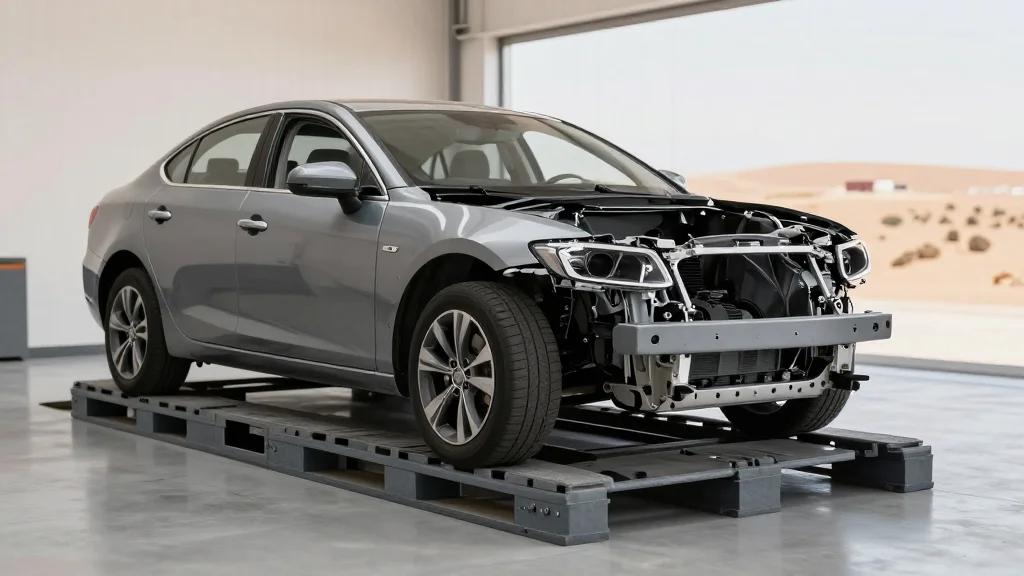
Stellantis Launches $1.8 M Vehicle Dismantling Center in Morocco to Boost Circular Economy

Companies Mentioned
Why It Matters
The Casablanca dismantling center illustrates how automotive COOs are translating circular‑economy concepts into tangible operational assets. By establishing a formal ELV pipeline, Stellantis reduces reliance on volatile raw‑material markets, improves parts availability, and creates a new revenue stream from remanufactured components. For the MEA region, the plant brings regulatory clarity to a traditionally informal scrap sector, potentially prompting other manufacturers to adopt similar models. For investors and supply‑chain executives, the project signals a shift from sustainability as a peripheral narrative to a core cost‑management lever. As vehicle lifecycles lengthen and regulatory pressure on waste intensifies, the ability to recycle and reuse at scale could become a decisive factor in competitive positioning, especially in emerging markets where price sensitivity is high.
Key Takeaways
- •Stellantis opened a €1.6 million ($1.8 million) dismantling center in Casablanca, Morocco.
- •Facility spans 6,000 sqm and can process up to 10,000 end‑of‑life vehicles per year.
- •The plant creates roughly 150 direct and indirect jobs and supports West African ELV flows.
- •Operates under the SUSTAINera unit, focusing on the 4Rs: remanufacturing, repair, reuse, recycling.
- •COO Samir Cherfan highlighted circular‑economy as a strategic priority for the MEA region.
Pulse Analysis
Stellantis’ move reflects a broader industry trend where operational leaders are using circular‑economy projects to hedge against supply‑chain disruptions and raw‑material price spikes. By internalizing the dismantling process, the automaker captures value that would otherwise be lost to third‑party recyclers, aligning cost savings with ESG goals. This dual benefit is especially compelling for COOs tasked with tightening margins while meeting sustainability mandates.
Historically, vehicle recycling has been fragmented, with many markets relying on informal scrap yards. Stellantis’ structured approach in Morocco could serve as a template for other OEMs seeking to formalize ELV handling in regions lacking robust regulatory frameworks. The modular nature of the Casablanca plant suggests that scaling to higher volumes—or replicating the model in neighboring countries—can be achieved with relatively modest incremental capital, preserving the low‑cost advantage that the initial $1.8 million outlay provides.
Looking forward, the success of the Casablanca hub will likely be measured by its ability to feed remanufactured parts into Stellantis’ aftermarket channels at competitive prices. If the plant can consistently deliver high‑quality components, it may reduce the automaker’s dependence on new‑part inventories, freeing up capital for other strategic initiatives such as electrification. For COOs across the sector, the Casablanca example underscores that circular‑economy investments are no longer optional add‑ons but integral components of a resilient, cost‑effective supply chain.
Stellantis Launches $1.8 M Vehicle Dismantling Center in Morocco to Boost Circular Economy
Comments
Want to join the conversation?
Loading comments...