
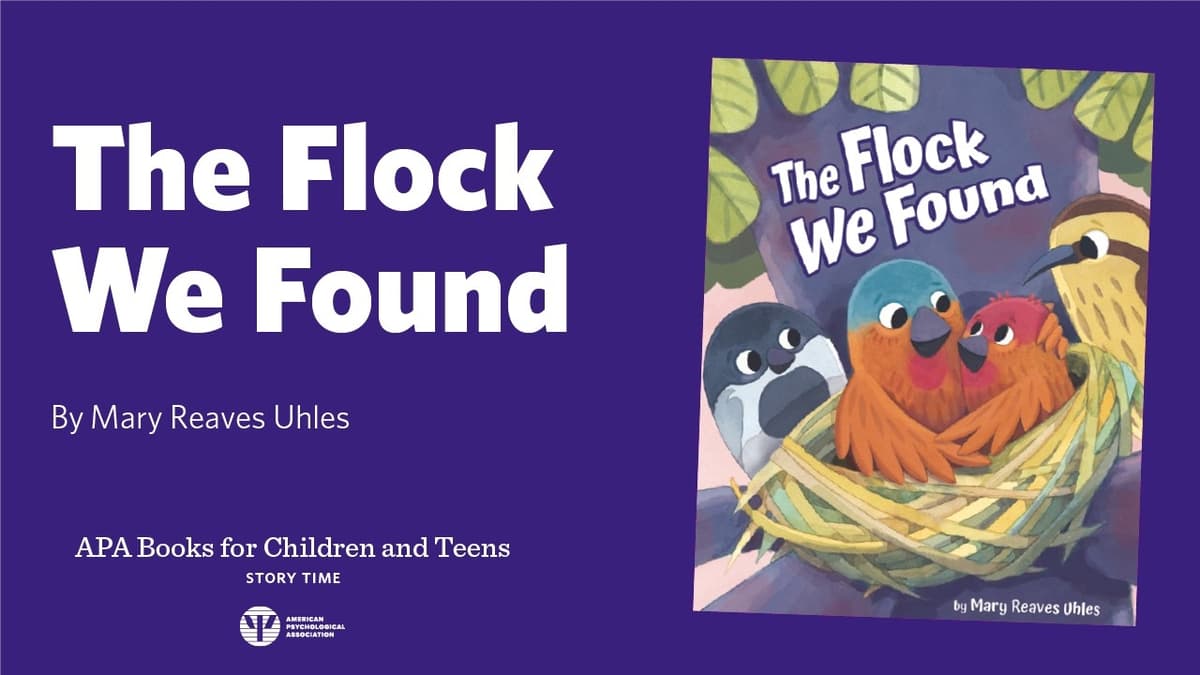
The Flock We Found Read by Mary Reaves Uhles
The Flock We Found, published by APA’s Magination Press and read by author‑illustrator Mary Reaves Uhles, is a picture‑book that follows Baby Bird’s quest for his absent father’s approval. Through a field‑day competition, Baby Bird tries to win prizes—best nest, fastest worm catcher, highest flyer—believing each triumph will make Papa Bird return happy. Mama Bird and neighboring wren and chickadee step in, teaching him nest‑building, worm‑hunting, and high‑flying techniques. When the day arrives, Baby Bird excels, yet Papa Bird never appears. Mama Bird comforts him, saying, “Sometimes I’m angry and disappointed too, but your flight was amazing,” and points to the “flock we found” surrounding them. The narrative frames parental absence—whether due to mental‑health issues, substance abuse, or addiction—as a catalyst for a chosen family. The book’s back‑matter offers caregiver notes, making it a practical tool for parents, educators, and therapists addressing trauma with young readers.
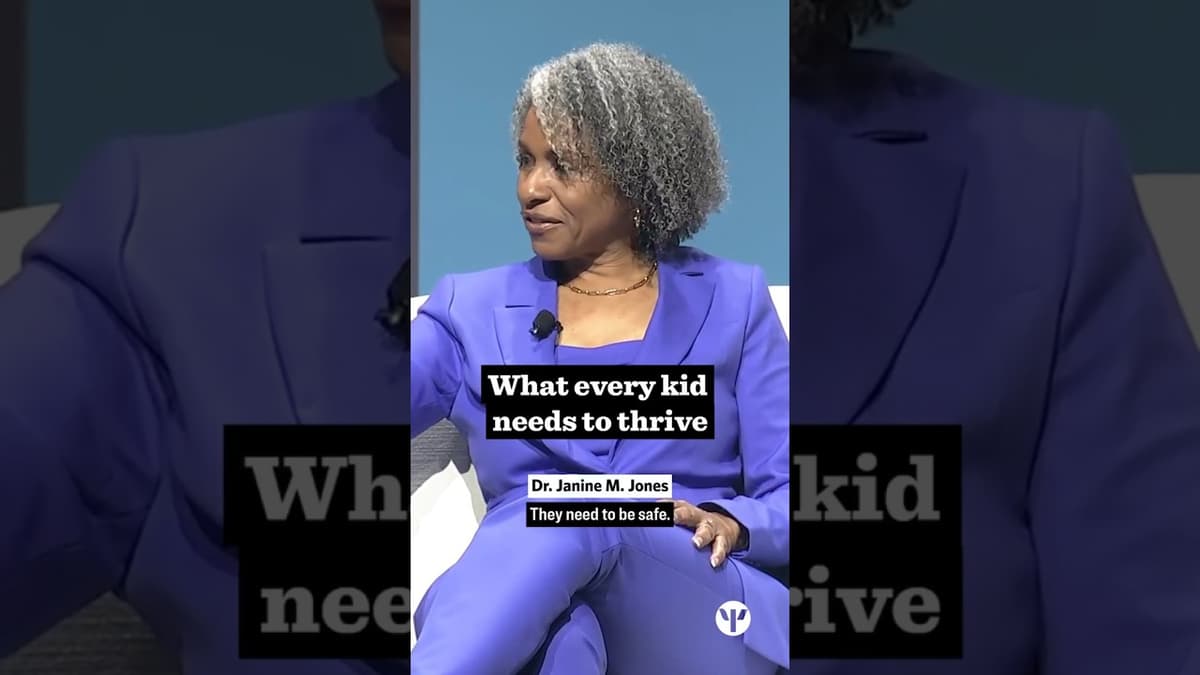
What Every Kid Needs to Thrive | APA 2025 #mentalhealth #psychology #teens #shorts
APA’s 2025 video outlines three essential conditions—safety, visibility, and support—that enable children to thrive. UC Santa Barbara professor Dr. Janine Jones emphasizes that schools must move beyond behavior management to recognize each student’s identity, experiences, and strengths. The message aligns...

The Limits of AI in Therapy | APA 2025 #psychology #ai #shorts
AI-driven tools are entering mental‑health practice, offering scalable screening and symptom monitoring. However, clinical psychologist Dr. Margaret Morris cautions that AI cannot interpret what remains unsaid, missing the nonverbal cues and contextual patterns that human therapists detect. The American Psychological...
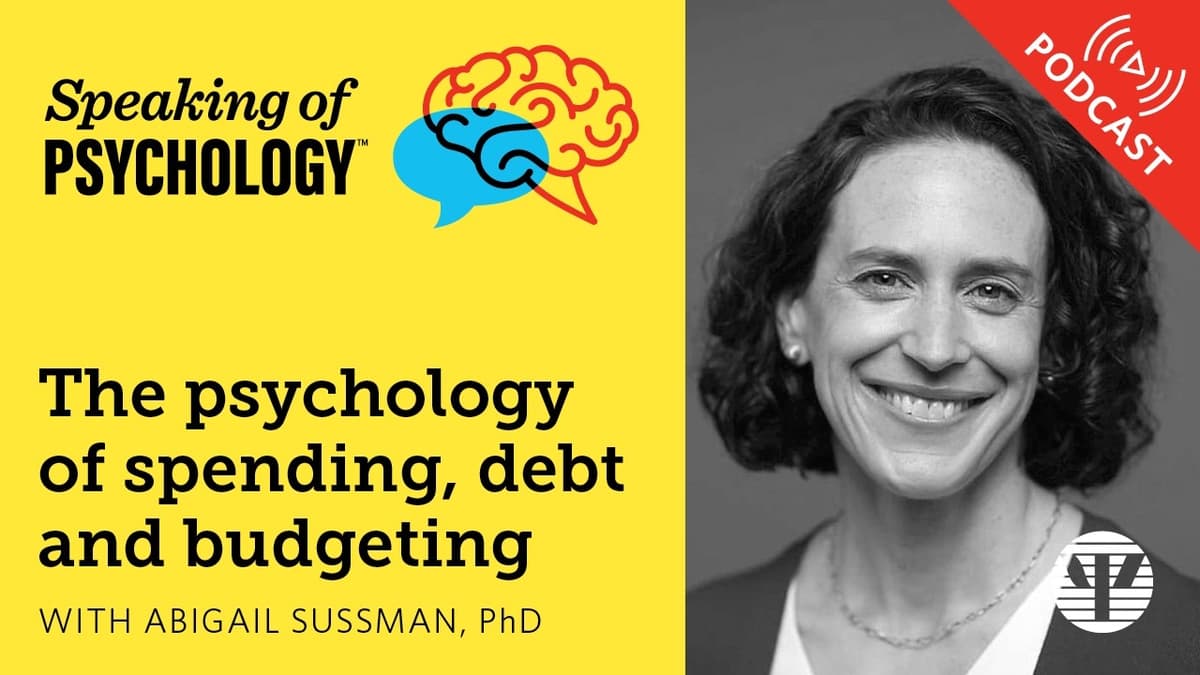
The Psychology of Spending, Debt and Budgeting, with Abigail Sussman, PhD | Speaking of Psychology
Buy‑now‑pay‑later (BNPL) schemes have exploded, adding a new layer to consumer decision‑making. Abigail Sussman, PhD, explains how payment‑splitting tricks the brain into perceiving purchases as cheaper, while people routinely overlook irregular costs in their budgets. She also highlights why many...

S'more Is Enough Read by Brenda S. Miles
The video introduces "S'more is Enough," a new title in Brenda Miles’ Food for Thought series, illustrated by Monika Filipina. Miles, a child psychologist, frames the story around Graham, a whimsical s’more who questions whether he is sufficient as he...

Why Babies Laugh, with Gina Mireault, PhD | Speaking of Psychology
The episode explores infant laughter as a developmental milestone, featuring Dr. Gina Moreau of Vermont State University. She explains that involuntary smiles appear in utero, voluntary smiling emerges around six weeks, and genuine laughter typically surfaces at four months, often in...
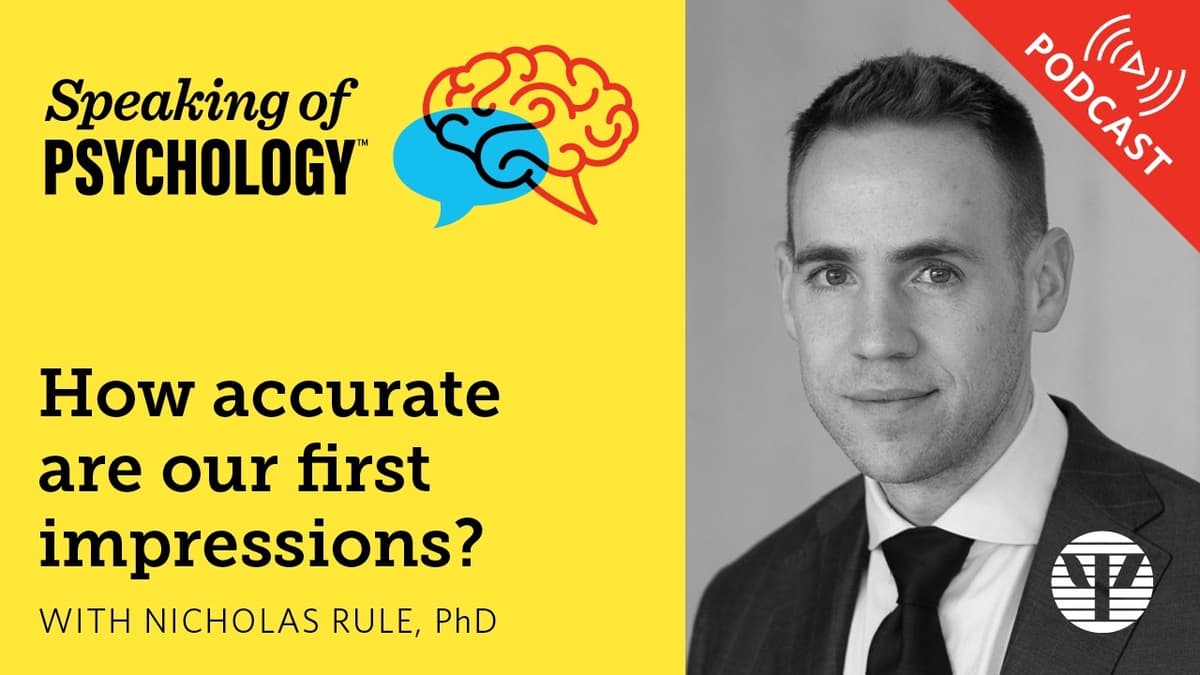
How Accurate Are Our First Impressions? With Nicholas Rule, PhD | Speaking of Psychology
Nicholas Rule, PhD, explains that the brain generates social judgments within milliseconds, often before conscious awareness. He reviews how accurate these snap assessments can be, noting that traits like extraversion and trustworthiness are sometimes inferred with modest success, while others,...

Closing Session: Perspectives Power Purpose | APA 2025
The American Psychological Association’s 2025 Closing Session featured four psychologists—Dr. Billy Holcombe, Dr. Daniel Lattimore, Dr. Jared Minkel, and Dr. Elise Oehring—sharing personal stories that illuminate the motivations behind their careers. Produced with Story District and inspired by The Moth,...
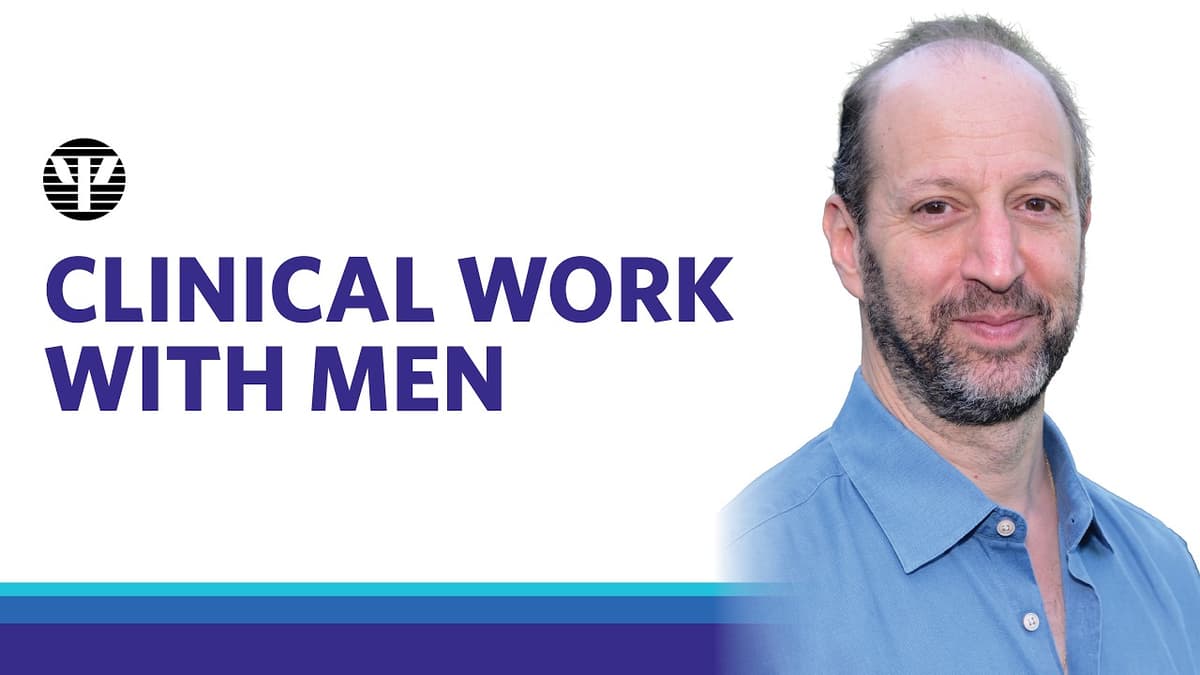
Clinical Work with Men | Andrew P. Smiler Spotlight
The video features clinical psychologist Andrew P. Smiler introducing his new book, *Clinical Work with Men: Understanding Masculinity and Psychotherapy*. He highlights the growing difficulty therapists encounter when engaging teenage boys and adult men, noting high no‑show rates and stagnant...

Safeguarding Mental Health Professionals in an AI World | APA 2025
The session, presented by a certified professional healthcare risk manager at the APA 2025 conference, focused on how mental‑health clinicians can safely integrate artificial intelligence into their practices. While acknowledging the growing allure of AI for documentation, report drafting, and...

Emotionography | Jonathan Potter & Alexa Hepburn Spotlight
The video introduces Emotionography, a methodological shift championed by Jonathan Potter and Alexa Hepburn, arguing that traditional emotion research relies on questionnaires and lab tasks that strip emotion from its lived context. They advocate analyzing audio‑video recordings of natural settings—family meals,...

Understanding Tourette Disorder, with John Piacentini, PhD | Speaking of Psychology
The podcast episode spotlights Tourette disorder and related tic conditions, clarifying common misconceptions—particularly the over‑emphasis on profanity tics—and presenting up‑to‑date prevalence data from the CDC that roughly one in fifty school‑aged children experience tics. Host Kim Mills interviews Dr. John...
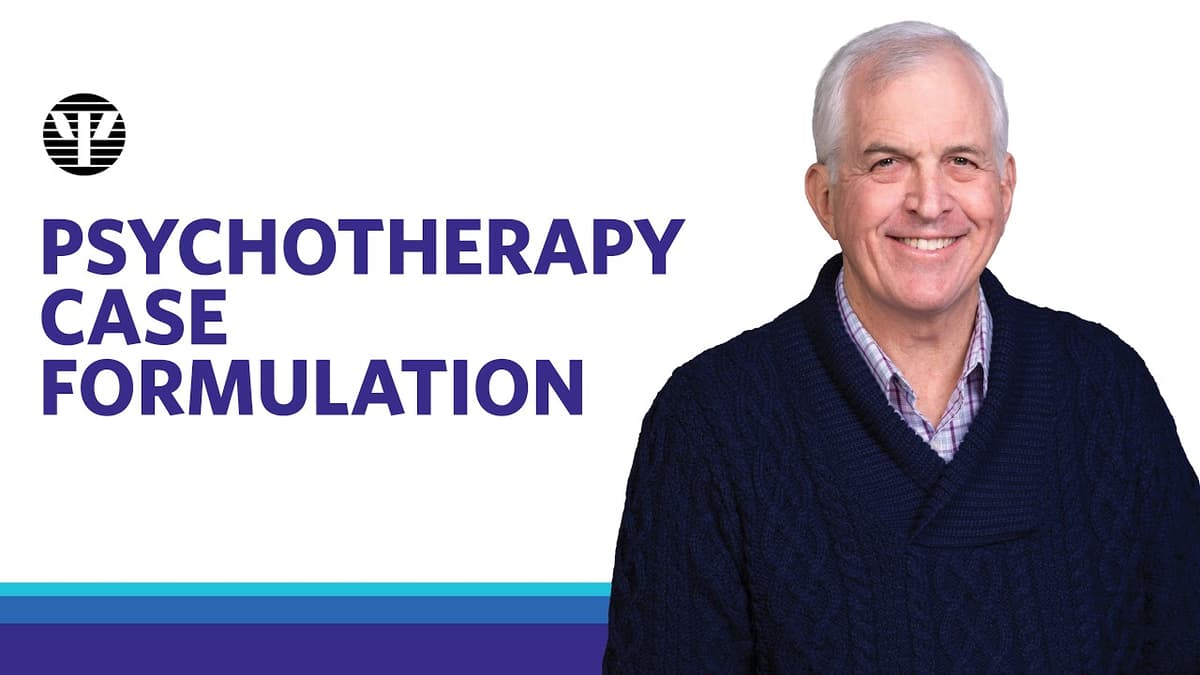
Psychotherapy Case Formulation | Tracy D. Eels Spotlight
The video introduces Tracy D. Eels’s newly released second‑edition book, *Psychotherapy Case Formulation*, published by the American Psychological Association. It argues that a systematic, collaboratively built, evidence‑based, and culturally responsive formulation is the cornerstone for making informed, moment‑to‑moment therapeutic choices. Eels...

Buddhist Psychotherapy: Connecting Early Buddhism to Mindfulness & Western Psychotherapy | APA 2025
In an APA 2025 Feature Stage session, President Dr. Debra M. Kawahara and Dr. Liang Tien examined how early Buddhist teachings can deepen modern mindfulness practice. They translated core Buddhist concepts such as the Four Noble Truths and the Eightfold...

Ethical Challenges for Mental Health Professionals | Jack P. Haynes Spotlight
In a recent Spotlight interview, APA‑affiliated psychologist Jack P. Haynes, a former ethics‑committee chair, introduces his new co‑authored volume, *Ethical Challenges for Mental Health Professionals: Your Questions Answered*. The book is positioned as a practical guide for clinicians across disciplines—psychologists,...

Too Many Toucans Read by by Paula Bowles
The video features author‑illustrator Paula Bowles reading her children’s book *Too Many Toucans*, a fable about a toucan named Toco who seeks help building his dream treehouse. The narrative quickly turns into a lesson on collaboration when well‑meaning neighbors flood...

The Kink and Flourishing Study: Impact of Kink Involvement in Personal Growth and Healing | APA 2025
The American Psychological Association hosted a symposium unveiling the first in‑depth mixed‑methods Kink and Flourishing study. Researchers presented evidence that consensual kink participation can facilitate trauma recovery, personal growth, and overall flourishing. Findings were shared by Anna Randall, Jessica Helmer,...

How to Become More Patient, with Sarah Schnitker, PhD
Sarah Schnitker, PhD, explains why patience is increasingly scarce in a world dominated by instant‑gratification technology. She distinguishes true patience from passive resignation and outlines cues for when to wait versus when to act. The discussion also presents evidence‑based cognitive...
Systems Level Approaches to Addressing the Youth Mental Health Crisis | APA 2025
The APA 2025 session convened scholars to examine system‑level strategies for the escalating youth mental‑health crisis, highlighting how intersecting societal forces—digital overload, economic insecurity, racism, climate threats, and displacement—compound distress among children and adolescents. Panelists presented data showing that one in...