

Cross‑Functional AI Lab Delivers 8 Impactful Use Cases
Many businesses are searching for ROI from AI. Does putting business, technology, and strategy teams together to learn, brainstorm, and build work? Yes, when done with real technical expertise and prioritizing according to business impact. Congratulations to the Morgan Stanley team for executing its very successful AI Challenge Lab, which found and executed 8 unique use cases -- ahead of other financial institutions. Thanks to Daniel Simkowitz , Andy Saperstein, Sharon Yeshaya , Matt Berke , Cameron Rice , and Adam Kudelka for working with Kirsty Tan and me at AI Aspire on this program. Thanks also to the project management team: John Hagarty , Jonathan L. , Julie Chung , Mina Pell Mitby , Brian Coyle , Kara Underwood , Dan Costin , Richard Huddleston, and Madeline Perdoch . That Morgan Stanley -- one of the most important institutions in the world -- is moving quickly with AI is inspiring.
Optimize, Deploy, and Benchmark an Open-Source LLM with vLLM
The video announces a new course, co‑created with Red Hat and taught by Sergey Kliger, that focuses on deploying open‑source large language models (LLMs) efficiently using the vLLM serving system. It explains the core memory bottlenecks of massive models—e.g., a 70‑billion‑parameter LLM...
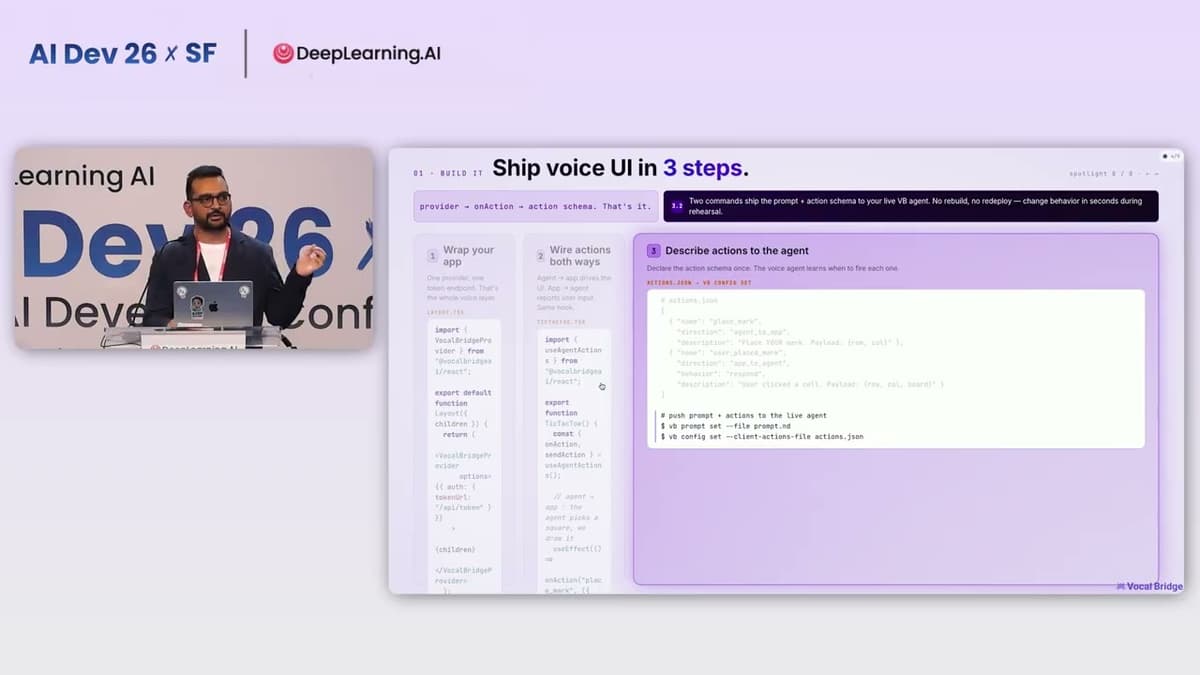
AI Dev 26 X SF | Ashwyn Sharma: Every App Needs a Voice UI. Here's How to Build It
Ashwin Sharma, CEO of Vocal Bridge, unveiled a platform that turns any application or AI agent into a voice‑first experience. The company positions itself as a one‑stop, fully managed solution, offering three distinct integration surfaces: embedding voice directly into existing...
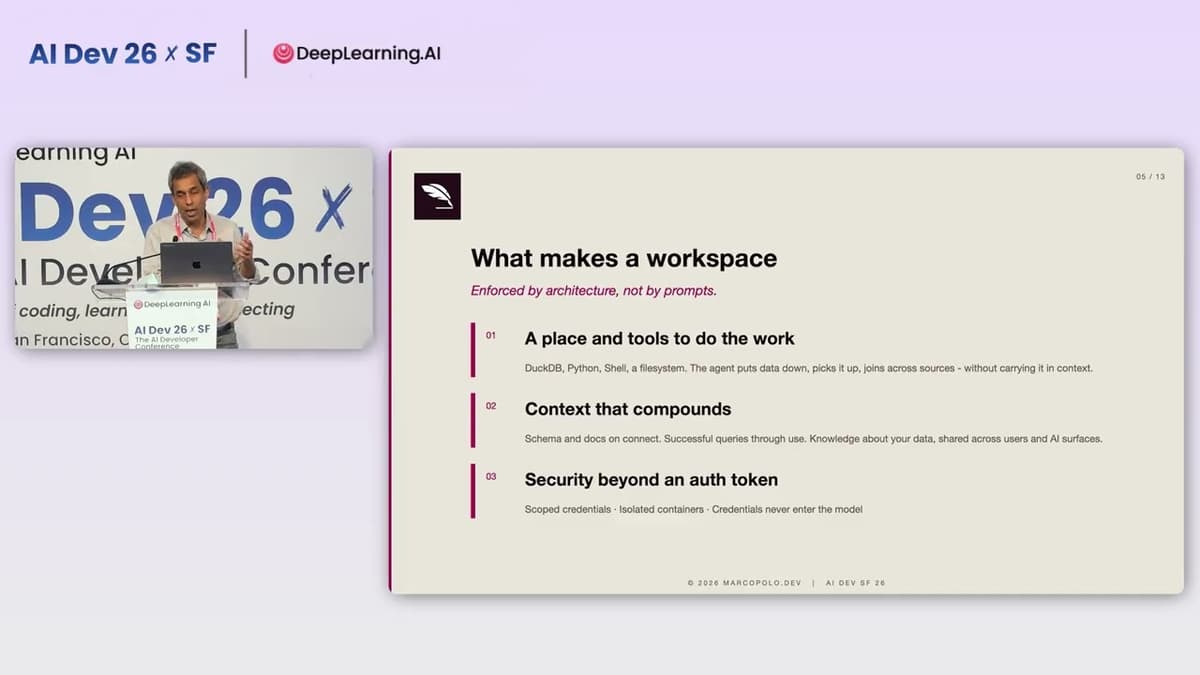
AI Dev 26 X SF | Aman Singla & Aseem Chandra: MarcoPolo, A Workspace for AI to Work with Your...
The video introduces Marco Polo, a middleware platform that provides a dedicated workspace where agentic AI models—such as Claude, ChatGPT, or custom agents—can safely access and manipulate enterprise data across dozens of systems. By running in a secure Kubernetes container,...
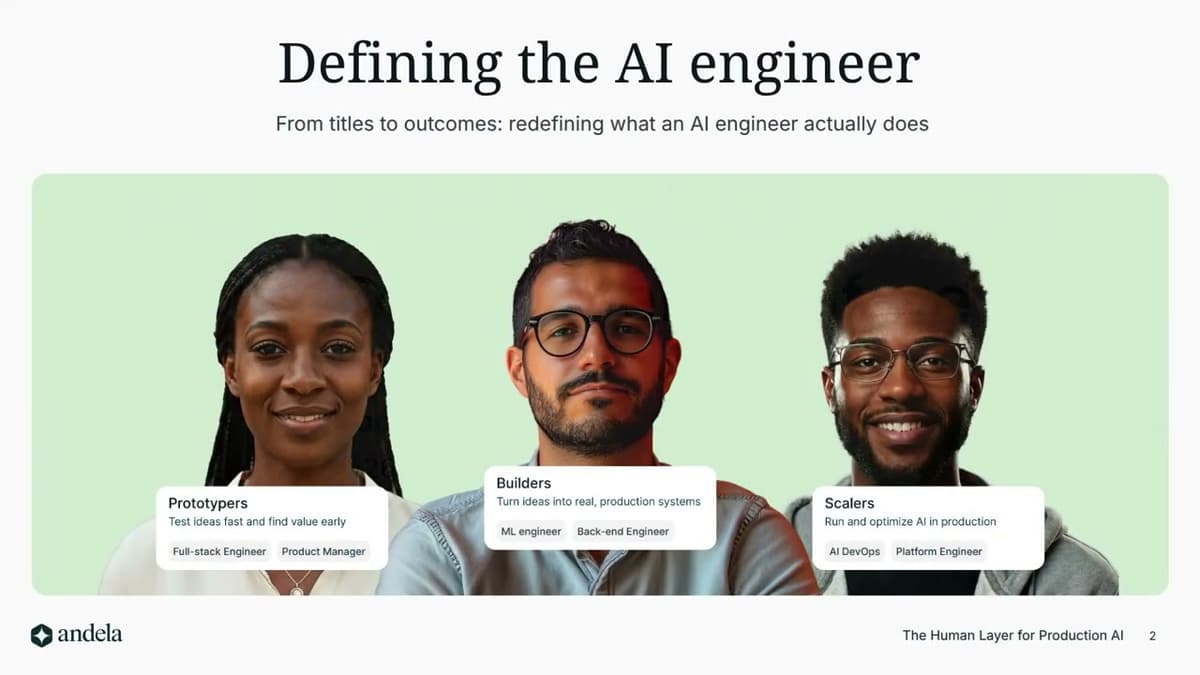
AI Dev 26 X SF | Barun Singh & Kennith Jackson; The Hidden Cost of AI Velocity and AI Agents
The panel, hosted by Endela’s SVP of AI Solutions and its CPTO, examined the hidden costs of AI velocity and the hype around autonomous AI agents. They argued that while AI coding assistants like Copilot boost speed in isolated tasks,...
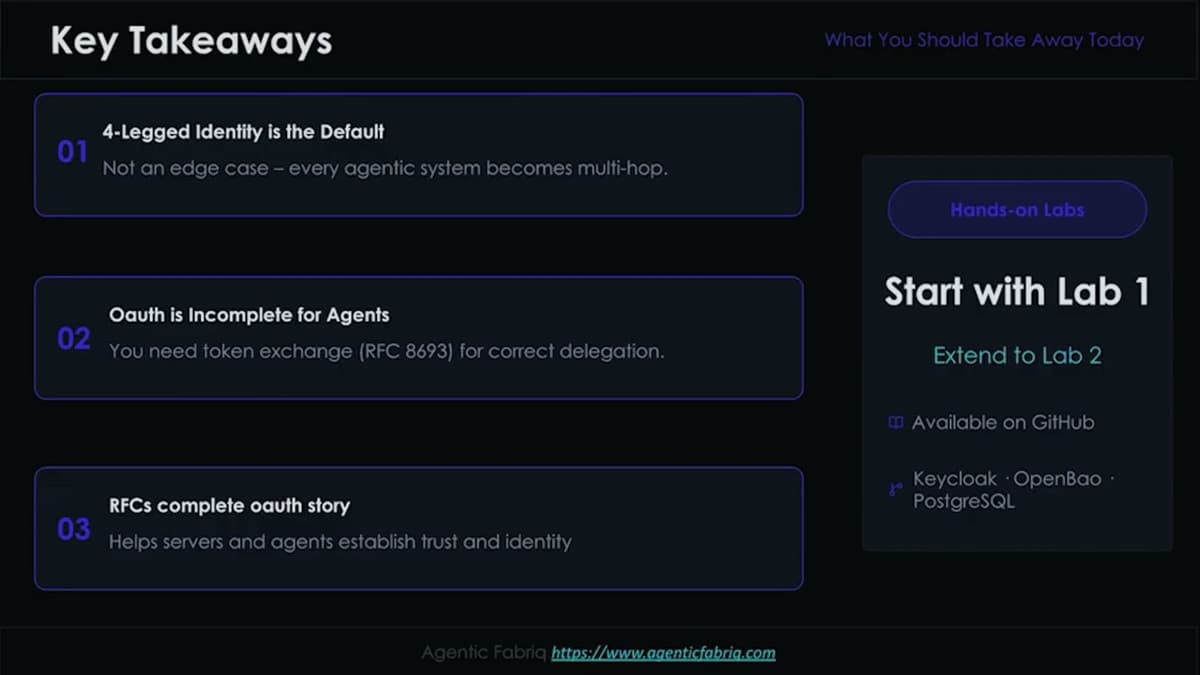
AI Dev 26 X SF | Matthew Xu: The 4-Legged Identity Challenge
In a recent AI Dev 26 session, Matthew Xu, CTO of Agent Fabric, warned that the “four‑legged identity challenge” – where a user, an agent, an MCP server and a downstream API each act in a chain – is becoming...
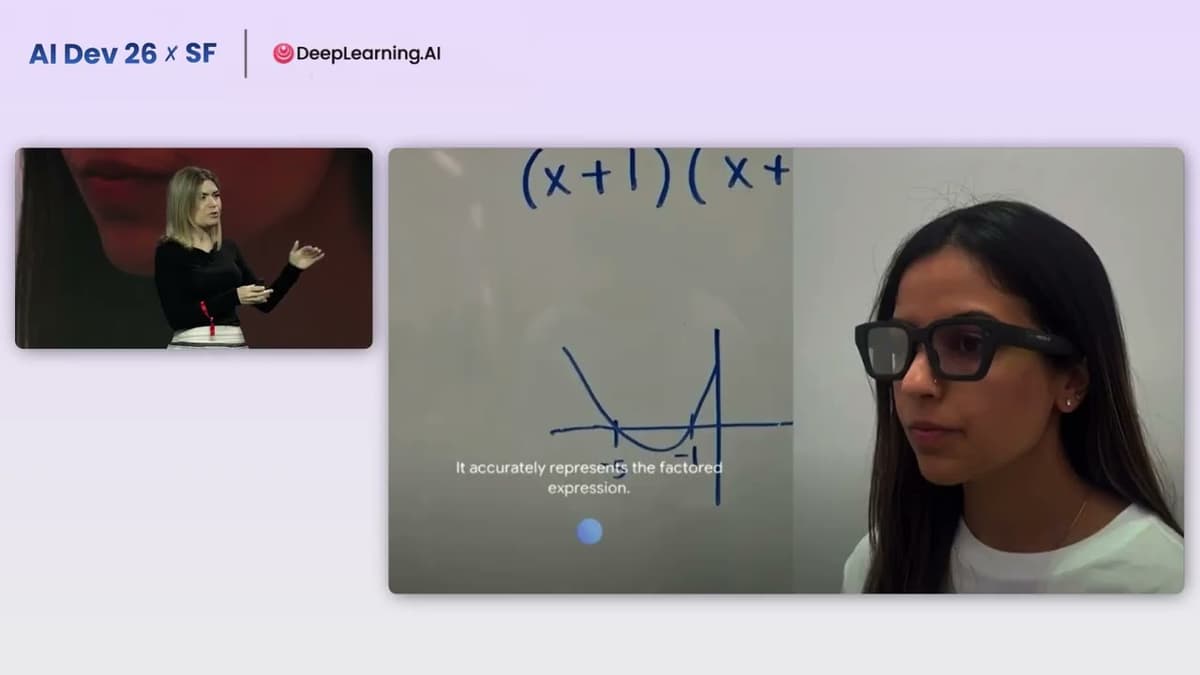
AI Dev 26 X SF | Paige Bailey: Research to Reality
Paige Bailey, engineering lead for Developer Relations at Google DeepMind, introduced the latest Gemini and Gemma model families during AI Dev 26. She highlighted Gemini 3’s native multimodal capabilities—processing video, images, audio, text, and code simultaneously—and outlined the tiered lineup from...
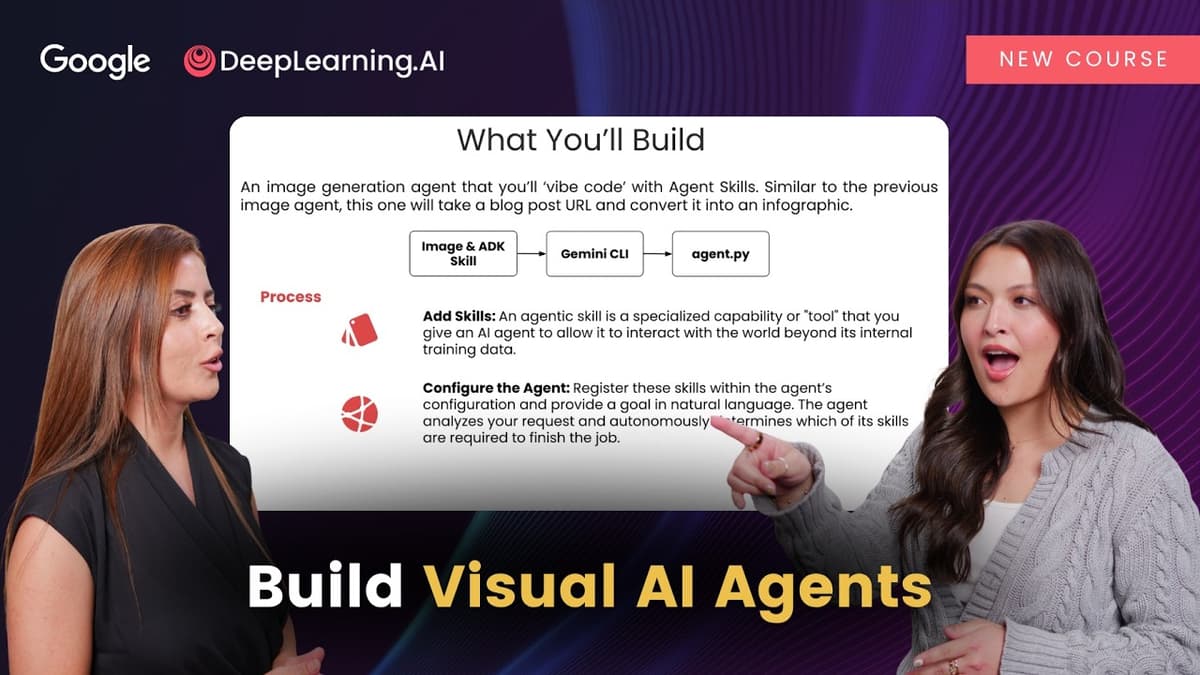
Build Visual AI Agents
Google, in partnership with AI experts Katie Nguyen and Wafae Bakkali, launched a short course titled "AI Agents for Image and Video Generation." The curriculum focuses on building autonomous visual media agents, covering prompt engineering, evaluation pipelines, and end‑to‑end agent...
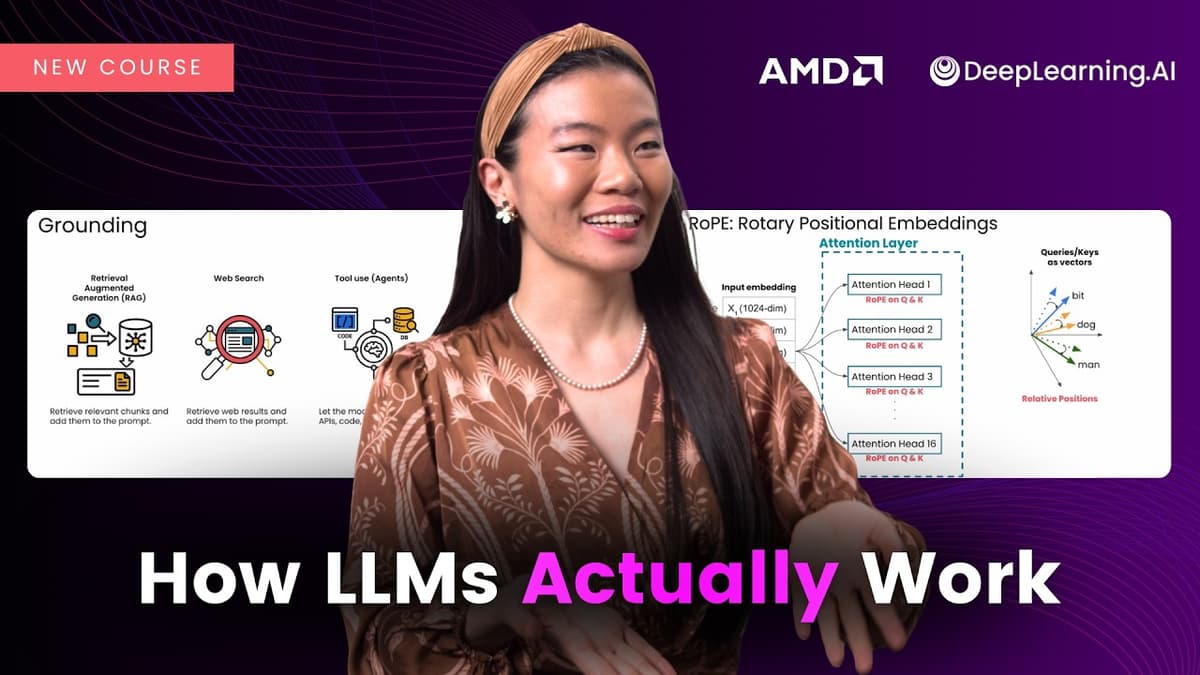
The Ultimate Transformer Course for Working Engineers
The video announces "Transformers in Practice," a hands‑on course built with Deep Learning AI and AMD aimed at engineers wrestling with large language model (LLM) deployment issues such as latency, out‑of‑memory crashes, and hallucinations. It positions the curriculum as a...

Coursera and Udemy Merge to Boost AI-Driven Lifelong Learning
I'm delighted that Coursera and Udemy have come together as one company to serve learners. Both Coursera and Udemy were founded with the belief that access to high-quality education changes lives. Over the years, both companies have advanced this goal,...
Build Interactive Agents with Generative UI
This short course teaches developers to build AI agents that generate custom user interfaces instead of plain‑text replies. Partnered with Copilot Kit and led by co‑founder Atai Bakai, the program shows how to wire an agent directly into a React...

Dual‑Agent Voice UI Makes Real‑Time Apps Easy
I'm excited about voice as a UI layer for existing visual applications — where speech and screen update together. This goes well beyond voice-only use cases like call center automation. The barrier has been a hard technical tradeoff: low-latency voice models...

Boost LLM Performance: New SGLang Course Is Live 🚀
The video announces a new online course on efficient inference with SGlang, an open‑source framework that accelerates both text and image generation. Developed in partnership with OMIS and Radix, the curriculum targets engineers and researchers looking to cut inference costs. The...

Build Memory-Aware Agents
The video announces a new training course, "Build Memory‑Aware Agents," created in partnership with Oracle and taught by Richmond Alak and Nacho Martinez. It positions memory as the missing piece that converts a stateless large language model into an agent...
Generative Adversarial Networks (GANs) Specialization
The new specialization introduces generative adversarial networks (GANs) as a cutting‑edge deep‑learning technique for creating photorealistic images and videos. It promises hands‑on implementation, allowing students to build a working GAN from day one. Instructor Sharon Joe demystifies GANs using the art‑forger and...