
Frontier AI Models Outperform Clinical Tools, Yet Need Agent Integration
A new study in Nature Medicine has frontier models outscoring the specialized clinical AI tools on a run of medical benchmarks, and it has stirred up both the AI and clinical worlds. Some clinicians feel the tools they trusted let them down. Others feel their faith in the frontier models was right all along. To navigate this moment, it's worth slowing down to untangle a few things we tend to blur together: the AI model, the agent harness wrapped around it, and the AI application a clinician actually uses. Pull those apart, and much becomes clear: why a handful of frontier labs produce the real intelligence, why frontier intelligence on its own is not enough at the bedside, why it is nonetheless an essential ingredient in AI agents, and what all of it means for building and using clinical AI.

Glass Boosts Speed and Handles More Patient Context
Several fantastic updates to Glass in the last week or so. Improved speed of response and the ability to ingest more patient context are my favorites.

AI Frees Clinicians to Think Deeper About Patients
An important point and true in AI for clinical medicine as well. Applying AI to clinical workflows can free you up to think much more deeply about your patients.

AI Will Write 90% of Clinical Work Soon
At leading AI companies, software agents are using AI to write 90% of their code. The same thing will happen in medicine, where doctors will use AI to complete 90% of clinical work. In some cases, the AI-Native doctor is...

AI‑empowered Patients Demand Smarter Clinician Collaboration
Patients are empowered by AI in a way they've never been before. This raises the bar for clinicians everywhere. I'm hearing from clinicians that their patients now come to clinic having done tremendous amounts of research on themselves and their conditions...
Redefine Your Job as Outcomes, Not Tasks, to Leverage AI
Your job is not the tasks you do. This is a critical reframe that every knowledge worker must embrace in order to successfully adapt to AI. Especially true given that the current frontier models are mind-blowingly good and the next...
Legacy EHRs Can't Keep Pace with AI‑Native Competition
The SaaS-pocalypse playing out in public stocks reflects a real fear. Legacy SaaS companies, even with their existing distribution and install base, may be unsuccessful in bolting on AI capabilities to their legacy platforms. There is fear that their user...
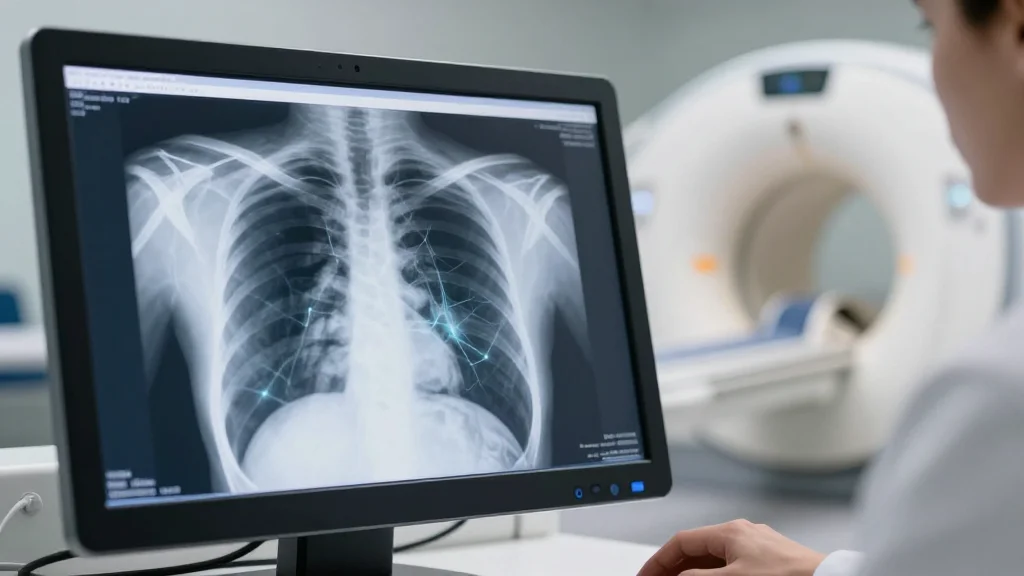
AI Automates Radiology Tasks, but Radiologists Still Thrive
On Lex Fridman's podcast this week, Jensen Huang brought up radiology and AI, highlighting radiology as an important data point for how we can expect AI to influence jobs. He talked about how nearly a decade ago, AI researchers predicted...

Clinical AI API Enables Easy Evidence‑Based Diagnostics
Evidence-based clinical intelligence is becoming a critical infrastructure for many healthcare technology companies. We've made building with our clinical AI agent exceptionally easy with in-app self-serve access to the Glass Developer API. Developers can get started building with our AI today and...

Glass 5.5 Delivers Specialty‑focused AI for Clinicians
Glass 5.5 is an amazing upgrade to the platform. Clinicians now have an AI specific to their specialty that will support them through every step of their clinical workflows.
Patients Should Expect Doctors to Use Clinical AI
At this point, it's very reasonable for a patient to ask their doctor, "Have you used clinical AI to help optimize your diagnosis and treatment plan for me?"

Claude Chrome Extension Tops Browser AI Agents
Anthropic's Claude Chrome extension is hands down the best browser use agent available right now.
OpenClaw Enables Continuous Self‑Prompting AI for Healthcare
Some experts do not think OpenClaw is relevant to AI in healthcare. They are wrong. OpenClaw represents us phase shifting in the way we relate to AI systems again. We are moving past promting a chatbot to ask a question so...

Clinical AI Efficiency Will Expand, Not Shrink, Healthcare Demand
Jevons' paradox applied to clinical AI — In 1865, William Stanley Jevons noticed that the more efficient steam engines became, the more coal England burned — not less. He observed that increased efficiency does not necessarily suppress demand. In some...

LLMs Turn Mental Bicycles Into High‑Speed Racecars
If the computer is a bicycle for the mind, the LLM is a racecar. Those of us who are using them to supercharge our minds can't stop zooming around.