

AI Robots Harvest Tomatoes, Humans Shift to Care
A greenhouse in the Netherlands is showing what the future of agriculture could look like. Robots equipped with AI and smart cameras are identifying and picking ripe tomatoes with precision - using a FANUC robot arm to harvest quickly and without damage. It’s a clear step forward. Consistent quality Continuous operation Less manual harvesting But the real shift isn’t just automation. It’s how work changes. Repetitive tasks move to machines. Humans focus on plant care, quality, and decision-making. The question isn’t whether this will scale. It’s how fast agriculture adapts to it. #AI #Robotics #AgTech #Innovation Credits to @spaceandtech_ @IanLJones98 @NevilleGaunt @bamitav @altiamkabir @sijlalhussain @marcusborba @jblefevre60 @Nicochan33 @TerenceLeungSF @KirkDBorne @CurieuxExplorer @enilev @Eli_Krumova @pascal_bornet @anand_narang @sulefati7 @Xbond49 @Hana_ElSayyed @engmlubbad @Timothy_Hughes @mcanducci @RLDI_Lamy @segundoatdell @engmlubbad @rvp @ipfcoline1 @PatGrant7777 @NigelTozer @Ronald_vanLoon @pierrepinna @Khulood_Almani @BetaMoroney @AKWY
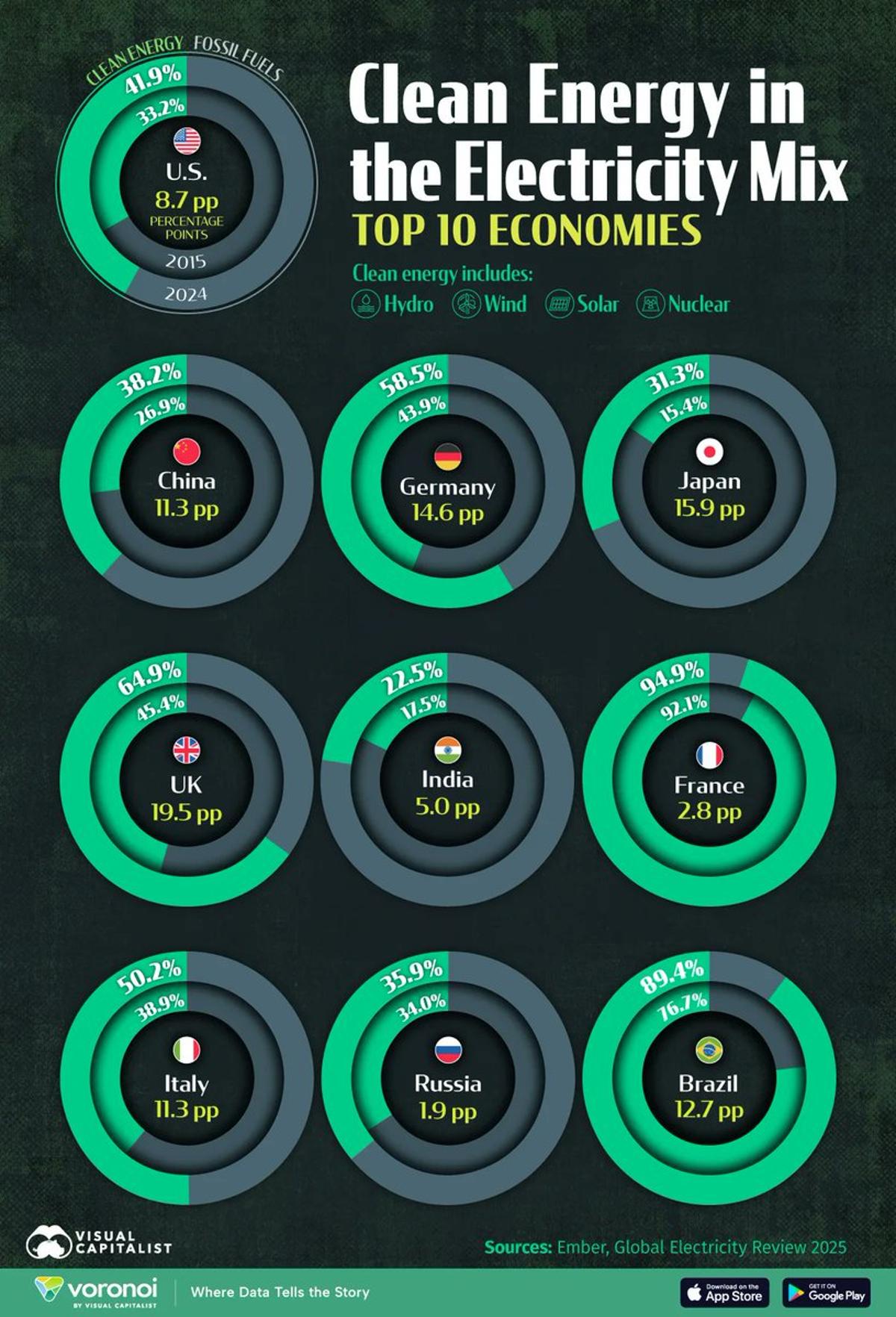
Clean Energy Shift Accelerates for Some, Stalls for Others
Clean energy progress isn’t evenly distributed. Since 2015, countries like the UK, Germany, and Japan have made the biggest gains with the UK leading among major economies. France stands out differently: not for rapid change, but for already having a 90%+ clean electricity...

Rail‑side Solar Looks Promising, but Durability Decides Viability
Solar doesn’t always need more land. Sometimes it just needs to fit better into what already exists. Installing panels between active rail lines sounds like a smart idea. The space is there. The infrastructure is already built. No competition with farmland or...
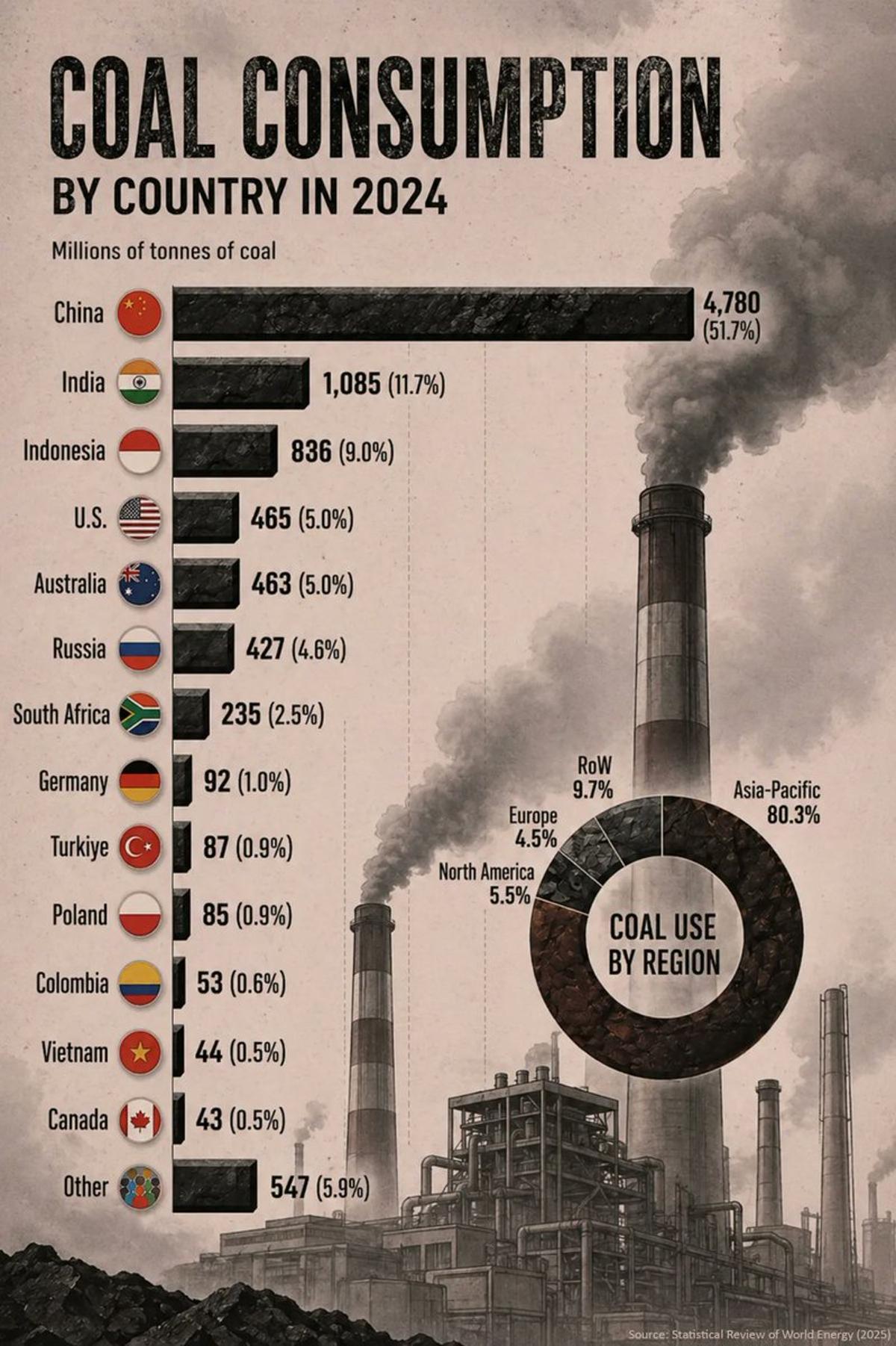
Coal Demand Concentrated: Six Nations Drive 87% Consumption
Coal consumption is more concentrated than many think. China alone accounts for over 50% of global demand, more than the rest of the world combined. The top six countries make up 87% of total consumption, with India, Indonesia, the U.S., and Australia following at...
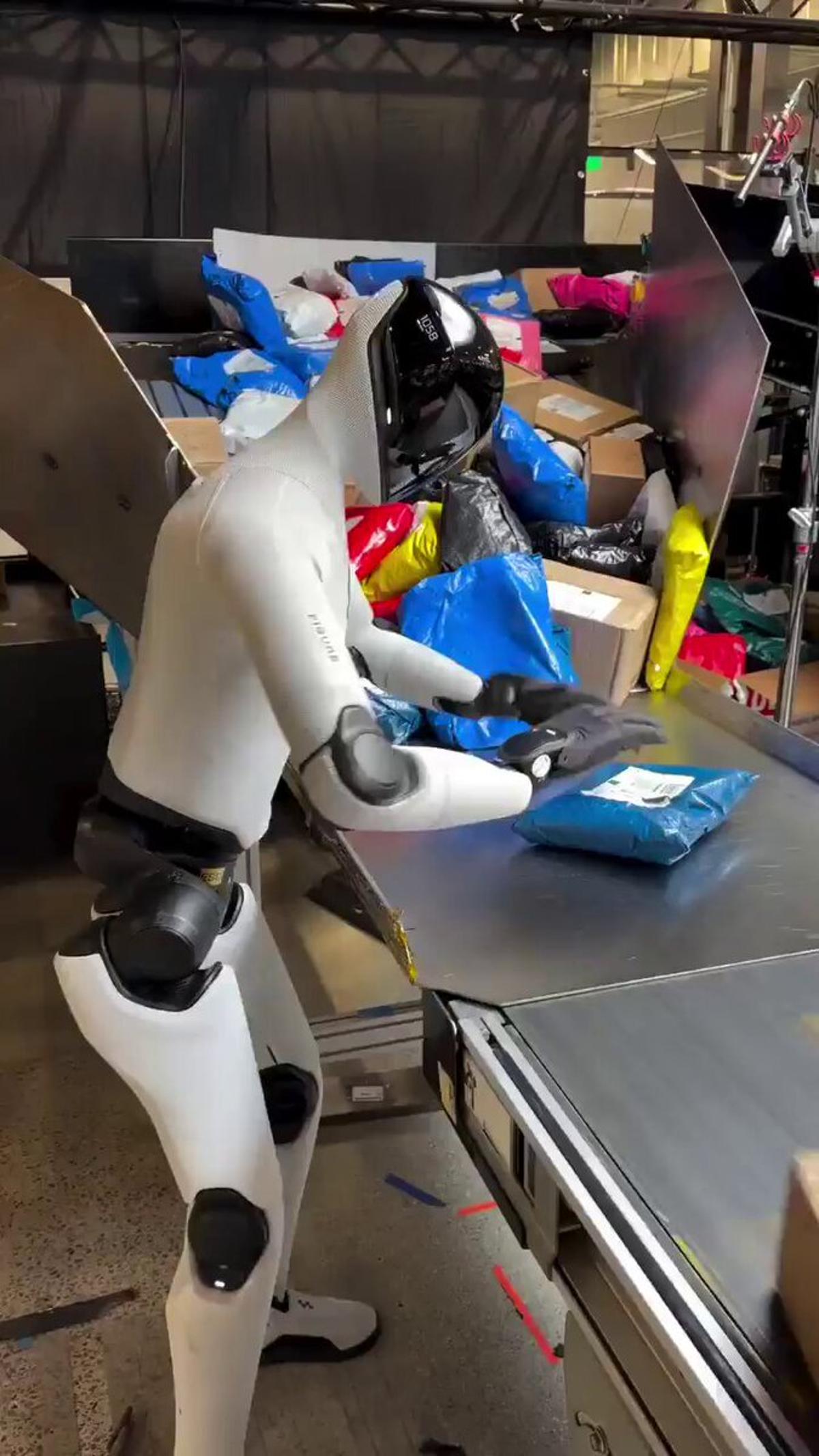
Robots Handle Routine, Freeing Humans for Creative Thinking
Robots are getting better at more than just repeating tasks. Seeing one sort packages, adjust on the fly, and keep going even after something breaks is pretty impressive. This isn’t really about replacing people. It’s about taking over the repetitive stuff so humans...
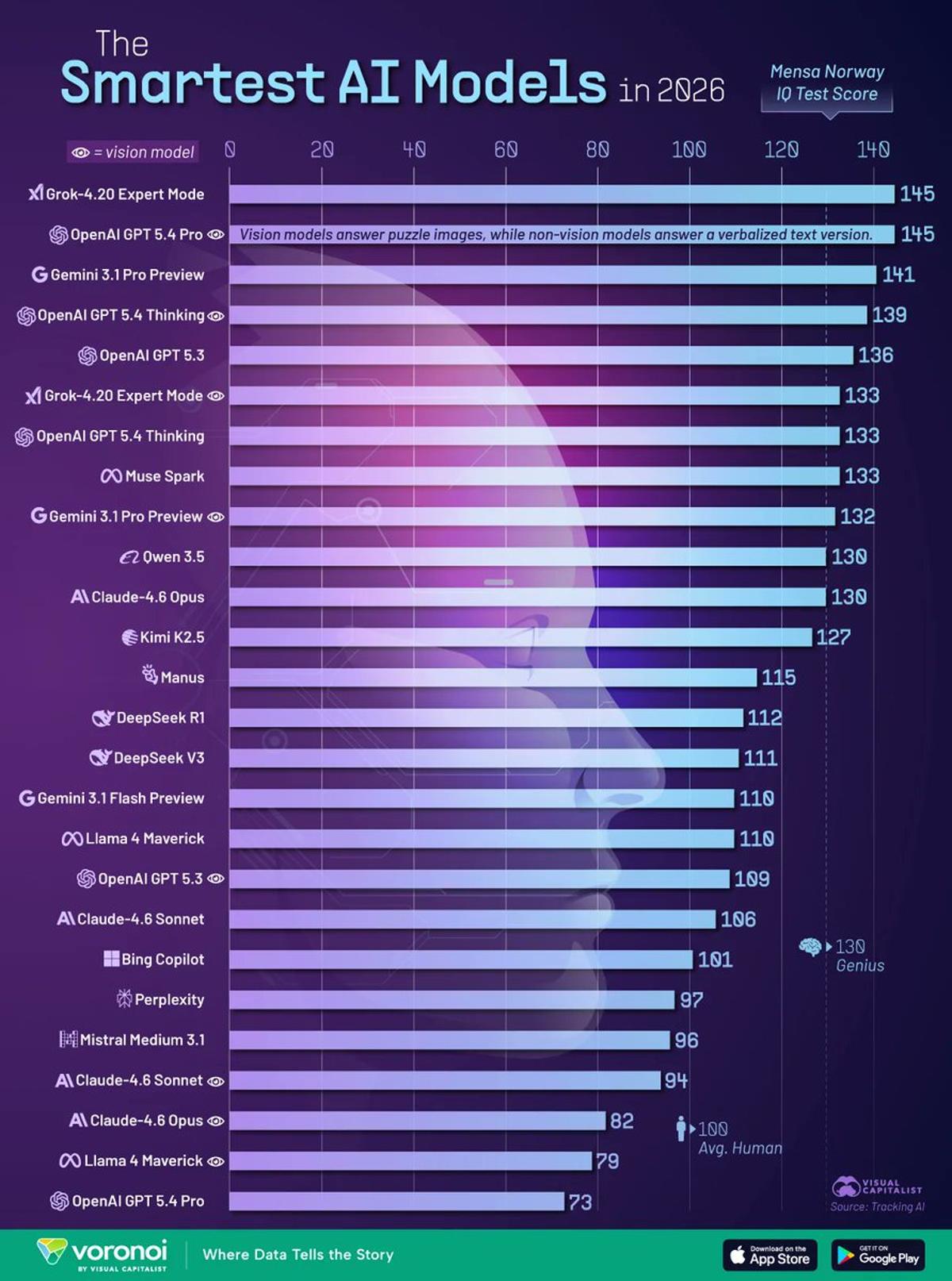
AI Performance Converges; Usefulness Becomes New Competitive Edge
The gap at the top of AI is closing fast. Multiple models now score at the same level with Grok-4.20 Expert Mode and GPT-5.4 Pro (Vision) leading the latest benchmark. But the bigger signal isn’t who’s #1. It’s how quickly performance is converging. When...

Kids' Unfiltered Sketches Reveal Innovation's
Children’s drawings of cars… brought to life by AI. It’s fun - but also revealing. Kids create without constraints. AI brings those ideas into form. Imagination meets execution. Not always practical, but a reminder: Innovation often starts before we filter ideas too early. #AI #Creativity #Innovation Video credit...
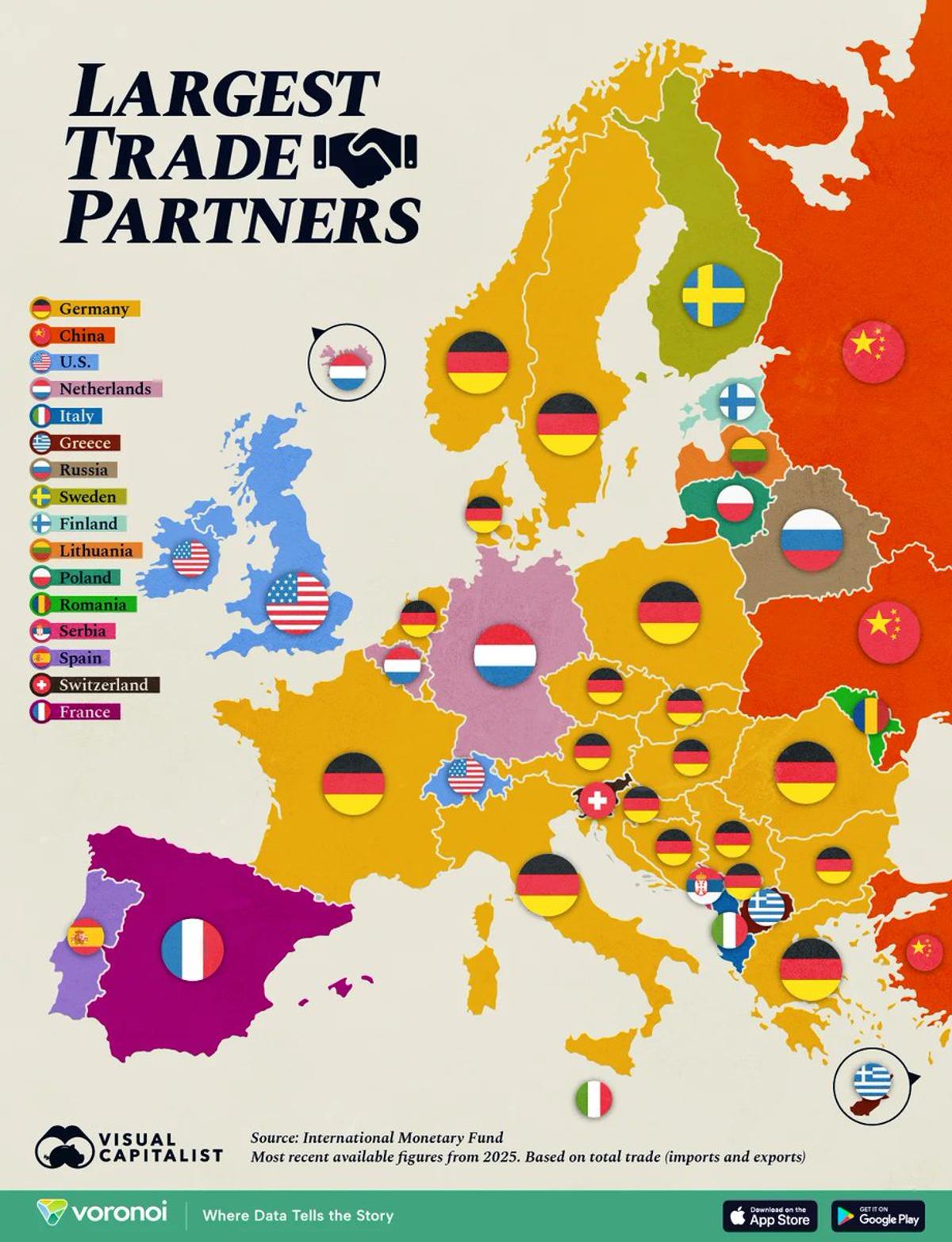
Germany Dominates European Trade as Primary Hub
Trade relationships in Europe are more concentrated than many assume. Germany is the top trade partner for 19 European countries by far the most dominant position. The U.S. leads in only a few cases, including the UK, Ireland, and Switzerland. China appears as the...
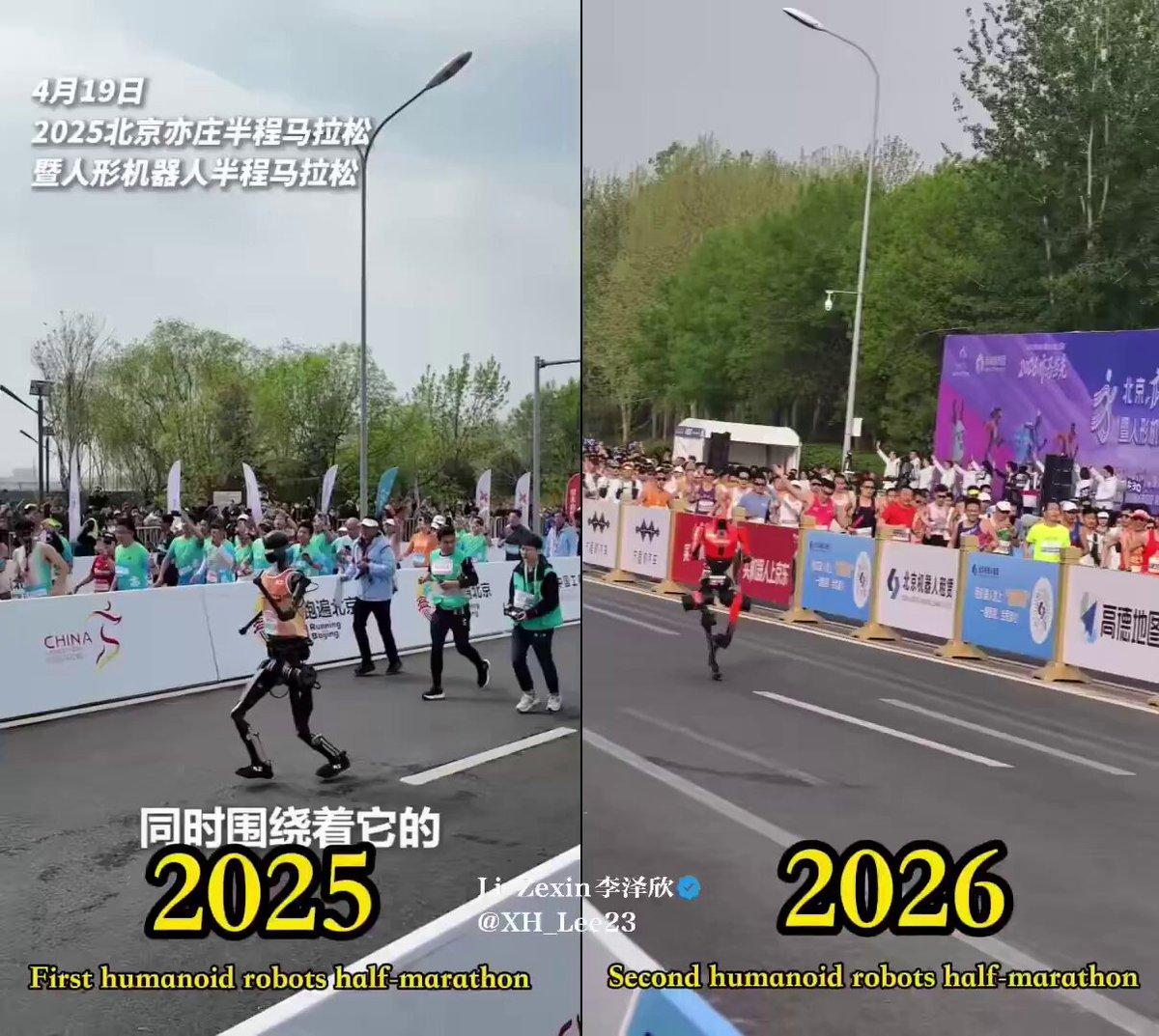
Robots Outpace Humans in Specific Tasks, Not Overall
From mocked… to outperforming humans in just one year. 2025: slow, experimental 2026: faster than elite runners Impressive? Definitely. But also worth a closer look. These results often come from controlled conditions, optimized hardware and very specific tasks. Endurance, adaptability, terrain changes, and real-world variability are a...
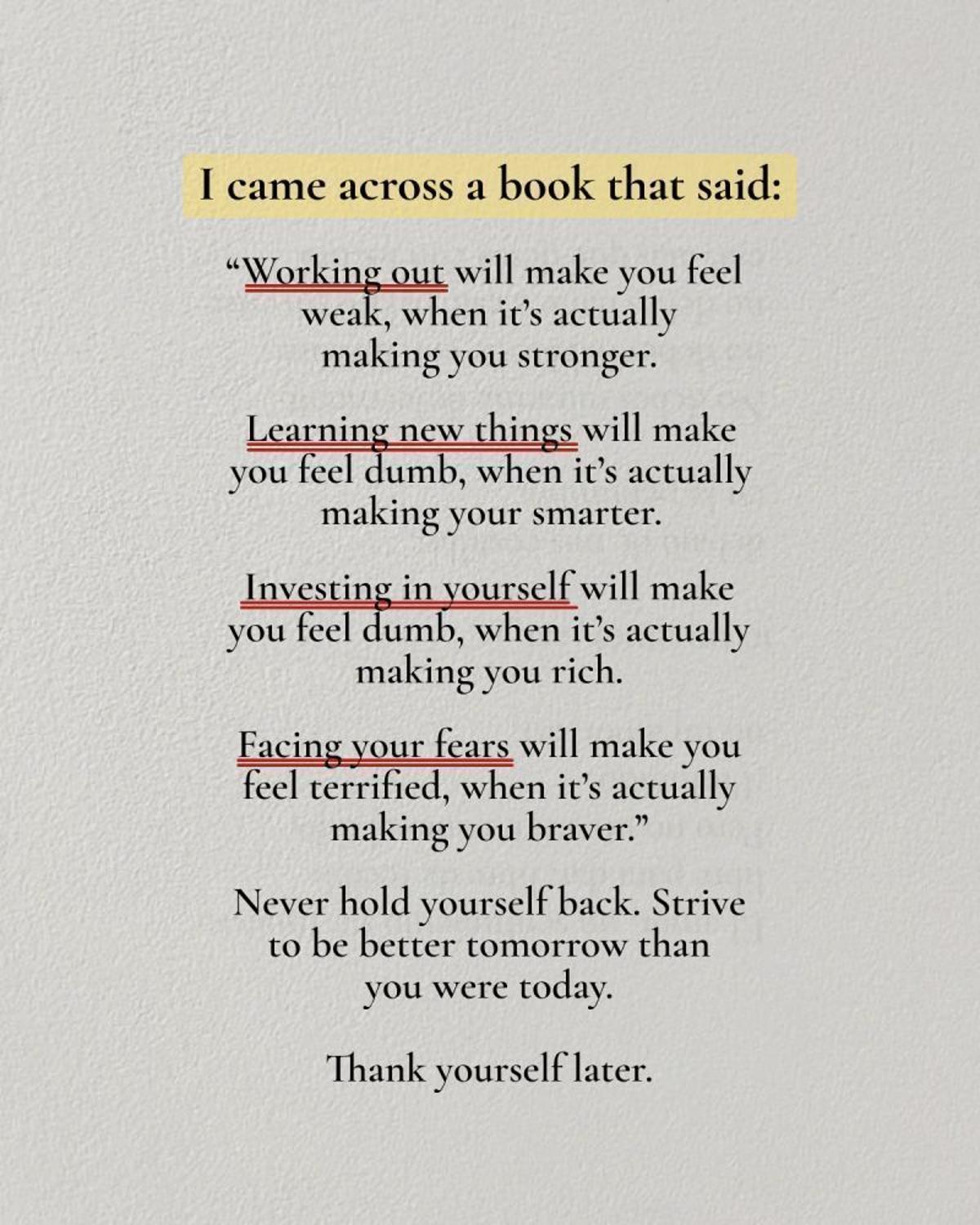
Discomfort Signals Growth, Not a Warning to Quit
Discomfort has a bad reputation. We treat it like a warning sign. Like something is wrong. Like we should step back. But often, it’s the opposite. Discomfort shows up when something is changing. When you’re learning, stretching, trying something you haven’t mastered yet. That’s why it feels...

Robots Thrive in Controlled, Repeatable Environments, Not Chaos
Robots playing basketball sounds like a gimmick. But it highlights something important. The Toyota CUE7 robot can consistently make free throws, because the environment is controlled and repeatable. That’s where robots excel. Change the conditions, and it gets much harder. So it’s less about basketball… and more about...

AI Agent Chains Add Complexity, Not Simplicity
Your company’s new AI agent workflow looks impressive. At least on the slide. Step 1: Prompt the agent Step 2: Agent calls another agent Step 3: That agent queries three systems Step 4: Something gets summarized Step 5: Nobody is quite sure what happened in between Step...

Sun‑Tracking Solar Panels Boost Yield, Yet Add Cost
Solar panels that automatically track the sun sound like a clear upgrade. More exposure. Higher efficiency. Better output throughout the day. And in many cases, that’s true. Tracking systems can significantly increase energy yield compared to fixed installations, especially in regions with strong, consistent sunlight. But...
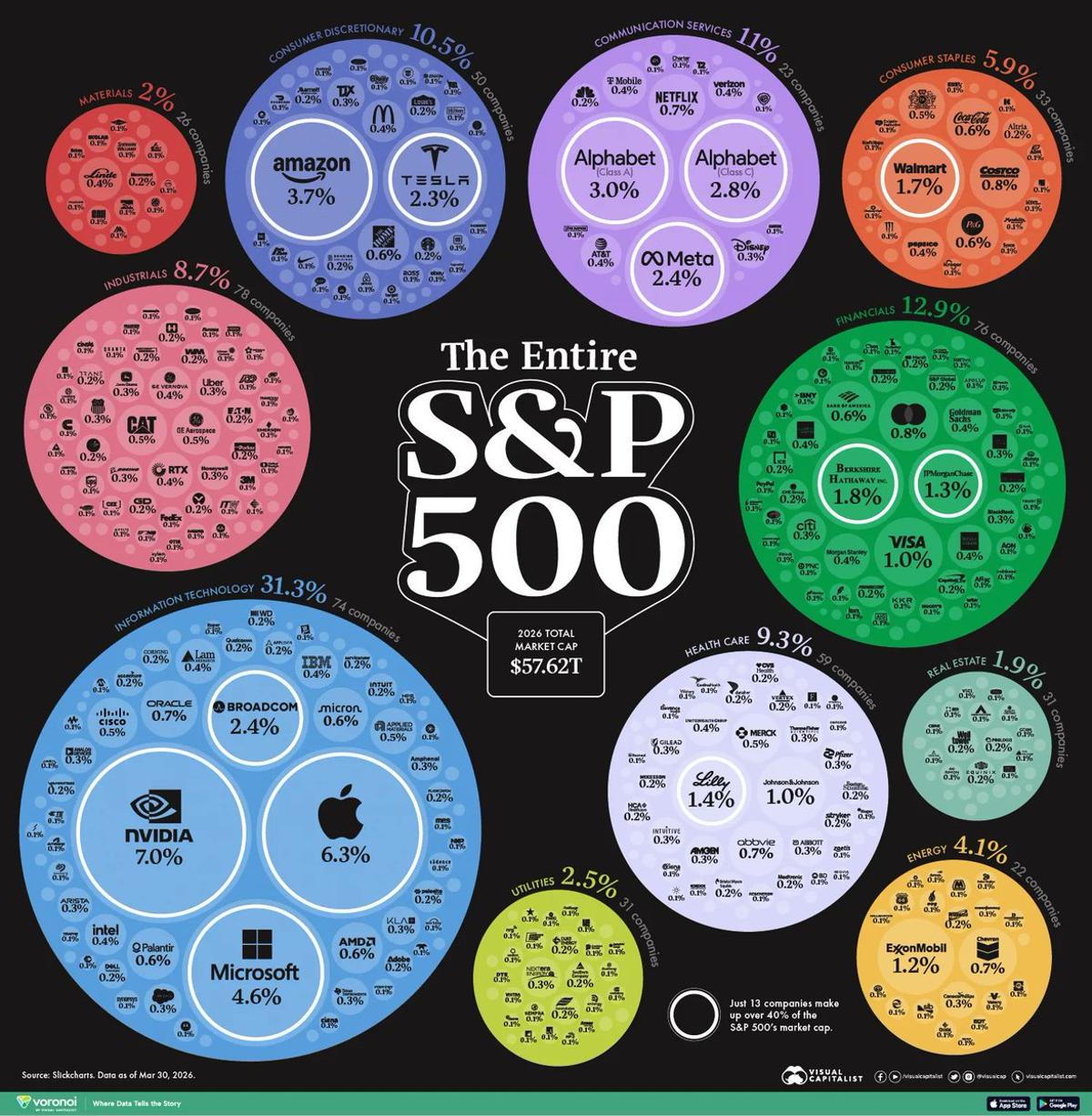
Mega‑caps Control Nearly One‑Fifth of S&P 500
Every S&P 500 Company in One Giant Chart Key Takeaways: 👉 This chart shows all 500 companies in the S&P 500, sized by market cap and grouped by sector. 👉 Nvidia, Apple, and Microsoft alone make up about 18% of the $57.6 trillion...

Resilience Over Self‑Sufficiency: Diversify Food Supply Chains
Food security looks very different from wealth. Only one country - Guyana - can produce all seven essential food groups domestically. Most others, including large economies like the U.S. and China, rely on imports in at least one category. That highlights a structural...

Robots Excel at Structured Tasks, Humans Still Needed
Maybe robots will not replace us. At least not as quickly as the headlines suggest. Watch enough real-world footage, and you see it: Robots slipping. Missing objects. Failing in simple, unpredictable situations. Not because the technology is bad. But because the real world is messy. Uneven surfaces. Changing conditions. Ambiguous...
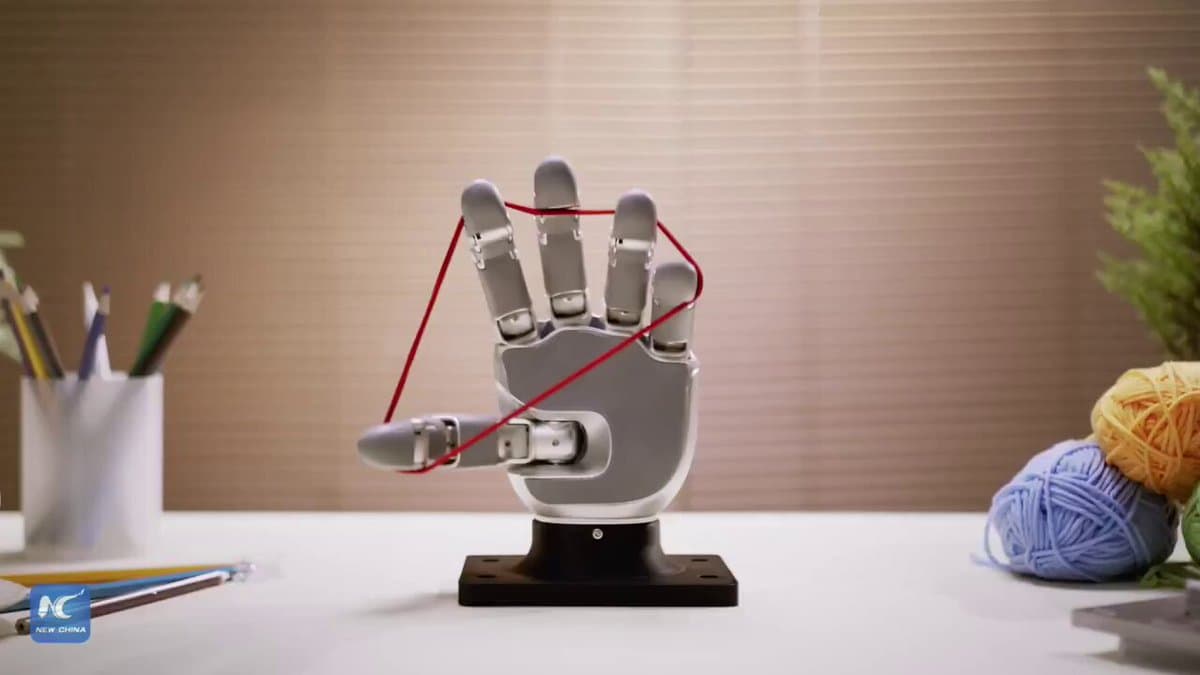
Robotic Hands Achieve Precise, Adaptive Fine Motor Control
Robotic hands are getting seriously capable. BrainCo’s new version shows how much progress has been made in fine motor control - handling objects with more precision and adaptability. That’s a big deal. Because in robotics, the challenge isn’t just moving. It’s interacting with the...

Cheap Delivery Triggers Complex Systemic Ripple Effects
Lower delivery costs sound like pure progress. 10,000+ unmanned vehicles and ultra-cheap last-mile pricing within 30km is impressive. But cost reduction is only one side of the equation. What happens when logistics becomes this cheap? Volume increases. Delivery frequency rises. Urban traffic patterns change. And the system...

Small-Scale Renewables Power Real, Resilient Progress
Small-scale energy solutions deserve more attention. A 1kW wind turbine may not sound dramatic, but that is often how real progress looks: reliable, practical, and deployable where it is actually needed. Not every clean energy breakthrough has to be massive. Sometimes the value...

Ringbot: Star Wars‑inspired Monocycle Balances, Recovers, Hits
This is Ringbot, a Star Wars - inspired monocycle robot developed by Kim Lab at the University of Illinois Urbana-Champaign in 2024. It uses a circular wheel and two legs with independent modules to move, balance, and control direction. It can avoid...

When Robots Build Robots, Bottlenecks Shift Upstream
Robots building robots. It sounds futuristic, but it’s becoming a real direction. Once humanoids can assemble components, handle tools, and operate in human-designed environments, manufacturing starts to change fundamentally. You don’t just automate tasks. You automate the creation of the systems themselves. That has implications: Faster...

Simple Robots Unite, Achieving Power Beyond Single Machines
Small robots, big idea. Ant-inspired systems show what happens when you focus less on individual capability and more on coordination. Each unit is simple. But together, they can navigate, carry, and adapt in ways a single robot can’t. That’s the shift. From powerful machines… to distributed...

Humanoid AI Must Earn Trust in Real‑World Life
Humanoid robots are improving fast. What’s changing isn’t just capability, it’s proximity. AI is moving from screens into physical spaces, where it can act, assist, and interact in real environments. That raises a different set of questions. Not about performance in demos. But about reliability...

Decentralized Pallet Movers Could Replace Forklifts Entirely
Interesting direction. Instead of improving forklifts, this approach removes them from the equation. Small, distributed units that move pallets directly could fundamentally change warehouse operations. Less congestion in aisles, more flexible layouts, and potentially smoother material flow without relying on a single...

Coordinated Drones Unlock New Logistics Possibilities
Coordination is becoming the real breakthrough. It’s not just what one drone can do, it’s what multiple systems can achieve together. When drones can coordinate in real time without heavy sensor stacks, you unlock new possibilities for transport, inspection, and logistics in...

U.S. Holds 43% of Global Data Centers, Europe Trails
The Countries With the Most Data Centers Key Takeaways: 👉 The U.S. hosts 43% of the world’s data centers, with 4,088 total. 👉 Germany and the UK are nearly tied for second place, separated by just one facility. 👉 Europe’s FLAP-D corridor remains a...

Comfort Stalls Growth; Leaders Must Rethink Success
“It’s working. Why change it?” That mindset kills more progress than failure ever will. I’ve seen it often: Something works → results come in → comfort sets in And slowly, building turns into protecting. The shift is subtle: From “What’s possible?” To “What’s safe?” That’s where growth stalls. Strong...

Foldable Homes Turn Housing Into Deployable, Scalable Solutions
Foldable houses used to sound like a futuristic concept. Now they’re becoming real. What makes them interesting isn’t just the design. It’s the shift in logic behind housing itself. A foldable house changes the equation: faster deployment, lower transport complexity, and more flexibility in where...

Uneven Global Convergence: Asia Surges, Japan Declines
The divergence is striking. China’s GDP per capita grew more than 10x since 2000. India and Russia followed with strong gains. At the same time, Japan saw a decline. This isn’t just growth. It’s a redistribution of economic momentum. Some economies are accelerating rapidly. Others are stabilizing or stagnating. The...

Construction Shifts Toward Scalable, Repeatable Production Model
Construction is starting to behave more like a production system. ICON’s new printer reduces setup time by moving between sites, while covering larger build areas with a single system. What matters isn’t just speed. It’s repeatability, lower labor dependency, and the ability to...

Growth Often Means Enduring Pressure, Not Speed
Survival, despite the burdens of life. Sometimes progress doesn’t look like growth. It looks like holding on. Like that small tree pushing upward, even with a heavy stone pressing down on it. No perfect conditions. No easy path. Just quiet persistence. It doesn’t stop. It...

Robots Assist, Humans Provide Empathy in Healthcare
Robots are starting to enter one of the most sensitive environments we have. Healthcare. Unitree’s systems being used as caregivers and assistants show how robotics is moving beyond factories into real-world human settings. The value is clear: Supporting staff with repetitive tasks Assisting with logistics...

AI Excels at Precision, Not Personal Style Judgment
Would you let an AI robot cut your hair? On paper, it sounds ideal. Perfect precision. No small talk. Consistent results every time. But here’s the uncomfortable part: A haircut isn’t just execution. It’s interpretation. Face shape. Style preferences. Subtle cues. The moment you say, “Just a little shorter”...

Global Risk Concentrates in Few Nations, Demands Selective Exposure
Global risk isn’t evenly distributed. In 2026, a small group of countries - including Belarus, Lebanon, Sudan, and Venezuela - sit at the top of the global risk ranking, with premiums around 30.9%. At the other end, only 19 countries globally have risk levels below...

Integrate AI Into Workflows, Not Just for Answers
Most people use AI like a search engine. That’s the lowest value use case. The real leverage comes when AI moves from answering questions to supporting execution. For small and mid-sized businesses, the shift is practical: Use it to structure decisions. Model scenarios before committing...

Floating Solar‑Aquaculture Needs Ecological, Economic Longevity
Floating solar combined with aquaculture is an interesting idea. Using the same surface for energy generation and food production sounds efficient. Less land use. Lower evaporation. Potentially better panel performance. But the concept also raises questions that are often overlooked. What happens to the...

Hybrid
Mobility in robotics is becoming hybrid. “Roadrunner” combines wheels and legs in a single system - switching between side-by-side rolling, inline movement, and stepping when needed. At just 15 kg, it’s lightweight, but the concept is bigger than the form factor. Real-world environments...

Robots Detect Microscopic Rail Flaws, Prevent Outages
Railway maintenance is becoming precise, fast, and increasingly automated. In China, a robot is now repairing track cracks at up to 10,000 RPM, while detecting flaws as small as 0.1 mm. That level of accuracy changes the game. Instead of reacting to visible damage, systems...

Unexpected Small Nations Accelerate Global Economic Convergence
Growth is accelerating, but not where most expect. Moldova is projected to lead global GDP per capita growth with +53% by 2030. Alongside countries like Guyana and Turkmenistan, emerging economies dominate the percentage rankings. But the more interesting signal is where speed meets scale. Countries...

Great Organizations Balance Visionary Leadership with Tactical Management
Leadership and management are closely connected. But they are not the same. Leadership is about direction. Management is about execution. Leadership asks: Where are we going? Why does it matter? What needs to change? Management asks: How do we organize this? Who is responsible? How do we deliver consistently? Both matter. Leadership creates...

Construction Automation Delivers Consistent, Predictable Paving Results
Construction is becoming more automated and more precise. The Optimas S19 paving machine is a good example of that shift. Designed for large-scale projects, it automates the placement of paving stones, handling tasks that traditionally required significant manual labor. What stands out...

Electronic Skin Gives Robots Real‑Time Touch Sensitivity
Electronic skin is starting to change how machines interact with the physical world. This material combines dense fibers with integrated sensors that can detect pressure, touch, deformation, and subtle changes in contact in real time. For humanoid robots, especially hands, this is...

Designing Operations for Robots Drives Million‑Robot Growth
In 2012, Amazon acquired Kiva. One year later, it had around 1,000 robots. Today, that number exceeds 1 million. This kind of growth didn’t happen by simply adding more machines. Amazon reorganized its warehouses around automation. Robots handle movement, positioning, and flow of goods,...

China Dominates Humanoid Robot Market with Volume Production
The humanoid robotics race is already uneven. In 2025, Chinese companies accounted for nearly 90% of global shipments. Unitree and AgiBot alone delivered over 10,000 robots combined, while U.S. players like Tesla, Figure, and Agility Robotics each shipped only around 150 units. That gap tells a...

Backyard Laser Demos Signal Everyday Tech Revolution
Your own tiny backyard laser warfare. It sounds like a joke, until you realize how quickly laser-based systems are moving from labs into real-world applications. From LiDAR in autonomous vehicles to precision tools in agriculture and manufacturing, lasers are becoming a core...

LiDAR Gives Self‑Driving Cars True Spatial Understanding
Have you ever wondered how self-driving cars actually “see” the world? It’s not just cameras. One of the key technologies is LiDAR - a system that uses laser pulses to scan the environment and build a real-time 3D map of everything around...

AI Shifts Jobs Toward Judgment, Away From Routine
AI is not eliminating work evenly. It is redistributing where work concentrates. Recent projections show a clear pattern: sectors built around judgment, research, and complex decision-making are expanding, while industries centered on routine execution and physical throughput are shrinking. Health and scientific fields are expected to add...

Urban Microcars: Smarter, Smaller, More Maneuverable than Cars
Cities weren’t designed for the size of most modern cars. That’s why concepts like @ÆMOTION’s tilting electric microcar are interesting. It combines the stability of four wheels with the leaning movement of a motorcycle, allowing it to move through tight urban traffic...

Small, Decentralized Turbines Power Resilient, Low‑impact Energy
Not every energy innovation needs massive infrastructure. The Vortex Turbine by Turbulent Hydro shows how smaller, decentralized solutions can generate reliable power from rivers and canals with only a low height difference. A single turbine can produce 15 to 70 kW of continuous energy, operating...

Understanding Fuels Progress More than Effort
Monday reminder: Knowledge changes how you see the world. The more you learn, the more patterns you recognize, the more opportunities you notice, and the better decisions you can make. Often the difference between struggle and progress isn’t effort. It’s understanding. Start the week curious. Small...