
There Are Only 3 Rides You Should Do
The video distills cycling training into three essential ride types—endurance, high‑intensity, and easy recovery—rejecting complex periodization. Endurance rides require 2‑6 hours at steady zone 1‑2 heart rate, usually once a week. High‑intensity sessions focus on either threshold intervals (5‑15 min) or VO₂max bursts (30 s‑5 min) with simple structures. Easy rides are low‑effort, 1‑hour rides at 120‑140 W to prime the body. The hosts stress that “complex interval sessions” hinder execution, and research shows repeating the same interval type for weeks yields greater gains than constantly varying workouts. They also note plateau timelines: sprint work peaks in 3‑4 weeks, VO₂max in ~6 weeks, threshold in 10‑14 weeks. By limiting training to these three rides, cyclists can maximize adaptation while fitting realistic schedules, improving performance without burnout. The framework offers a clear, scalable template for amateurs and coaches alike.
Midseason Cycling Fatigue, Epic Ride Stories & the Best Training Books | Fast Talk Potluck
The Fast Talk Potluck episode tackles the growing problem of mid‑season fatigue among cyclists and triathletes, emphasizing that today’s ten‑month race calendars demand new recovery strategies. Hosts Grant, Julie, Trevor and Chris discuss why the traditional “train all year, take...
High-Fat Vs. High-Carb for Endurance Athletes: What the Science Really Says
The Fast Talk episode tackles the long‑standing debate over high‑fat versus high‑carbohydrate diets for endurance athletes, spotlighting a recent point‑counterpoint series in the American Journal of Clinical Nutrition by Dr. Timothy No and Dr. Louise Burke. Both researchers are highly...
3 Ways to Boost Testosterone
The video reviews a recent scientific paper titled “Testosterone Optimizing Strategies and Athletes,” outlining practical ways to raise testosterone for both men and women. It emphasizes three pillars: sufficient, high‑quality sleep; a nutrient‑dense diet rich in protein, vitamins and minerals; and...
How to Build a Champion Mindset: Sports Psychology, Flow State, and Better Coaching
The Fast Talk episode explores how a champion mindset is cultivated through sports psychology and the Way of Champions methodology, a culture‑building framework that blends Eastern philosophy, Native American mysticism, and relational leadership. Hosts explain that championhood is defined not by...

“Backed by Science” Doesn’t Mean What You Think with Dr Stephen Cheung
The episode tackles the overused claim “backed by science,” exposing how a lone study rarely validates a product’s performance. Host Trevor Connor and Dr. Stephen Cheung explain that true scientific confidence comes from multiple, independently replicated investigations, not isolated headlines. Listeners...
Heat Training, Cycling Back Pain & Gravel Race Crashes
The Fast Talk episode opened with a sponsor plug for Stages Cycling, emphasizing that modern power meters—especially Stages’ crank‑based units—provide the accuracy needed for precise training, combining power data with heart‑rate metrics. The hosts then shifted to heat training, debating...
Cycling Periodization Explained: How to Structure Training for Peak Performance
The podcast explains periodization as the simple practice of structuring training into distinct periods to prepare for target races, tracing its origins from early Russian work through Soviet-era refinement and eventual adoption in the West. Hosts and guest coach Joe...
Breathing for Endurance Athletes: Can Better Breathing Improve Performance?
The Fast Talk episode explores whether endurance athletes can improve performance by training their breathing. Host Rob Pickles and guests—exercise physiologist Dr. Steven Chung, coach Steve Neil, and researcher Jared Berg—break down core respiratory concepts and debate the “body knows best” stance of...
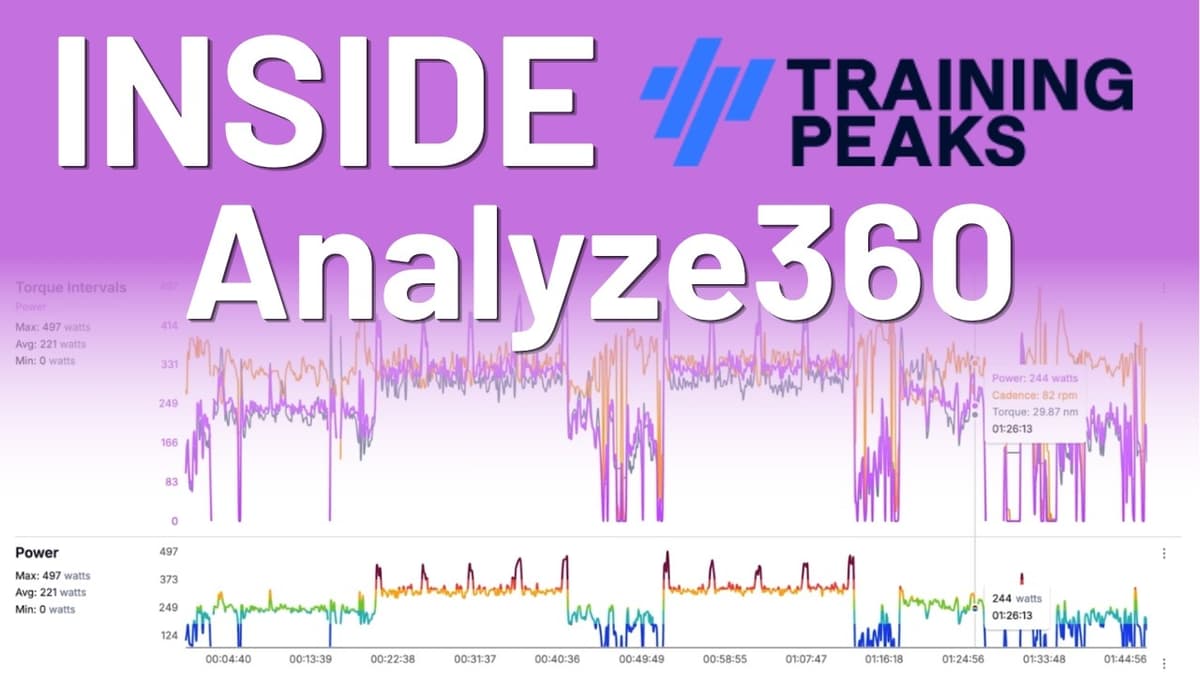
Inside TrainingPeaks Analyze360: Visualize Data Like Never Before
TrainingPeaks unveiled Analyze 360, a new analytics interface that lets athletes and coaches layer emerging physiological sensors—heat strain, ventilation, sweat rate—on top of traditional power, cadence and heart‑rate streams. The platform is fully customizable: users can display up to four data channels...
The 95% of Training That Matters: Why Fundamentals Beat Marginal Gains for Endurance Athletes
The episode tackles a core debate for endurance athletes: should they chase marginal‑gain tricks or double down on the fundamentals that make up the bulk of performance? Host Chris Casease and coaches Trevor Connor and Ryan Kohler argue that for most...
Sleep and Athletic Recovery: How Endurance Athletes Can Improve Sleep Quality and Performance
The Fast Talk episode tackles sleep’s central role in endurance athletes’ performance, moving beyond the obvious health benefits to practical strategies for monitoring and improving nightly rest. Host Chris Casease and Dr. Shona Hollson explore how athletes can use wearable...
Stretching and Performance: What Cyclists Need to Know About Flexibility, Power, and Injury Risk
Episode 97 of Fast Talk features Manakam Brody, owner of Human Vortex Training, discussing how stretching influences cycling performance, power output, and injury risk. Brody explains that research on stretching and performance is sparse, but three primary mechanisms emerge: increased stretch...
Sweat Rate and Hydration: How Endurance Athletes Should Replace Fluids and Electrolytes
In this Fast Talk episode, host Rob Pickles and guests—including Dr. Robert Kenneth, a former US Army Institute researcher—break down the science of sweat rate and fluid replacement for endurance athletes. The discussion frames sweating as the primary mechanism for...
Female Athlete Physiology: How Women Should Train, Fuel, and Recover Across Every Life Stage
The Fast Talk episode spotlights Dr. Stacy Sims' science‑based recommendations for training, fueling, and recovery across a woman's lifespan—from teens to menopause—highlighting how traditional male‑centric guidelines often misfire for female athletes. Sims explains that inherent sex differences (smaller heart, lower hemoglobin,...