

Amdocs and the Future of Fiber
The discussion, led by Neil Hollander, General Manager of Amdocs’ Network Division, centered on the state of fiber broadband in the United States and Amdocs’ role in accelerating its rollout. He highlighted that roughly 60% of U.S. residences now have fiber access, yet only about 45% have adopted the service, leaving significant upside for both builders and service providers. Hollander identified three core challenges: high and variable deployment costs, especially in non‑urban areas; a tightening labor market that drives up construction expenses; and the race to market, where first‑movers secure dominant regional market share. Operators must balance aggressive build‑out with the need to monetize the massive infrastructure investments already made. He emphasized the importance of partnering with technology providers that can automate the end‑to‑end workflow—from network design and planning to physical construction. "Having the right partner that helps automate design to rollout is key," he said, noting Amdocs’ AI‑driven platform that uses generative flows and agents to streamline engineering processes and reduce time‑to‑service. For telecom operators, embracing such automation could lower capex, accelerate deployment, and improve adoption rates, ultimately translating into faster revenue generation and stronger competitive positioning in a crowded fiber market.
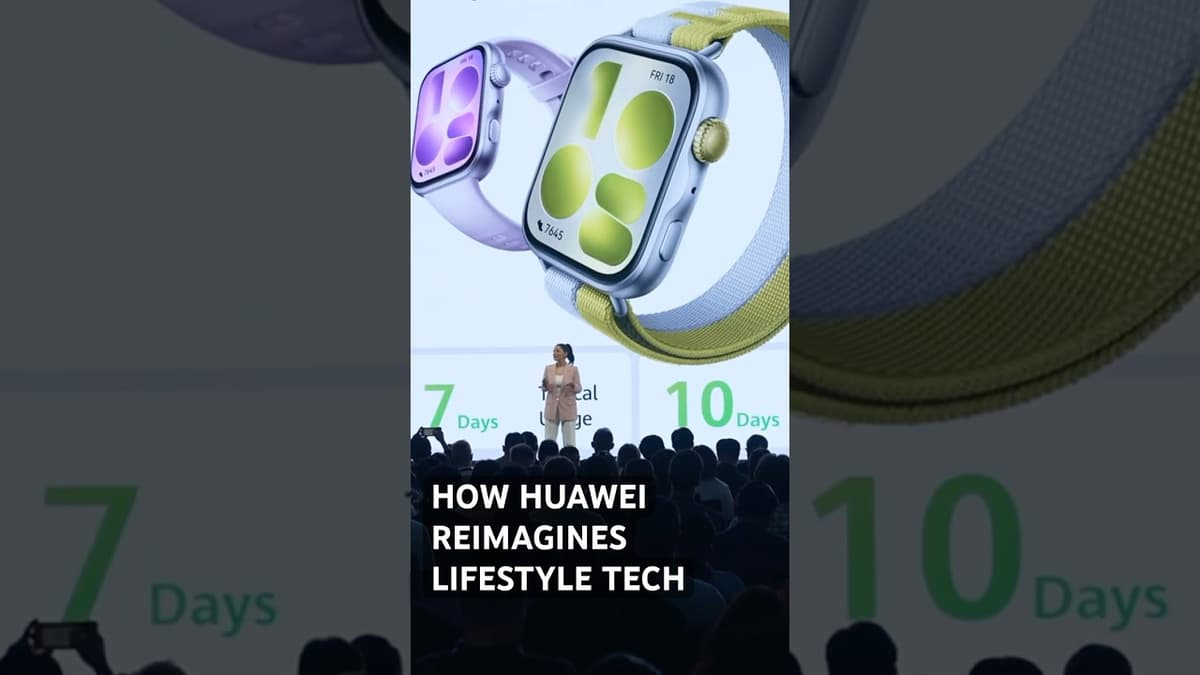
How Huawei Reimagines Lifestyle Tech
Huawei unveiled its latest consumer wearable, the Watch Fit 5, at a launch event in Bangkok, positioning the device as a lifestyle‑focused smartwatch rather than a niche fitness gadget. The watch emphasizes everyday usability: a 1.5‑inch bright display stays legible under Thailand’s...

Carrier 2.0 - The Carrier Identity Crisis
Carrier 2.0 explores the identity crisis facing telecom operators as AI and hyperscalers reshape the value chain. The episode asks what kind of service provider will survive the next decade, contrasting the traditional utility model with emerging platform and vertical‑enabler...
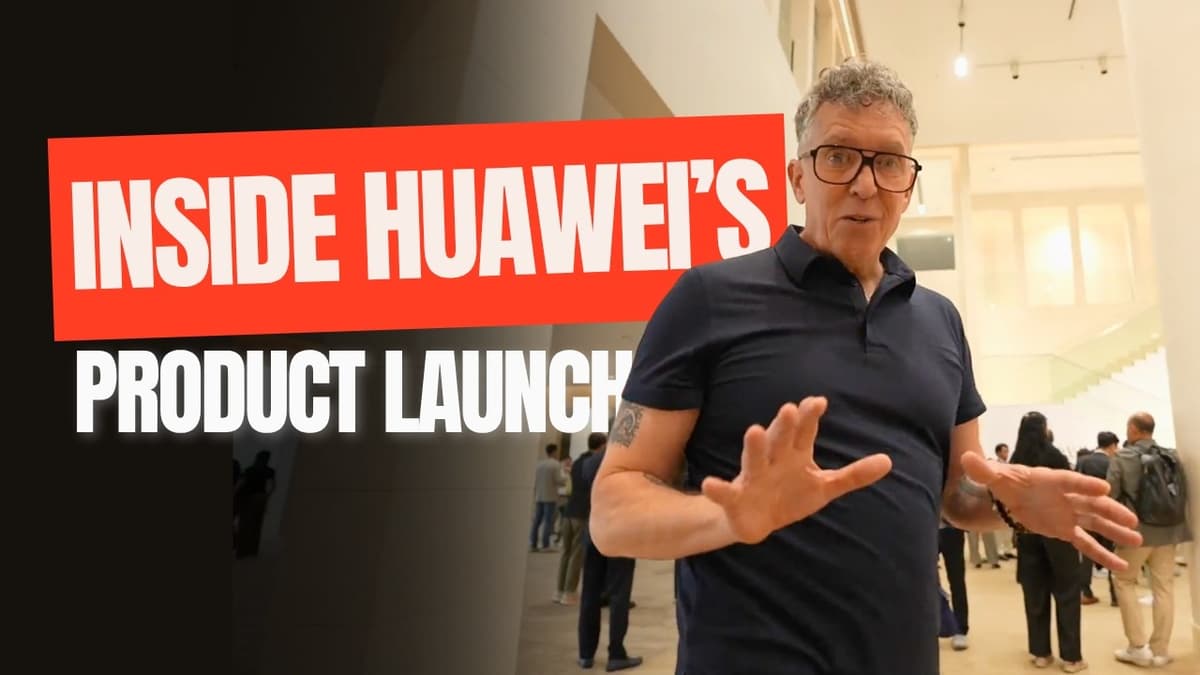
Inside Huawei’s Bangkok Product Launch
Huawei staged a high‑gloss consumer‑tech launch in Bangkok, presenting smartphones, wearables and other gadgets amid a neon‑lit, Blade‑Runner‑style backdrop. All devices run the company’s Harmony operating system, the same software stack that powers its industrial solutions, including autonomous 160‑ton electric mining...

The AI-Driven Reinvention of Telecom Infrastructure
The video discusses how a U.S. fiber carrier is using AI and a proprietary orchestration platform to integrate acquisitions and accelerate its goal of 1.5 million fiber passings across 15 states by 2030. By abstracting the orchestration layer from vendor‑specific NMS into...
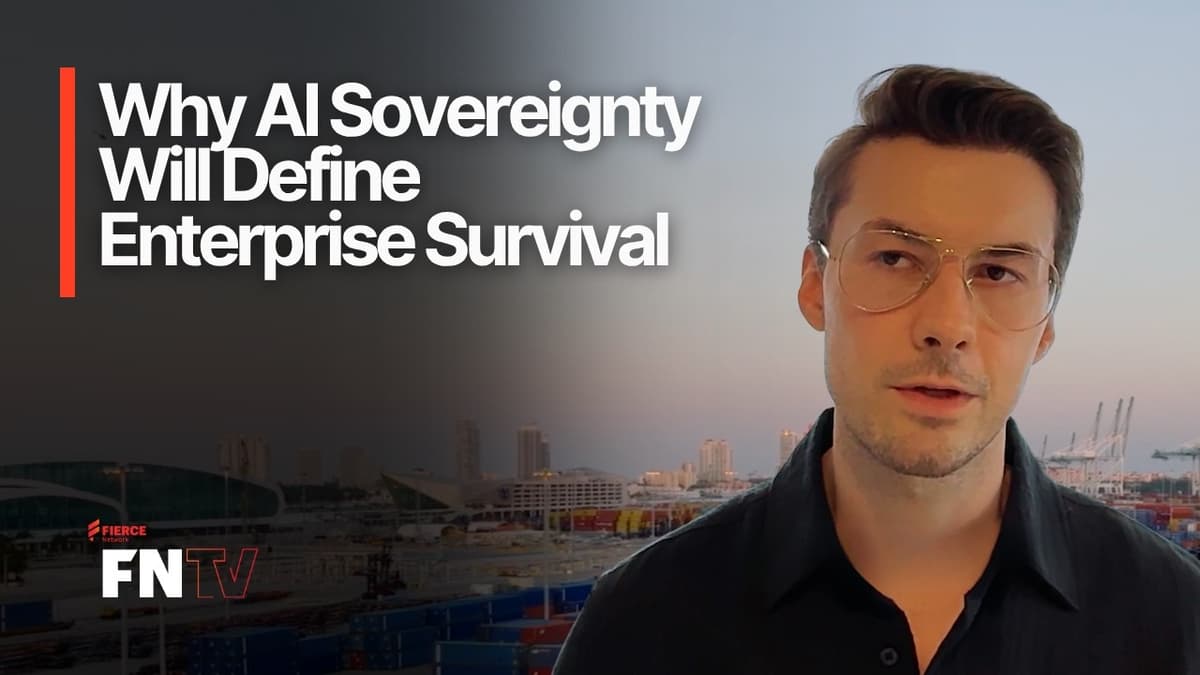
Why AI Sovereignty Will Define Enterprise Survival
The conversation between Logan and Steve centers on why AI sovereignty will become a decisive factor for enterprise survival. Kyndryl positions itself as a technology‑neutral partner that helps companies treat sovereignty as a strategic risk‑mitigation discipline rather than a pure...

Quantum Horizons | The Arrival on the Living Planet
The video introduces a speculative world where every element—forests, oceans, and even the air—is bound together by invisible quantum threads. This luminous network creates a living planet that pulses with unseen light, turning the environment into a single, responsive organism. Key...

The AI System Saving One of the World’s Rarest Monkeys | Huawei AI Conservation
Huawei has deployed an AI‑driven monitoring system across 26,000 hectares of limestone forest in Chongzuo, China, to protect the critically endangered white‑headed langur. The system uses computer‑vision to identify individual monkeys, track their behavior and forecast movements, giving rangers real‑time...

CSG On Simplifying Fiber Operations At Scale
The video outlines CSG’s strategy for simplifying fiber‑network operations at scale, emphasizing the end‑to‑end order‑to‑install‑to‑cash workflow. It argues that automation, AI‑driven scheduling, and unified platforms are essential for fast‑growing providers facing mounting operational load. Key insights include AI agents that prioritize...

CommScope FAST Track Tests Fiber in Real Time
CommScope’s FAST Track program lets operators test fiber networks in real time, comparing architectures and measuring performance under live conditions. The hands‑on approach provides immediate validation of design choices, reducing uncertainty before large‑scale rollouts. Video footage demonstrates engineers, customers, and...

CommScope FAST Track Brings Fiber to Life
CommScope’s Fast Track program is an outdoor laboratory in Catawba, North Carolina, designed to let customers, partners and internal teams physically interact with fiber‑optic equipment. The site showcases complete passive‑optical‑network (PON) architectures—taps, indexing, cascaded splits, and more—allowing real‑time configuration...

How Microsoft Brings AI Closer to Enterprise Data
Microsoft’s latest briefing outlines how Azure is being extended to bring generative AI agents directly to enterprise data stores, creating a unified platform that spans public cloud, sovereign clouds, and on‑premises deployments. The company emphasizes three pillars: flexible data sovereignty, low‑latency...

How MaxLinear Advances FDD Massive MIMO with Next‑Gen Wireless Tech
MaxLinear used its Barcelona showcase to unveil a suite of next‑generation wireless components, emphasizing a fully integrated approach for broadband and wireless service providers. The company highlighted its Wi‑Fi 7 single‑chip solution, DOCSIS 4.0 platform, and a new macro 4TR radio that...

How Cisco and Wipro See Private 5G Evolving Now
Cisco and Wipro explore how private 5G is maturing, emphasizing the shift from legacy SIM cards to eSIM‑based, software‑defined connectivity for enterprises. The discussion highlights that eSIMs are the last vestige of hardware‑centric networks, offering programmable, granular control that modern...

Huawei GT Runner 2 Focuses on Precision and Accuracy
Huawei unveiled the GT Runner 2 smartwatch at Madrid’s Galleria de Crystal, positioning it as a precision‑focused wearable rather than a typical fashion gadget. The device leverages Huawei’s end‑to‑end stack—custom silicon, integrated radios, AI‑driven telemetry processing—to cut latency, reduce noise, and deliver...