

Are We There Yet? Evaluating the Transition to EVs
Professor Christian Kaps, speaking at the HKS Energy Policy Seminar, examined the progress and challenges of the electric‑vehicle (EV) transition. He framed the discussion around two pillars—vehicle mobility and managed charging—while highlighting the broader renewable surge, especially solar’s thousand‑fold expansion that now adds more capacity globally than the United States’ total generation. Kaps illustrated the “duck curve,” where abundant midday solar creates negative prices and steep evening demand spikes, stressing the grid. He argued that EVs, with their sizable batteries, can absorb excess solar and discharge during peak periods, effectively flattening the curve. However, adoption remains modest: without aggressive regulation, EVs constitute under 10% of new vehicle sales worldwide, and in the United States they are still a single‑digit share of the total fleet. Empirical analysis of a BMW‑sourced dataset—21,000 EVs and 300,000 internal‑combustion vehicles—revealed that EVs are driven slightly more than comparable ICE cars, contradicting earlier assumptions that they serve only as secondary vehicles. Despite this usage parity, managed‑charging practices are scarce; fewer than a quarter of U.S. EVs participate in demand‑response programs, and pilot projects from a decade ago have yet to scale. The findings suggest policymakers and OEMs must accelerate incentives for managed charging and integrate EVs into grid‑balancing strategies. Doing so could unlock the dual benefits of deeper renewable penetration and faster decarbonization of transportation, turning the EV fleet into a distributed energy resource rather than merely a new load.
Forging Just Futures: Solutions-Based Science to Address the Climate Gap
In a Harvard Energy Policy Seminar, UC‑Berkeley public‑health professor Rachel Morello‑Frosch presented her “Solutions‑based Science to Address the Climate Gap,” outlining how structural racism and historic land‑use policies have created disproportionate climate and health burdens for marginalized communities. She traced the...

Forging a New Approach to Energy and Climate Policy
Aliya Haq, president of the Clean Economy Project, opened the Harvard Kennedy School Energy Policy Seminar by arguing that the climate debate has stalled because it is framed as a future‑pay‑now, future‑benefit issue. She proposes a new narrative that ties...

Carbon Hunters: Reflections and Forecasts of Climate Markets in the 21st Century
The seminar featured Richard Sandor, a pioneer of environmental finance, discussing his new book “Carbon Hunters.” He framed climate markets as extensions of classic commodity trading, emphasizing that well‑defined property rights and scarcity are the foundation for any functional pollution...
America Revived: Robert Blackwill on US Grand Strategy, Global Leadership & Liberal Internationalism
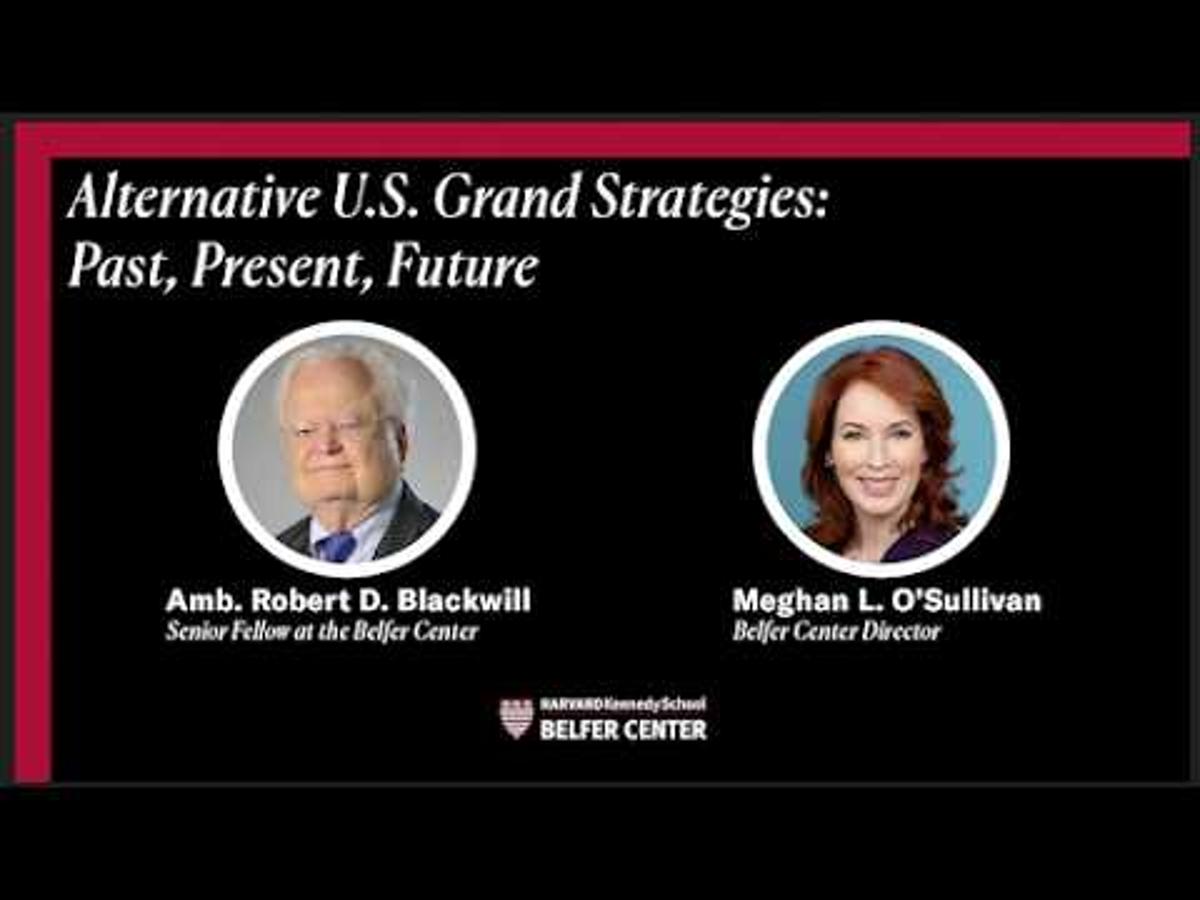
The virtual seminar featured Robert Blackwill, senior fellow at the Belfer Center and Hoover Institution, unveiling his 100‑page report “America Revived: A Grand Strategy for Resolute Global Leadership.” Blackwill framed the discussion around the urgent need to reassess U.S. grand...