
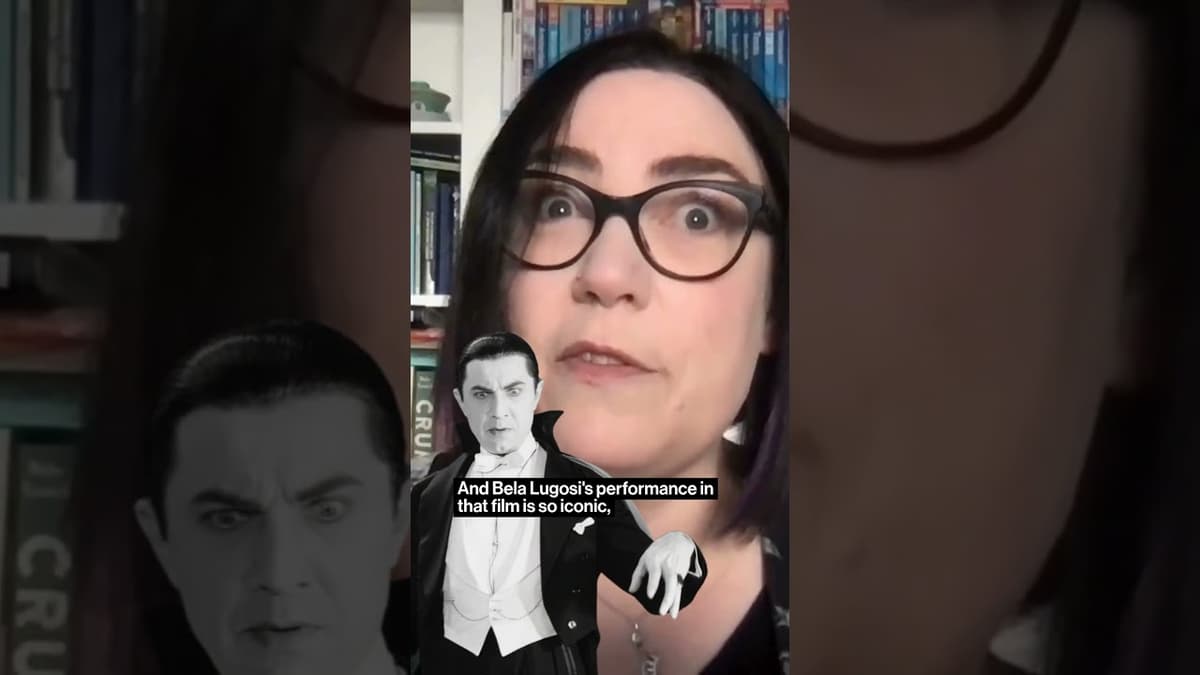
Professor Catherine Spooner on Dracula’s Enduring Cultural Appeal.
Professor Catherine Spooner explains why Dracula endures as a cultural touchstone, tracing its roots to a novel that reads like a pre‑cinematic storyboard. She argues that Bram Stoker’s descriptive landscape and shifting perspectives functioned as an early film script, making the story instantly adaptable when cinema emerged. Spooner highlights two landmark adaptations: the 1922 German unauthorized version Nosferatu and Tod Browning’s 1931 Hollywood classic starring Bela Lugosi. Lugosi’s performance, she notes, forged a visual shorthand for the vampire that eclipses the text itself, a point reinforced by literary critic Ken Gelder’s claim that this film marks the birth of “vampire recognition.” To illustrate the power of that visual brand, Spooner recounts showing children a still of Lugosi and receiving an immediate identification of “Dracula” despite no prior exposure to the novel. The anecdote underscores how the image, not the narrative, now signals the vampire archetype. The lasting impact is twofold: Dracula, like Sherlock Holmes, has become one of the most filmed fictional characters, and its early cinematic translation set a template for how literary icons can be re‑imagined across media. Understanding this trajectory informs branding, adaptation strategies, and the study of cultural memory in visual storytelling.
No Writer Is Perfect – Sarah Perry on the Greatest Achievement of When Breath Becomes Air.
Sarah Perry reflects on Paul Kalanithi’s memoir "When Breath Becomes Air," examining why its greatest achievement lies not in flawless prose but in the raw ambition of a young writer confronting death. Perry notes Kalanithi’s extraordinary self‑perception, describing his illness as...
Dr Kathryn Mannix Reads When Breath Becomes Air by Paul Kalanithi, Our Book Club Pick for April.
Dr. Kathryn Mannix introduces the April book‑club selection, Paul Kalanithi’s memoir “When Breath Becomes Air,” reading a passage that frames neurosurgery as a modern embodiment of the Greek ideal of arete. She emphasizes that neurosurgeons must achieve moral, emotional, mental and...
Dr Rachel Clarke on the Power of the Arts to Develop Our Muscles of Imagination and Empathy.
Dr. Rachel Clarke argues that engaging with literature and other arts is not a luxury but a core competency for physicians, urging medical educators to treat reading as a clinical skill. She likens the act of reading to “flexing muscles of...
The Day Is Precious – Writer Sarah Perry on the Lessons We Can Take From When Breath Becomes Air.
Sarah Perry uses Paul Kalanithi’s memoir *When Breath Becomes Air* to explore how literature can become a dialogue with one’s own loss. After her father‑in‑law’s sudden death, she realized that mortality is not only a distant possibility tied to terminal...
Jan Morris, the Travel Writer? Biographer Sara Wheeler on the Perceived Hierarchies in Literature.
The video features biographer Sara Wheeler discussing how celebrated writers such as Jan Morris and Michael Chapwin fiercely rejected the label “travel writer.” She argues that this aversion stems from a long‑standing literary hierarchy that places poetry at the summit,...

A Natural Middle Ground. Publisher Barnaby Rogerson on What Makes Oman Such a Pivotal Country.
Oman is portrayed as a geopolitical and cultural bridge between the Arabian Peninsula and the Indian Ocean, with deep historical ties to India, Zanzibar, Persia and Southeast Asia that shaped its maritime trading identity. Barnaby Rogerson highlights how these connections...
On the Fall of Empires. Sara Wheeler Explores One of the Defining Themes of Jan Morris’ Work.
Sara Wheeler argues that the collapse of empires and geopolitical change is the central, persistent theme across Jan Morris’s 58-book career. While Morris’s later work rarely sustained focus on the Middle East, her early observations there—and her interest in the...
Introducing Sultan in Oman – Sara Wheeler Shares This Month’s Hay Festival Book Club Pick.
Sultan in Oman recounts a six-week 1954–55 expedition led by the Sultan of Muscat and Oman into the interior to reassert control over independent imams and consolidate sovereignty. Journalist Wilfred (or Morris?) accompanied the Sultan in American trucks, filing censored...
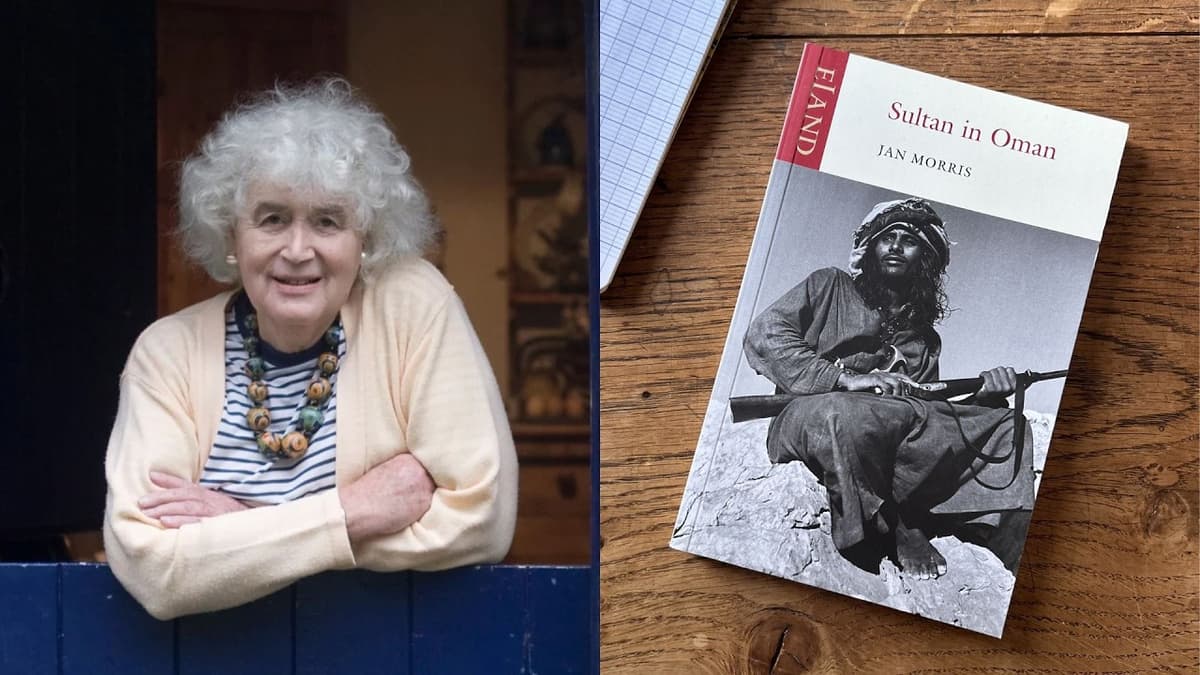
Sultan in Oman by Jan Morris | Hay Festival Book Club MARCH 2026
At the Hay Festival Book Club, Gary Raymond led a discussion of Jan Morris’s Sultan in Oman with guests Sarah Wheeler and Barnaby Roger, revisiting Morris’s six-week 1954–55 journey into Oman with the Sultan and his retinue. The panel highlighted...

Hay Festival Presents... A Night of Pleasure
The Hay Festival’s "Night of Pleasure" brought together four writers and a critic to explore the books that first sparked their desire to write. Hosted by Tom Gaty, the panel featured Yasmin Abdel Majid, Tamima Anam, Stephanie Sakia and Chris...